
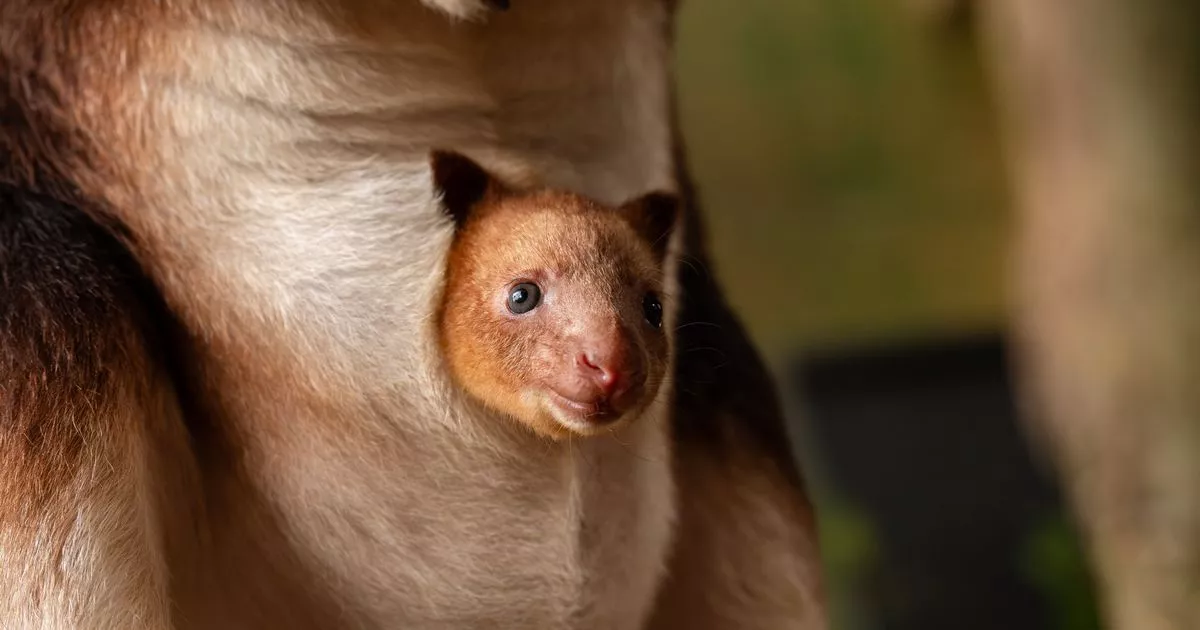
The baby was the size of a jellybean when it was born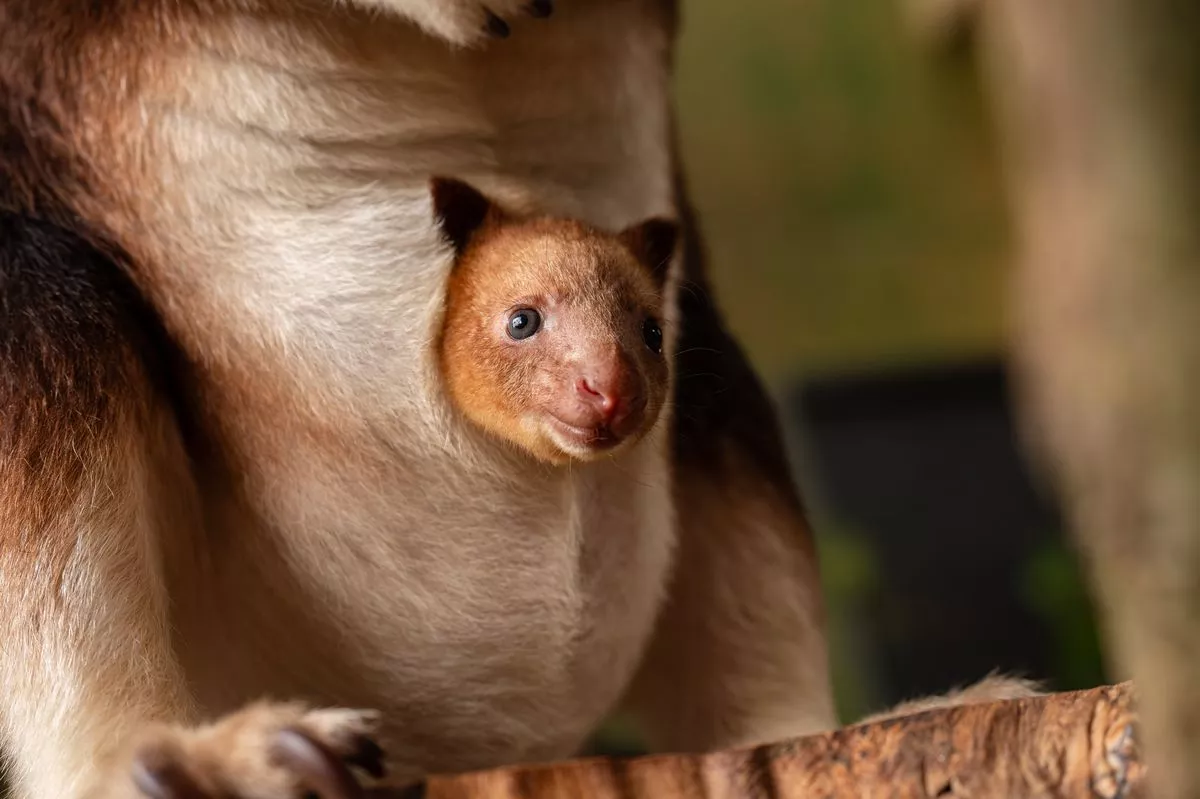
An endangered Goodfellow’s tree kangaroo joey has been born at Chester Zoo(Image: Chester Zoo© SWNS)
An adorable baby kangaroo has been born at Chester Zoo, and only emerged from his mother’s pouch last week.
Arriving into the world little bigger than a jellybean, the Goodfellow’s tree kangaroo joey marks a major conservation milestone for one of the world’s most threatened marsupials. The little creature has been dubbed a ‘special arrival’ by experts.
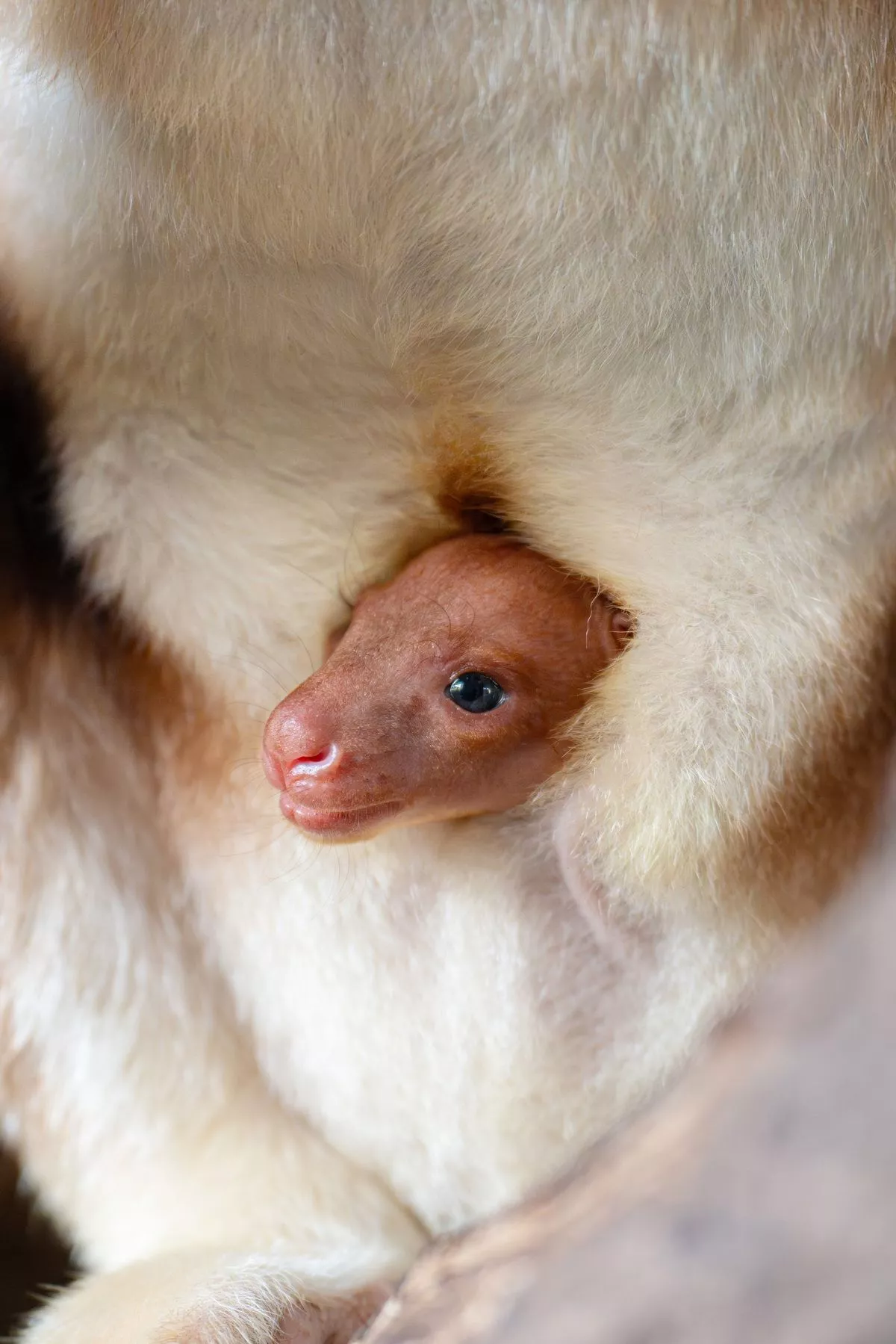
Using the ‘pouch cam’, Chester Zoo has offered a rare glimpse into the hidden world of an endangered baby animal. Keepers captured the first few months of his life using a special device. Filmed between October and December, rarely-seen images reveal the secret world inside the kangaroo’s pouch and allowed staff to identify him as a healthy male.
The joey arrived to mum Kitawa and dad Kayjo as part of an international conservation breeding programme at Chester Zoo aiming to ensure the future survival of the species. The zoo says the pouch footage and findings are expected to provide “valuable insight” for similar initiatives worldwide.
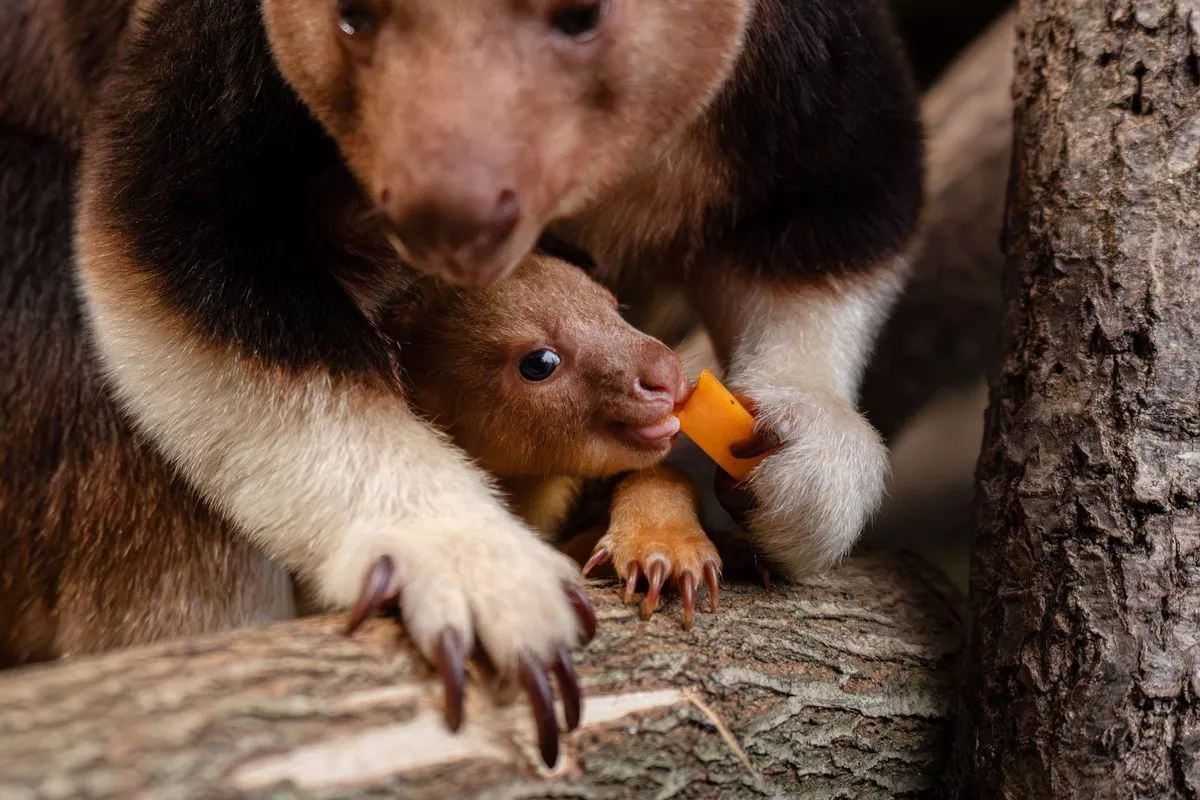
The adorable baby kangaroo has not yet been named (Image: Chester Zoo© SWNS)
Matthew Lloyd, a tree kangaroo expert at the zoo, said: “When people think of kangaroos, they rarely imagine small, fluffy animals living high in the treetops. With so little known about tree kangaroos, Kitawa’s joey is a particularly special arrival, and represents a major step forward in understanding and protecting this remarkable species from extinction.
“Being able to carefully track this joey’s development inside the pouch using tiny cameras wasn’t possible only a few years ago, and it’s already helped us learn more crucial information about the early stages of life inside the pouch – knowledge that can now support, and hopefully speed up, our conservation breeding efforts globally.
“We don’t have a name for the little one just yet, but our choice will be influenced by communities in Papua New Guinea who live alongside tree kangaroos and are now part of efforts to protect their forest homes.”
The joey only emerged from its mother’s pouch last week(Image: Chester Zoo© SWNS)
The joey, which now weighs 1.85kg but was no bigger than a jellybean at birth, spent the first months of his life developing inside Kitawa’s pouch. Experts inserted tiny endoscopic cameras into the pouch to confirm Kitawa’s pregnancy and carefully monitor her joey’s development.
It’s just the second time experts have bred the species at the conservation zoo, with only two zoos in the UK currently caring for the rare animals. Scientists helped pinpoint the best time for the two kangaroos to be paired by using hormone monitoring carried out in the zoo’s on-site science laboratory – the only facility of its kind at a zoo in Europe.
Goodfellow’s tree kangaroos are found only in the forests of Papua New Guinea and are classed as endangered by the International Union for Conservation of Nature, with populations declining due to hunting and widespread habitat loss.
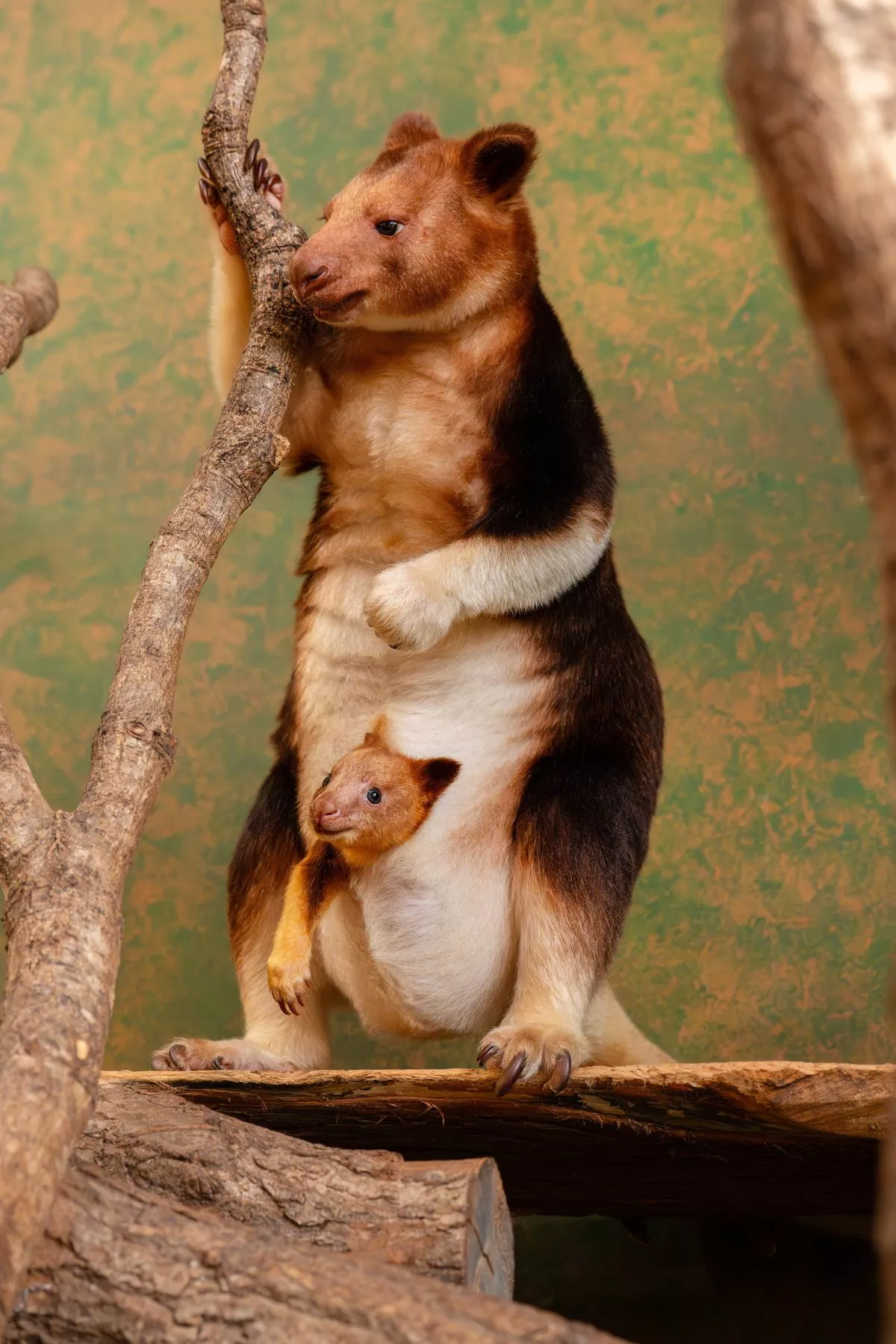
Experts say the “special arrival” marks a major conservation milestone for one of the world’s most threatened marsupials(Image: Chester Zoo© SWNS)
David White, team manager at Chester Zoo, added: “Goodfellow’s tree kangaroos don’t breed quickly, as a joey is a huge energy investment for the mother. This is one of the reasons they are disappearing from the forests of Papua New Guinea – they just can’t keep up with numbers being lost to hunting and deforestation.
“That’s why every birth like this is incredibly important. It’s been a real team effort, from zookeepers using their expert animal knowledge, to vets and scientists closely monitoring hormone levels and behavioural changes to understand the best times of year to introduce the parents.
“Everything we’ve learned so far will help conservationists around the world in securing a future for this magnificent species.”