

Your support helps us to tell the story
From reproductive rights to climate change to Big Tech, The Independent is on the ground when the story is developing. Whether it’s investigating the financials of Elon Musk’s pro-Trump PAC or producing our latest documentary, ‘The A Word’, which shines a light on the American women fighting for reproductive rights, we know how important it is to parse out the facts from the messaging.
At such a critical moment in US history, we need reporters on the ground. Your donation allows us to keep sending journalists to speak to both sides of the story.
The Independent is trusted by Americans across the entire political spectrum. And unlike many other quality news outlets, we choose not to lock Americans out of our reporting and analysis with paywalls. We believe quality journalism should be available to everyone, paid for by those who can afford it.
Your support makes all the difference.Read more
Nail biting and skin picking are not just mindless reflexes, they are survival mechanisms, according to psychological analysis of our daily habits.
There is no clear reason why people bite their nails, but there are a few theories. These include starting the habit to cope with challenging emotions, boredom and the need to keep your hands busy, as well as inheriting the habit from parents.
These behaviours may seem counterintuitive, unhygienic, and in some cases, painful. But clinical psychologist Dr Charlie Heriot-Maitland has suggested we have developed these “small harms” to protect ourselves.
“By creating a small sensation, the body is able to create an immediate physical focus and an immediate release of tension and a sense of control,” Dr Heriot-Maitland told The Independent, adding: “That is preferable to the alternative, which is just out of control, overwhelming emotions.”
His new book, Controlled Explosions in Mental Health, is divided into three main sections: self-sabotage, self-criticism, and self-harm. These could be traits such as ghosting a new friend, perfectionism and nail biting.
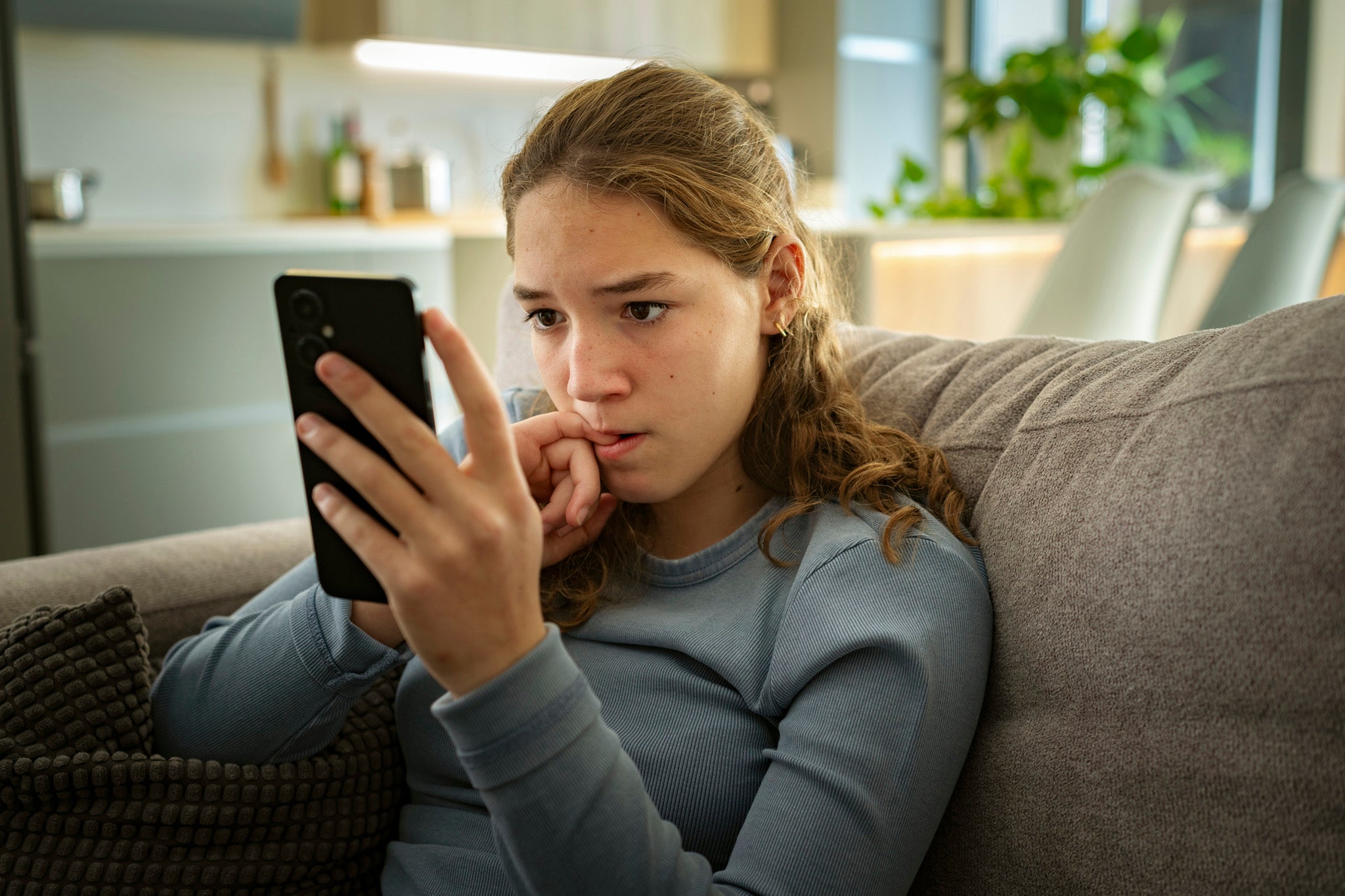
open image in gallery
Dr Charlie Heriot-Maitland has suggested we have developed these ‘small harms’ to protect ourselves (Getty/iStock)
He explained skin picking and nail biting are milder forms of self-harm which people may be able to relate to, while serious issues such as cutting or eating disorders are more extreme versions. By discussing habits such as skin picking and nail biting, he hopes people will understand more stigmatised versions of self-harm.
“If you create pain by pulling your hair, in the moment after the pain, you get relief. So it’s like you elicit your body’s natural endorphins,” he explained.
However, he suggests we do it not only for immediate relief but also as a way of protecting ourselves.
He added: “Our brain is a survival machine. It is programmed not to optimise our happiness and well-being, but to keep us alive. It needs us to exist in a predictable world. It does not like surprises. It does not want us to be caught off guard.”
This protective mechanism operates on a fundamental principle: the brain would rather deal with the certainty of a controlled, known threat than cope with the possibility of an out-of-control, unknown threat.
The science behind this theory is based on how the human brain evolved, primarily for survival rather than happiness. Brains are hardwired to spot danger everywhere, which helped the species survive. However, it now means we are extra attuned to any potential hurts on the horizon – physical or emotional.
In many cases, people who have habits such as nail biting may have initially started doing it when they felt anxious, and then it has become a repetitive action that has become learned, Dr Heriot-Maitland suggested.
While there are practical tips for kicking the habit, such as cutting nails shorter and anti-nail biting treatment – Dr Heriot-Maitland said there are no “quick fixes”.
Instead, he explained we need to “understand the function of these behaviours” and “some of the fears underneath that are being protected” rather than simply trying to eliminate them.