
 Ben Healy achieved incredible things in 2025, but he has told stickybottle, above all else, he’d love to win the Worlds. His coach outlines efforts to close the gap to the current champion, Tadej Pogačar (Photo: Thomas Maheux)
By Shane Stokes
Ben Healy had the best season of his career in 2025 but, minutes after finishing third at the world road championships, his thoughts had already moved on. What was on his mind? How he would get closer to the race winner and world number one Tadej Pogačar.
“There is still a couple of minutes to make up somewhere. I am going to have to go away and work hard for that,” he said then, showing real hunger. Healy’s ambition is clearly stated: how is he going to close the gap to a rider who is perhaps the greatest of all time?
Jacob Tipper has coached Healy since he was 16 years of age. He is uniquely positioned to assess where the Irish rider is at and where he is going, and also to lay out the route for him to try to raise his game and find that extra couple of minutes. So how does he believe Healy can approach the challenge?
“Just the same way that always has,” Tipper told stickybottle, speaking as part of a long phone call about the EF Education EasyPost rider.
“I think a lot of people like to over-complicate this. Ben is not going to suddenly start getting up at 5am and dipping his face in the water. He has always continued being aspirational, and continued wanting to push. I think that’s a huge, huge part of professional sport.
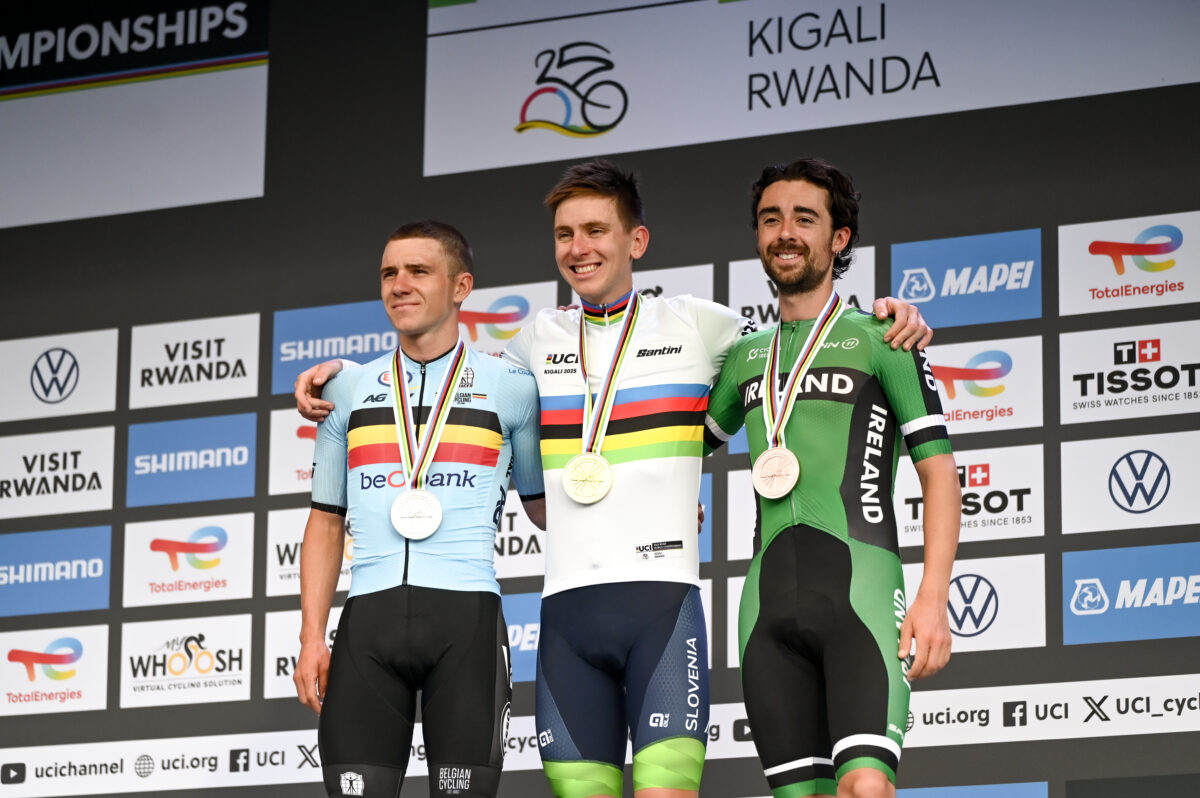 Healy on the Worlds podium in Rwanda with Remco Evenepoel and Tadej Pogačar, two of the riders he has in his sights and is pushing hard to contend with, and beat, in the years ahead (Photo: Elias Rom)
“A lot of people get to pro teams, and obviously you’re very much put into a system, and you’ve got a job to do. And sometimes your own personal development, your personal goals, become a second thought. Then through that, naturally, you don’t maybe make the full progression that you could.”
That’s undoubtedly true: the sport’s history is full of examples of talented young riders who never quite delivered on their early promise, and instead settled into life as an occasional winner or a superdomestique.
Healy is different. As team CEO Jonathan Vaughters previously told stickybottle, the squad had a very specific approach to their young talent.
In year one it deliberately asked him to hold back on his training and put him into a broad spectrum of races, sometimes at very short notice, in order to identify his strengths and to better understand how to bring him on. That paid off in spades.
“Ben chose EF for the fact that he would get some opportunity to race for himself and race the way he wants to race,” Tipper said. “That’s why he chose EF and not Ineos or other equivalent teams all those years ago.”
Building pace amid an improving peloton
The principle of building gradually but continuously applied then, and continues to apply now. Healy had the best year of his career in 2025, winning a stage of the Tour de France, wearing the yellow jersey and getting the award for the most combative rider in the race.
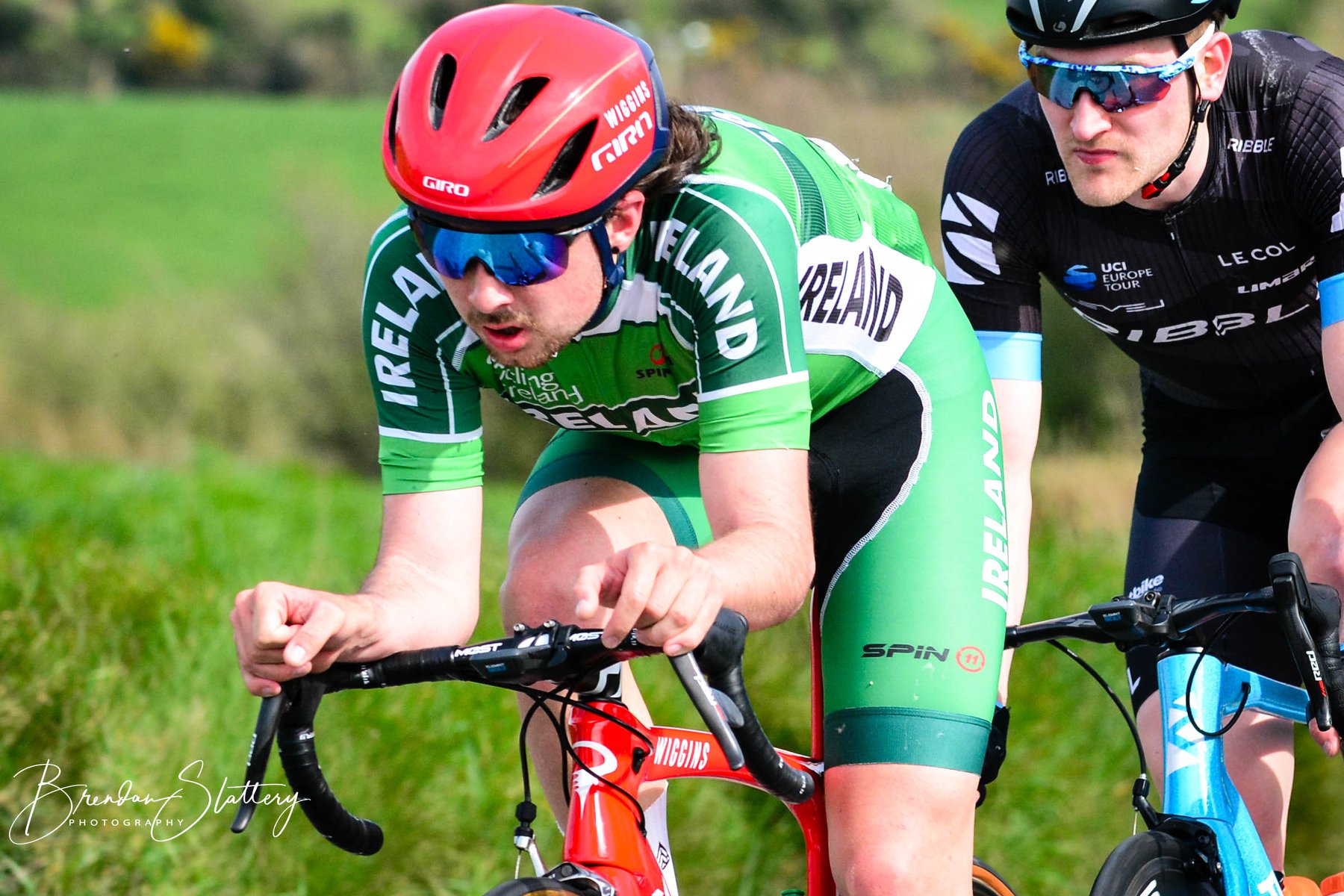 Tipper has coached Healy since he was a young U16 rider, all the way up through the junior and U23 ranks and into the pro game (Photo: Brendan Slattery)
He also finished ninth overall. Bronze at the worlds was the best Irish result since Sean Kelly was third in 1989, and taking a stage in the Itzulia Basque Country, third in Liège, fourth in Strade Bianche and fifth in Flèche Wallonne were also world-class results.
Tipper can see Healy is making good progress. Together they will focus on continuing that trend.
“We’re going to continue saying, ‘what have we done last year? What can we do differently? What’s the gap in performance? How do we close that gap, and how do we get better?,” he explained.
“Since Ben started, the level now compared to what it was five years ago is a long, long way away. So if he hadn’t always had that ambition to get better and keep improving and just settled for just being a WorldTour rider, he’d have been a long way off.”
To put it another way, staying at the same level while the peloton improves would see a talent such as his wasted. Staying hungry and continuing to work hard is really important.
“You have to be someone that has that attitude for constant progression, constant growth,” Tipper said. “To just continue pushing the right direction and to see what we can do to improve things. To make things better, look for the opportunities and go from there.”
Making crucial refinements
Healy has undoubtedly been getting stronger but a big element to his 2025 success was not down to legs alone. He’d previously taken many big victories as a result of his attacking instincts, but he had also missed out on a lot of successes due to how he rode.
He tended to attack repeatedly, and often with a diesel surge that was both easy to predict and also relatively straightforward for the strongest riders to follow.
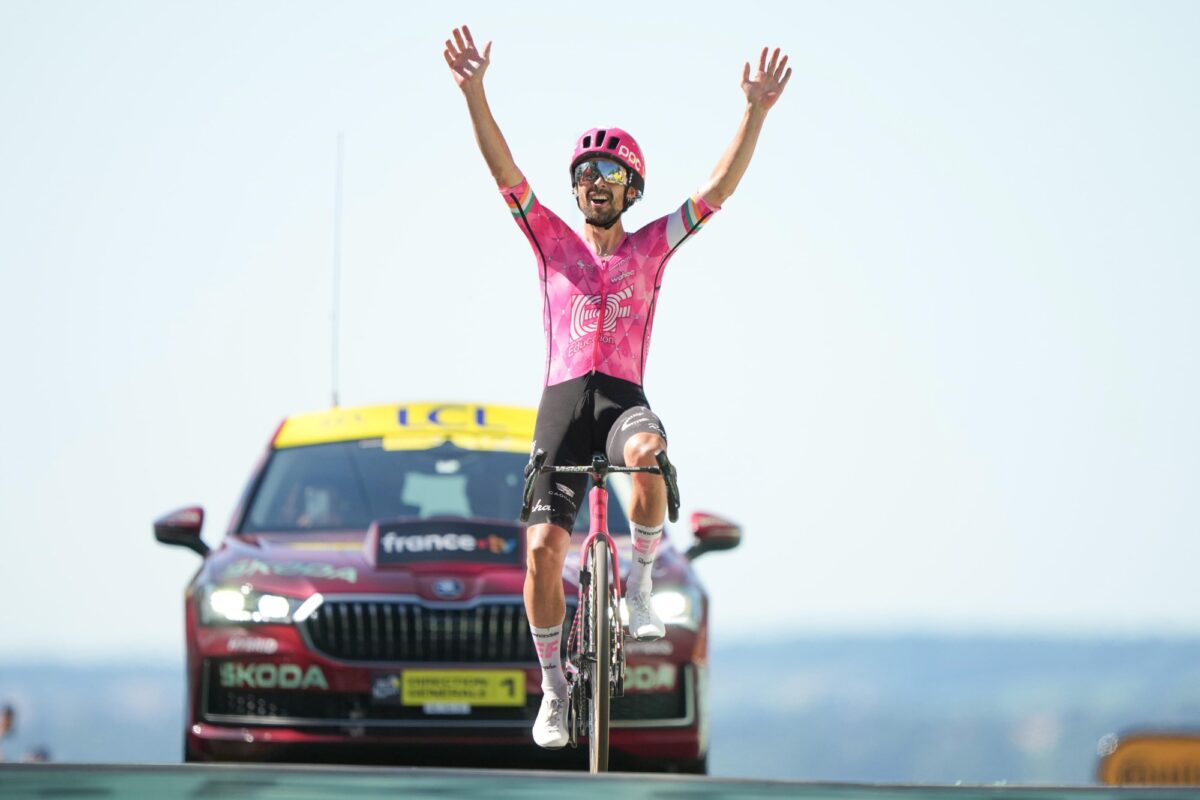 Healy’s biggest days so far may have come at the Tour de France, but he’s a rider made for the Ardennes and a hilly Worlds course (Photo: Szymon Gruchalski-Cor Vos)
That had to change, and it did. Indeed working on this aspect was hugely important in landing his Tour stage win and also in various other events.
Tipper was a big part in turning things around.
“We spent a bit of time doing a kind of video analysis,” he explained. “I went out with him before the Ardennes this year. I also met up with him before the Tour, and we sat down and really reviewed the race footage a bit more.
“We just went through the tactical side of things a bit more. It’s something that cycling probably doesn’t do the best of jobs with. With footballers, every Monday you’re into the data analysis stuff.
“How much attention the footballers are paying is probably another question, but they are doing that data analysis. They are doing that match feedback, video feedback, were you in the right place at the right time kind of thing? Whereas cycling doesn’t traditionally do too much of that.
“So we took that as an opportunity and went through the race footage. We pointed out the things he was doing that were good, and the things that he was doing that weren’t good. The team was behind this as well.”
That tactical assessment was accompanied by work with a sports psychologist. Tipper said this was to identify what mental state Healy was in when he was making repeated unsuccessful attacks in the past. “Why was he becoming a bull to a red cloth, and just going wild at times?”
With his mental and tactical approach tweaked, Tipper also looked at his physical ability. Those diesel attacks lacked a little bite at times, and so something needed to be done.
“We added a little bit of nuance to his training in respects to maybe being that bit punchier at times when he needs to be,” he said. “But obviously not too much, because it’s difficult to do that and also expect to try and keep up on the Hautacam. What God gives you on one hand he takes away with another.
“So while he’s done a little bit of punchy stuff, it was more from a technical perspective. Making sure he gets it all out on the bike, rather than a case let’s hit the gym hard and try and get bulky, because obviously that then takes away from what you need in the mountains.
“So, swings and roundabouts in that respect. We were doing what we could without taking anything away as well.”
Is time on his side?
Physiological and tactical improvements aside, there is something else that could and should see Healy inch closer to Pogačar in the years ahead. Specifically, age.
Healy is now 25. Pogačar is almost exactly two years older, both riders being born in September. Riders tend to peak around 27 or 28 years of age, and so it’s logical that at some point the world champion’s form should start to dip while Healy’s continues to improve.
Tipper sees the point, but also notes that two of the best riders in the world haven’t followed the trend typically seen in the past.
“Tadej and Remco ultimately tore that rule book up a little bit, because they were the best in the world at 22. So suddenly everyone’s going, is 27 really your peak? Because, like with football and athletics and other sports, suddenly there are 22 year olds who are the best in the world.
“So actually, is the peak 27, 30? Is it 22 that’s the best? The fact that Pogačar has continued getting better maybe means that it isn’t 22, that they are just such freaks that they will be so good at that age. We just don’t know.”
In ways it doesn’t really matter: all Healy can do is keep plugging away. All he can do is control what he can control.
“We’ll just continue pushing in the right direction and see what happens,” Tipper said. “It’s a good and terrible part of endurance performance, full stop. You never know … you keep pulling the levers and hoping for the right results. You’re making the best educated decisions that you can by being aspirational, by having these goals and aims.
“But ultimately you never know that what the outcome is going to be. Ben’s the one that’s happy to keep looking and keep trying to find and fight for those gains. As long as he has that attitude, then hopefully there’ll be more to find.”