
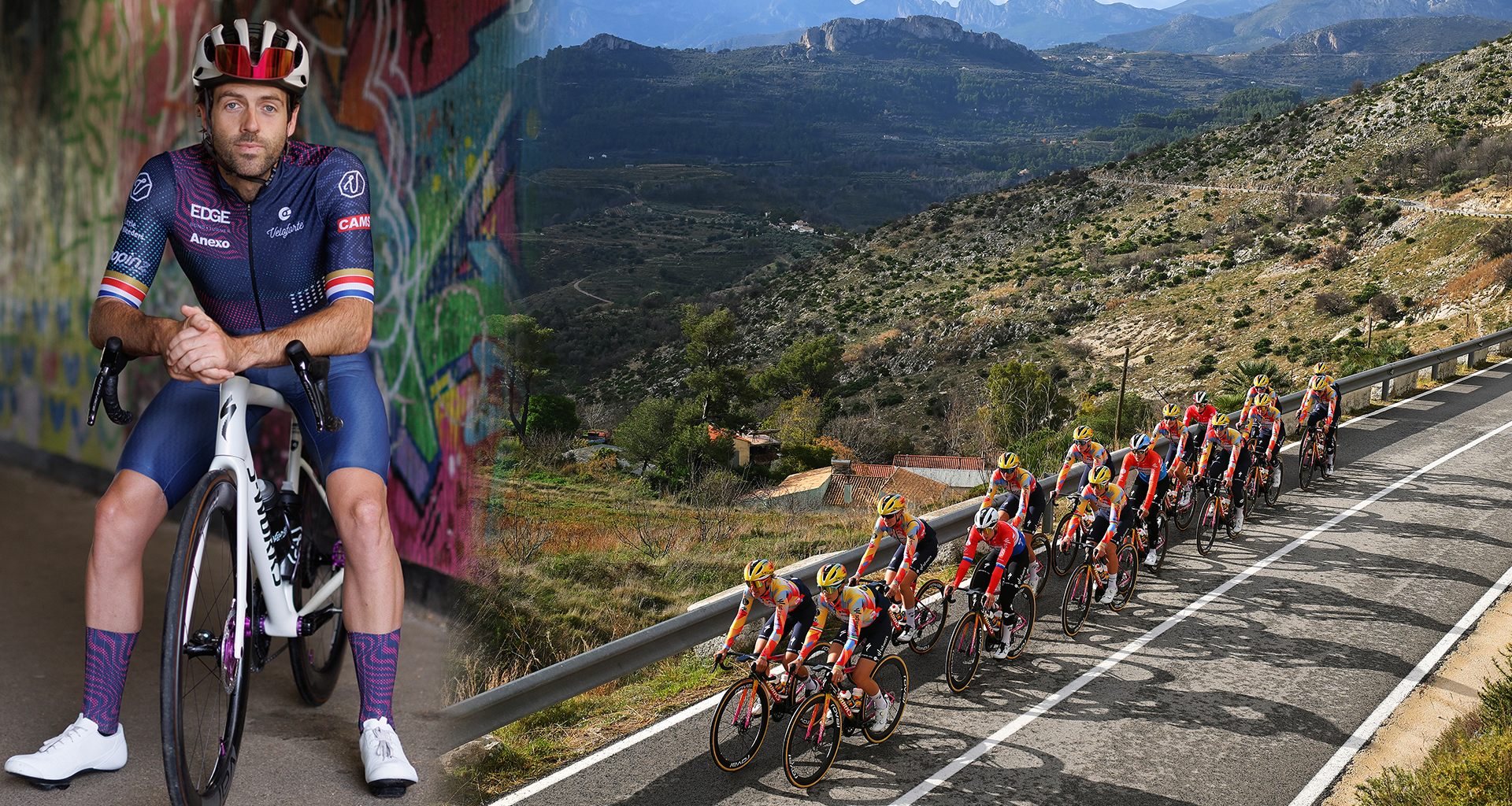
I’m writing this sat on a ‘Nothing beats a Jet2 holiday’ plane – try saying that not to the tune of the viral advert! I’m en route to Calpe, or Altea specifically, a coastal town on Spain’s Mediterranean coast, for XDS Astana‘s January training camp.
I’ve been told to have a great holiday on multiple occasions by their friendly staff. I laughed internally at the reality; a holiday it is not, but it doesn’t quite feel like work either. I’ll land at a similar time to some riders, such is the logistical masterpiece put together by my colleague Francesca and the rest of the team’s staff who organise the camp.
This time last year, I found myself hesitating when I realised it was now me who should be taking Harold Tejada’s case for him. I’m pretty sure I did, and that was a real line in the sand at the start of this chapter with XDS Astana. Winter training camps can vary across different teams, and, surprisingly, Calpe is not a destination I ever found myself training as a pro.
And then there was Movistar. Zero winter team training camps during the five years I was there – not a single one. Movistar would have a four-day get-together in October or November to rattle through bikes and kit, team meetings and photos and then say, ‘see you at the races’.
This is laughed at by many until I remind people of Movistar’s brilliant successes over those years and explain the logic I thought was behind it.
Firstly, the December camp is the single most expensive team endeavour of the year. Depending on a team’s size, between 60 and 150 employees require flights, food and accommodation, so the costs are eye-watering. Movistar did away with that, so that’s either less funding required from sponsors, or it can be invested into gains elsewhere, such as riders, research and development, extra races, or altitude camps in the season.
‘But what about the riders and team bonding, the training they’ll do?’
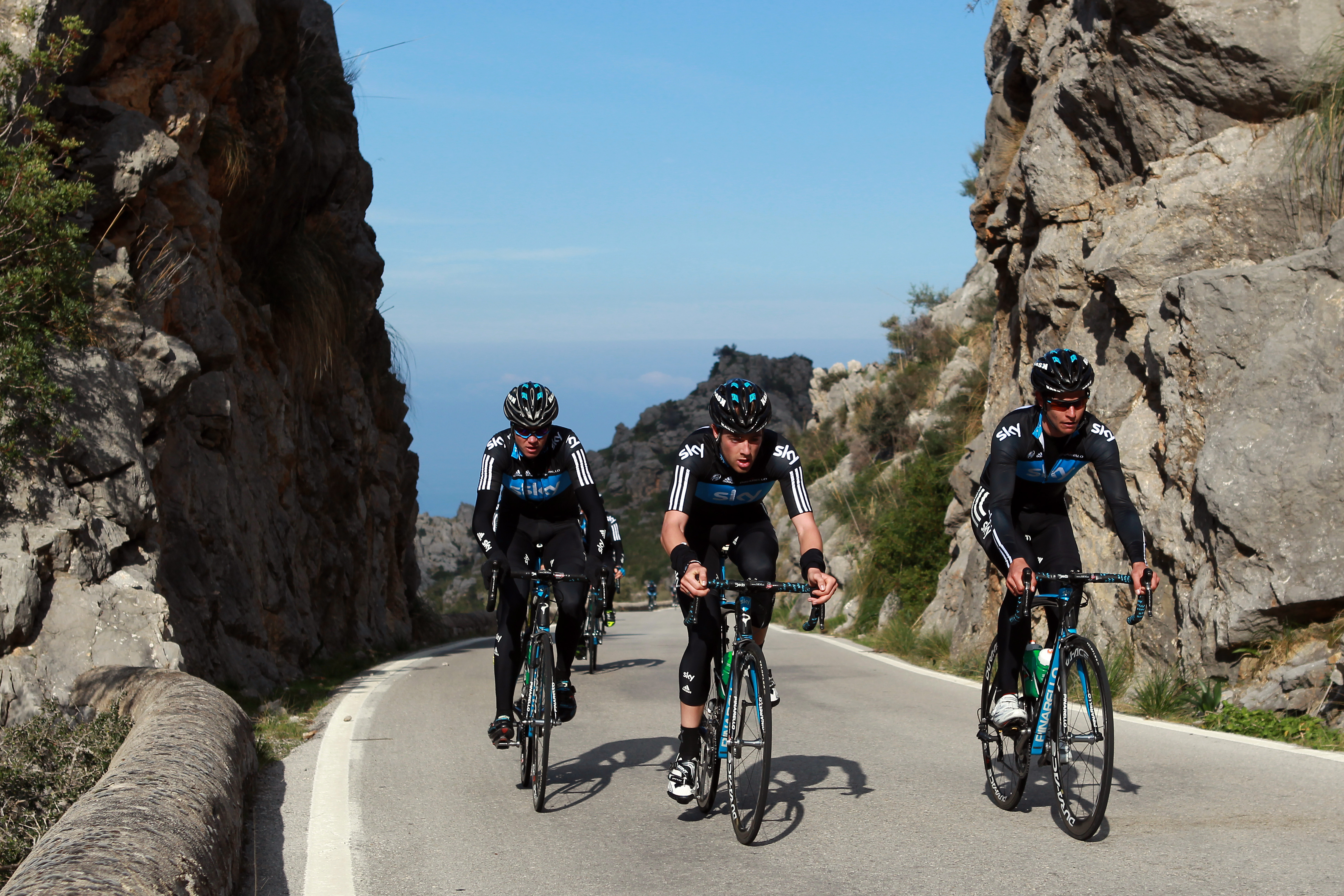
Back in 2011, at Team Sky’s January training camp in Alcudia, Mallorca (Image credit: Bryn Lennon/Getty Images)
Well, I think the logic was that no WorldTour pro made it into the ranks by chance; there’s a certain work ethic that exists across the board, that’s how and why they turned pro, and they don’t need a camp to get the work done. They’re coached by the team, but ultimately they and they alone have to ride the bike and do the hours, so they are trusted to turn up fit and ready, and they usually deliver. If they don’t, then contracts don’t get renewed; it’s as simple as that.
Thirdly, a lot of pros already live somewhere suitable to train, and if they don’t, then they’ll likely get themselves there. I was the latter and spent weeks in Lanzarote and even spent Christmas in Mallorca once. Heck, in the Zwift era, modern-day cyclists are perfectly happy indoors as well.
My fourth and final point is around team bonding and rider happiness. Movistar had a very high retention rate in riders, so there was always a familiar face, but here’s where the non-camp magic occurred. Movistar usually shone between August and October, and OK, they would naturally be expected to perform well at their home Grand Tour of La Vuelta, but the Tour of Guangxi or Tour of Beijing were also often a success too.
It comes down to rider happiness. It’s a long season with a lot of time sacrificed being away from home and family. I think Movistar valued that highly and felt that the riders spent so much time away once the season was underway that more wasn’t perhaps beneficial. Happy riders win bike races, and I think that was Movistar’s logic, or at least part of it.
January camp sees an intensity lift
So after waxing lyrically about the ‘Movistar Methodology’, let’s get back to how we’re doing things at this camp, why it’s important and why it works. Never has the saying ‘there’s more than one way to skin a cat’ been so true. We are always trying to find single-digit percentage gains, and these camps are part of that.
There are so many different aspects that both the riders and we as staff value from these weeks. Whether it be the training quality, the direct feedback we can receive from riders while on the road and the ability to act upon it quickly to accelerate development or the togetherness, friendships, and team cohesion that can develop.
Refining time trial positions, education sessions, and season planning, whilst face-to-face, are other examples. Any new faces in the team become ingrained quickly.
Calpe is the epicentre of it now for most teams, and I can see why. It’s not on an island, so the team’s infrastructure can travel easily there. The weather is good – not good enough to wear shorts and a jersey like on the Canary Islands, but still very pleasant. Terrain, road quality and route options are perfect, and honestly, it’s much like Mallorca, where the quantity of cyclists means that drivers really do take care around them.
We will split the team into three or four groups for training; usually, climbers, non-climbers and the Tour Down Under team. The coaches carefully craft the routes and efforts that’ll be taken on each day, and everything else slots in around that: massage schedules, bike fitting, meetings about every aspect of racing and the season ahead. It’s hugely productive.
My job here is to personally deal with aero testing, bike fitting, team time trial and time trial simulation days, and one-to-one work with riders who need it. I also head out on a moped to take video footage and get feedback from riders in the moment, so it’s not forgotten by the time they return to the hotel.

XDS Astana during the team time trial at Paris-Nice last season (Image credit: Anne-Christine Poujoulat/Getty Images)
The December camp usually includes a bit of a social outing for staff and riders to encourage team bonding, while in January, you will find riders are keener to head to bed than to stay on after dinner for more chats, such is the intensity lift in training. It’s an intense 12 days for all. I personally come away from it as shattered as if I were a rider, but fulfilled. Seeing the smiles on riders’ faces as equipment is dialled in and they’re hitting good numbers is a lot of fun to see.
So too are the wide-eyed realisations of the neo pros as they’re given support and tools they’ve never had before to take their dream to the top level of the sport. Marco Schrettl is one of XDS Astana’s new recruits and is visibly buzzing over the opportunity he has, and we’re all excited to see what he makes of it.
The captain has just signalled that there are 10 minutes to go until we land, so I need to tuck the laptop away and get ready to take a rider’s suitcase at the airport before starting January camp once again.
Nothing beats an XDS Astana Training Camp – I hope you sang that in your head to the Jet2 soundtrack.