

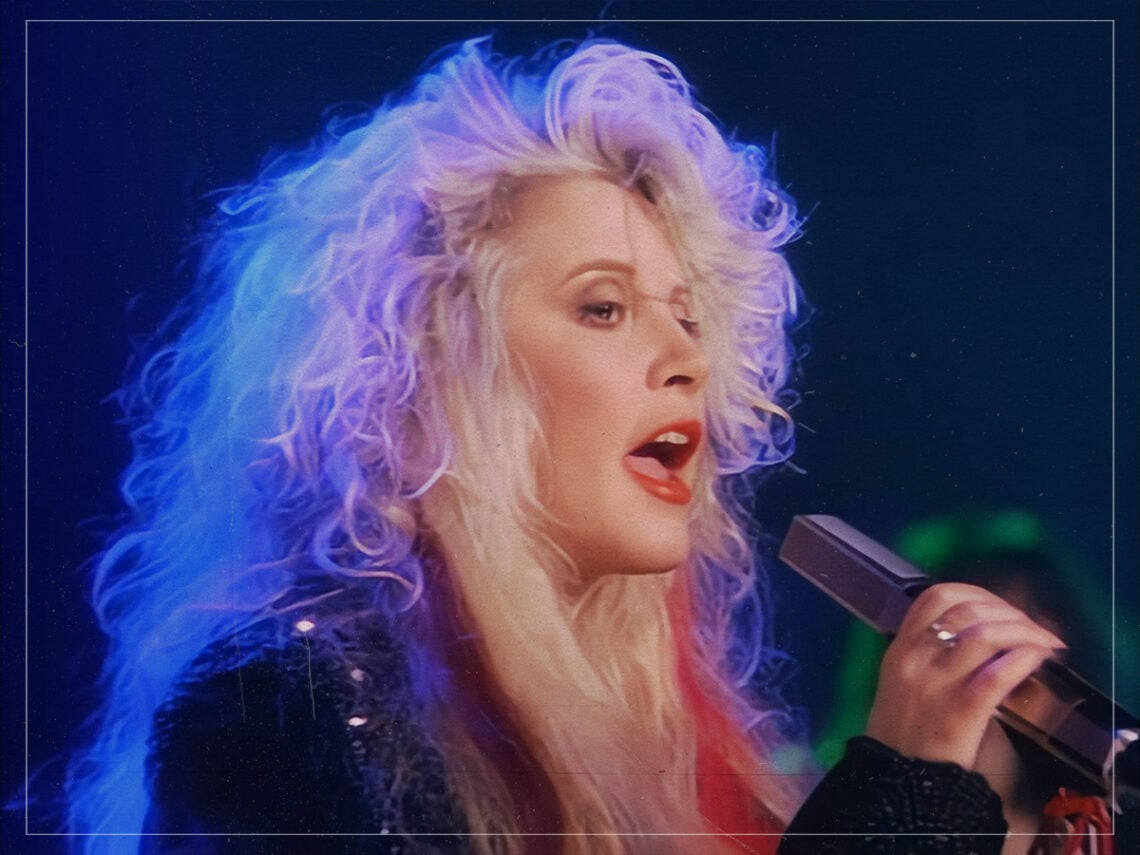
(Credits: Far Out / YouTube Still)
Thu 15 January 2026 17:00, UK
When Stevie Nicks released Bella Donna in 1981, Fleetwood Mac would have rightly been fearful that the future of their band was going to be stripped away from them. Nicks’ record was a triumphant showing of her ability as a solo artist and gave her a much-needed sense of sonic liberation after nearly a decade of creative trauma.
For all her greatness in Fleetwood Mac, she was somewhat of an artistic prisoner, bound by her own trauma as a means of writing great songs. As the 1970s drew to a close, however, the necessity of that entire experience became questionable.
Her ex-partner, Lindsey Buckingham, was thrusting the band into the realms of his own creative crusade, and having spent the last five years writing the group’s biggest hits, Nicks would have rightly questioned whether that was getting the best out of her.
A question soon answered when she got a chance to step out of the Mac bubble and finally lay down her own album, Bella Donna. Despite collaborations with Tom Petty and Don Henley, this was Nicks are her purest, showcased best in her triumphant lead single ‘Edge Of Seventeen’. It combined the raucous riffs of the hard rock she loved, while openly celebrating the sort of melodic mysticism that she prided herself on, it’s a track that has since gone on to become her soundtrack.
But while it sounds inherently Nicks, the truth is, the idea of the song was inspired by another band. “Stevie wrote the song after hearing The Police’s ‘Bring On the Night’. She was very inspired by the echo-driven guitar track that Andy Summers played, that rolling and repeating kind of sound. [Producer] Jimmy Iovine played the demo for me,” the guitarist Waddy Wachtel explained.
He continued, “It was very intense and dramatic, and he said, ‘I want it like that.’ I told him, ‘Well, I don’t use echo, so I’ll just play it.’ He was like, ‘What do you mean? You can play that without echo?’ So I showed him how I wanted to play it, really strong and forceful. Then the band went out – it was me, Russ Kunkel [drums], Bob Glaub [bass], Bobbye Hall [percussion], Roy Bittan [piano] and Benmont Tench [piano, organ] – and we just nailed it.”
But after Wachtel’s session, his original interpretation of The Police’s track got lost. While in that anecdote, he claims that Iovine played him a demo as a means of inspiration, he has since claimed that the final mix of the track veered too close to the territory of plagiarism and lost sight of the originality of his own interpretation.
Years after the release of Nicks’ track, Wachtel claimed, “I had the radio on, and on comes what sounds like ‘Edge of Seventeen’ – and all of a sudden, there’s Sting’s voice! I thought, ‘We ripped them off completely!’ I called Stevie that night and said, ‘Listen to me, don’t ever do that again!’”
When you compare both songs in the finished formats, they have completely different feels, with The Police’s number being more mid-tempo and muted, while Nicks’ was heavier and more energetic. But understandably, for a craftsman like Wachtel, it’s hard to look past the individual elements of the guitar sounding so alike.
Related Topics