
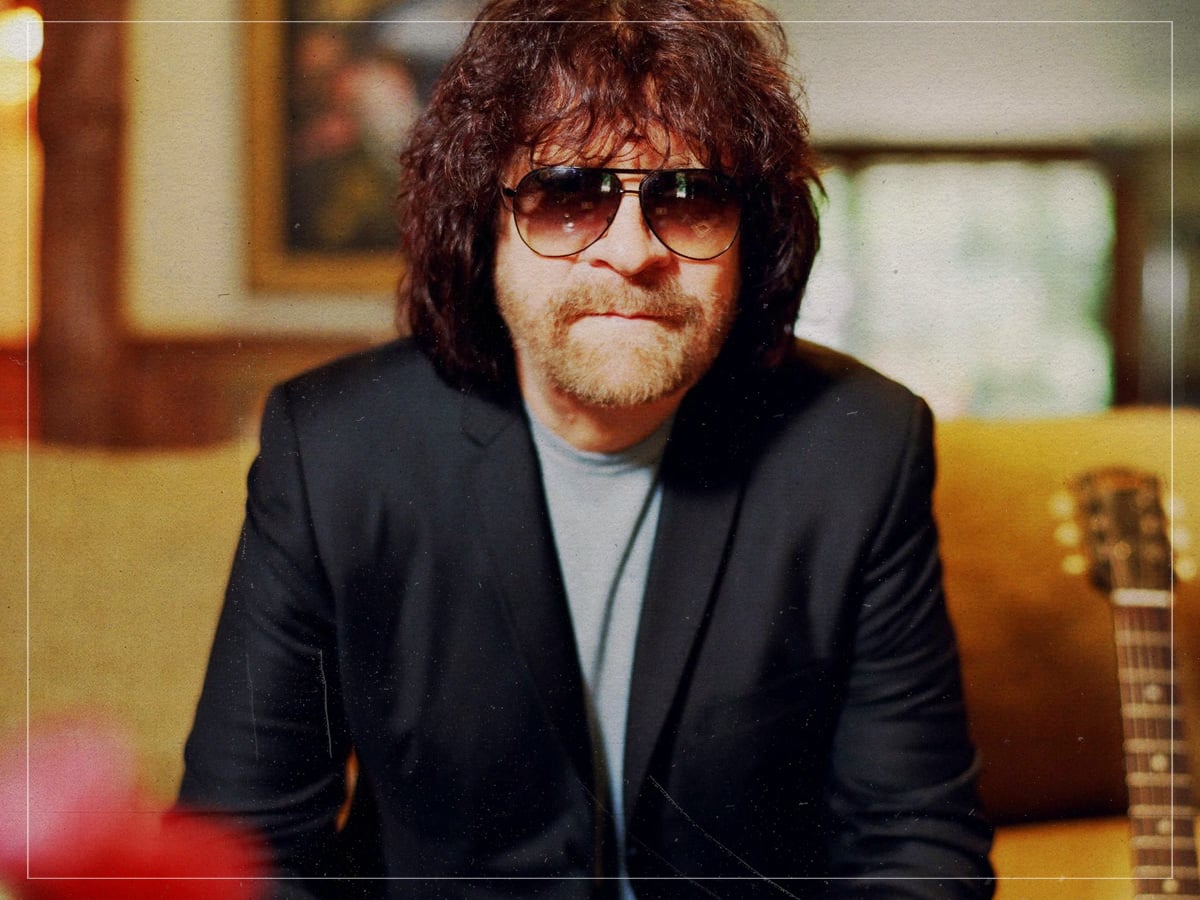
(Credits: Far Out / Jeff Lynne)
Sat 17 January 2026 17:12, UK
In a world full of hard rockers in the 1970s, there was nothing that was going to stop Jeff Lynne from being one of the best artists the world had ever seen.
He had studied what made rock and roll so exciting for him back in the day, and by the time he started making his own classics, he seemed to be checking off all the boxes that his favourite artists never managed to reach during their time together. The world was his oyster in many respects, but Lynne felt that he wouldn’t have ended up making the kind of tunes he did in a million years when he first started.
While The Move gave him a great place to hone his craft before he formed ELO, it’s not like every one of their songs as exactly a musical symphony or anything. They were still indebted to the bluesy sounds of England at the time, but when listening to a song like ‘10538 Overture’, Lynne was ready to leave that in the dust. The tone was still rock and roll, but it had a lot more to do with the kind of swagger that Lynne had whenever he arranged the strings to play Jimi Hendrix-style guitar licks.
And once the band really started to take over the world, you could hear them slowly starting to embrace rock and roll textures a lot more. ‘Can’t Get It Out of My Head’ was a much more straight-ahead pop song, but on tracks like ‘Rockaria’ and ‘Don’t Bring Me Down’, it was about creating a wall of sound in the same way that Phil Spector did, only this time with the same kind of construction as a classical piece of music.
So when he decided to step away from singing and become a producer, Lynne had already done a lot of the dirty work when making his own records. He knew the science behind what made people love pop songs, and when working with George Harrison, Roy Orbison, and Tom Petty, he was starting to fall in love with the construction of songs. Not everything had to be an orchestral suite, but there would always be a few chords that perked up everyone’s ears when they first heard them.
Which probably explained why Lynne first started to move into easy listening music on his sophomore solo album, Long Wave. A lot of those songs predated rock and roll, and while Lynne does a gorgeous job bringing songs like ‘At Last’ and ‘Love is a Many Splendored Thing’ to life, he was the first to say that he wouldn’t have been caught dead making this kind of record at the start of her career.
In his mind, this was music for his parents, and it was practically the opposite of cool when he first began, saying, “A lot of these songs I hated as a kid, like ‘If I Loved You’. I also never thought I’d be singing ‘Beyond The Sea’. But if you listen to the strings in the middle, they sound like ELO. It’s only when I discovered how to play the songs that I fell in love with them. It’s the way they’re constructed that intrigues me.”
A lot of the arrangements were a bit unusual for the time, but it also wasn’t all that different from what The Beatles had been doing towards the end of their career. No one had any reference point for what the medley on the flipside of Abbey Road was like, but the musical framework of it seemed to be indebted to the same pop geniuses that had constructed songs like these, only extended for 17 minutes.
So if there’s one thing that Lynne learned from making Long Wave, it was about never discounting a genre of music on principle. A Bobby Darin song would have been the exact opposite of rock and roll, but once you peel back the layers of everything, there’s a work of genius going that no one would have ever thought of before.
Related Topics