

Security officials are working on more than 100 investigations into Britons suspected of spying on behalf of Russia, Iran and China, a senior police chief has revealed.
Since the 2018 Salisbury novichok poisonings there had been a sharp rise in foreign states recruiting people from criminal, corporate, financial and even legal backgrounds to carry out espionage, sabotage and assassination plotting on British soil, said Commander Dominic Murphy, head of the Metropolitan Police’s counter-terrorism squad and in charge nationally.
Officials were conducting about 160 investigations into security threats linked to enemy states, the vast majority of which concerned suspected proxies in the UK, he said. In some cases Britons had been unknowingly recruited to feed information to foreign governments.
“We’ve seen a significant increase,” said Murphy. “Every single week we’re working on proxy-based investigations. It does form the majority of what we’re doing.
“The breadth of activity is so significant. It goes from very low-level information acquisitions, and that can be cyberattacks, or it can be trying to turn somebody inside an organisation … right through to an assassination plot in the United Kingdom.
“There are disruptions happening on an extraordinarily regular basis. Almost every month we’re disrupting something — and often much more regularly than that even.”
The warning from Murphy, head of Counter Terrorism Policing London, follows a rare statement made by the new head of MI6, Blaise Metreweli. She said that the UK faced an “age of uncertainty” as the rules of conflict were being rewritten by Russia and other hostile actors.
In recent years several Britons have been charged with espionage. They include Dylan Earl, 21, from Leicestershire, who was recruited by the Wagner Group, a mercenary organisation with ties to the Kremlin, and instructed to carry out arson on a London warehouse storing aid for Ukraine.

Dylan Earl
METROPOLITAN POLICE/PA
Earl was convicted in October under the National Security Act 2023, which was designed to tackle threats that fall short of traditional spycraft and third-party actors not working directly for a hostile state.
This act has empowered security officials but the risk posed by foreign states and their proxies is only going to increase in the years ahead, Murphy predicts, as a result of political instability in the Middle East, the war in Ukraine and the mass expulsion of foreign intelligence officers from Britain following the Salisbury nerve agent poisoning — a failed assassination attempt on Sergei Skripal, a former Russian military officer and double agent for British intelligence and his daughter, Yulia.
“Because of what we’re seeing playing out in the political and diplomatic sphere around the world at the moment means … the [proxy] threat will grow and it will be more challenging going forward,” Murphy said.

The warehouse in Leyton, east London, was targeted on behalf of the Wagner Group
LONDON FIRE BRIGADE/PA
His intervention also comes amid heightened anxieties in Westminster over the extent and reach of Chinese spy operations in Britain. In November, MI5 warned that various parliamentarians had been targeted on LinkedIn by Chinese agents posing as headhunters.
• How Chinese spies seek state secrets with LinkedIn ‘headhunters’
Before that, two British men were charged with passing sensitive political information to a Chinese intelligence agent. The case was later dropped by prosecutors. They denied the charges.
Critics have meanwhile warned that Beijing’s efforts to construct a new super-embassy in London will, if approved, embolden Chinese espionage and interference in the UK.
Murphy said China was one of “the big three” for conducting proxy operations in the UK, alongside Russia and Iran.
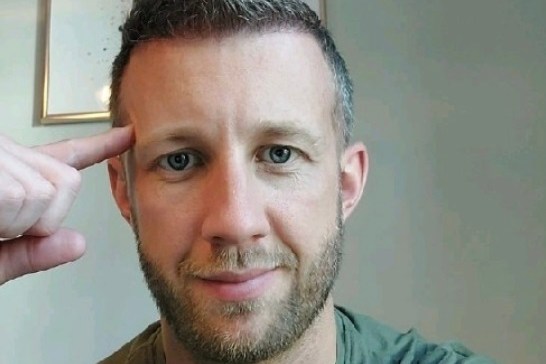
Matthew Trickett, a Home Office immigration officer, was found dead after being charged
In May 2024, Matthew Trickett, an immigration officer and private detective, was charged with assisting the Hong Kong intelligence service. He was found dead a week later in a park in Maidenhead.
Months after Trickett’s death, Daniel Khalife, a former British soldier, was found guilty of spying for Iran over a two-and-a-half-year period, during which he passed information to Tehran, including the names of elite special forces personnel. He was sentenced to 14 years in prison in February.
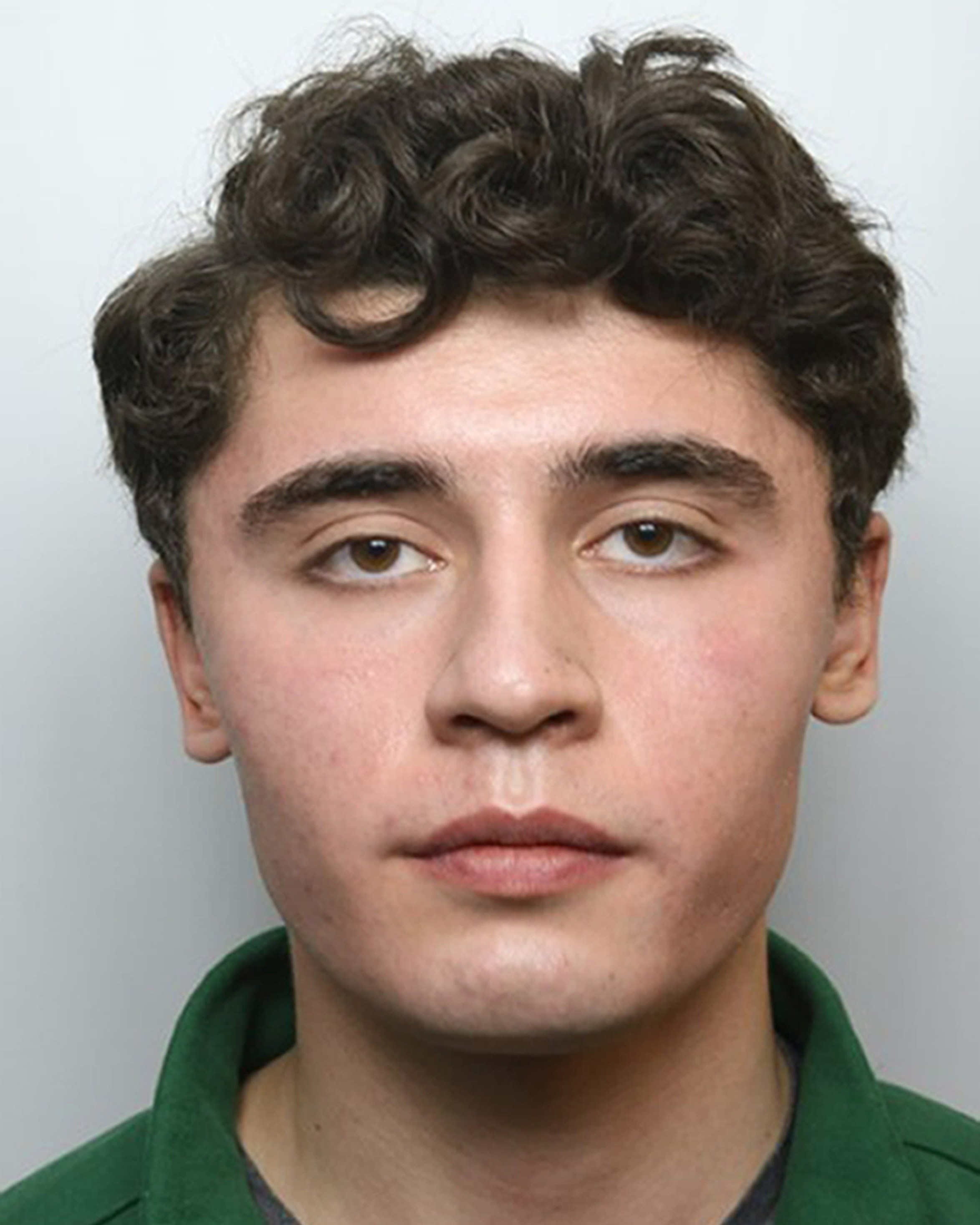
Daniel Khalife
METROPOLITAN POLICE/PA
“Particularly as it relates to Iran and Russia, the vast majority of our investigations have at their heart some kind of proxy in the UK undertaking activity on their behalf,” Murphy said. “Where physical things are happening in this country, it is mostly now proxies doing that work.”
He said Iran was especially active in using proxies to target Iranian dissidents living in Britain. “The Iranian threat in that respect is quite substantial,” he said.
But how Tehran’s covert activities in the UK might be affected by the ongoing protests is not clear. At least 2,400 protesters are reported to have been killed in Iran during more than two weeks of nationwide unrest that has threatened the rule of the Islamic regime.
Many of those being targeted and recruited by foreign intelligence services are ideologically ambiguous and are largely motivated by money, according to Murphy, who described the relationship between the proxy and their handlers as “quite transactional”.
“We’ve seen all sorts of people in the United Kingdom being contacted by foreign governments to act on their behalf,” he said. “We’ve seen people who are here claiming asylum. We’ve seen criminals — but they’re often on the periphery of crime … We have arrested some teenagers, sometimes even as old as thirties or forties. But you don’t see very much ideological focus.”
Proxies are predominantly recruited online through social media platforms such as Telegram, which is popular among criminal groups because of its weak identity verification demands and large, poorly moderated public channels.
“Most of the time, this is very much an online environment,” said Murphy. Telegram channels being used by foreign intelligence agents to recruit proxies were constantly being shut down before reappearing elsewhere, he added.

There are fears that Beijing’s new super-embassy, if approved, could embolden Chinese espionage in the UK
“We’ve got to be really agile to ensure that we’re keeping pace with how technology changes and the different ways people communicate now.”
He also expressed concern that the algorithms used by social media were fuelling the ease with which Britons and foreign intelligence agents were connecting with one another.
• The risk of bringing spies in from the cold
“If someone is trying to understand how they can earn some money and do stuff on behalf of other countries, I’d hate for there to be a situation where the internet service providers or social media companies were pushing content towards those people,” he said.
Not all of those recruited as proxies are aware of their involvement in espionage. Murphy said they had uncovered cases in which private detectives had entered into business with companies linked to foreign states and were tasked with collecting information.

China is seen as one of “the big three” for conducting proxy operations in the UK
CBRE
“As far as the private detective is concerned, they’re working on a debt recovery operation or a business deal that’s gone wrong,” he said. “They’ve been asked to do some due diligence around the company that the foreign state is interested in, and it’s all done under the guise of legitimate corporate security work.”
He said “legitimate” businesses in the legal and financial industries had been similarly targeted. “There are so many of these opportunities for foreign countries to reach in and do this [espionage] legitimately.”
Murphy added: “People do need to wake up to the way in which Russia particularly, but other countries too, are operating differently now and how vulnerable they could be to committing serious offences without really realising.”