
What lies beneath Antarctica’s immense and impenetrable ice sheet? Until now, we didn’t fully know, but a new, groundbreaking study reached deeper than any other to discover a hidden world that might hold the key to predicting the future of the continent, as well as our world.
In a new, groundbreaking study published in Science, authors explained that “less is known about the topography beneath the ice of Antarctica than any other planetary surface in the inner solar system.”
As the least studied region in the known universe, this mysterious area, cloaked by the Antarctic Ice Sheet, “offers critical insights into its geological history and influences how the ice reacts to climate changes,” as study authors continued.
Scientists ventured into our planet’s icy frontier with satellite data and physics. They deciphered the complex movements of the ice as if reading a secret language, creating a map of a subglacial wonderland of mountains, deep canyons, and rugged hills, as per the BBC.
And this sub-surface map of Antarctica would aid climate scientists in understanding how glaciers will move as the ice continues to melt under the threat of climate change. The urgency surrounding the speed of their disappearance is one of the most significant uncertainties confronting us today.
Did these scientists just break new ground?
Is Narnia actually under Antarctica?
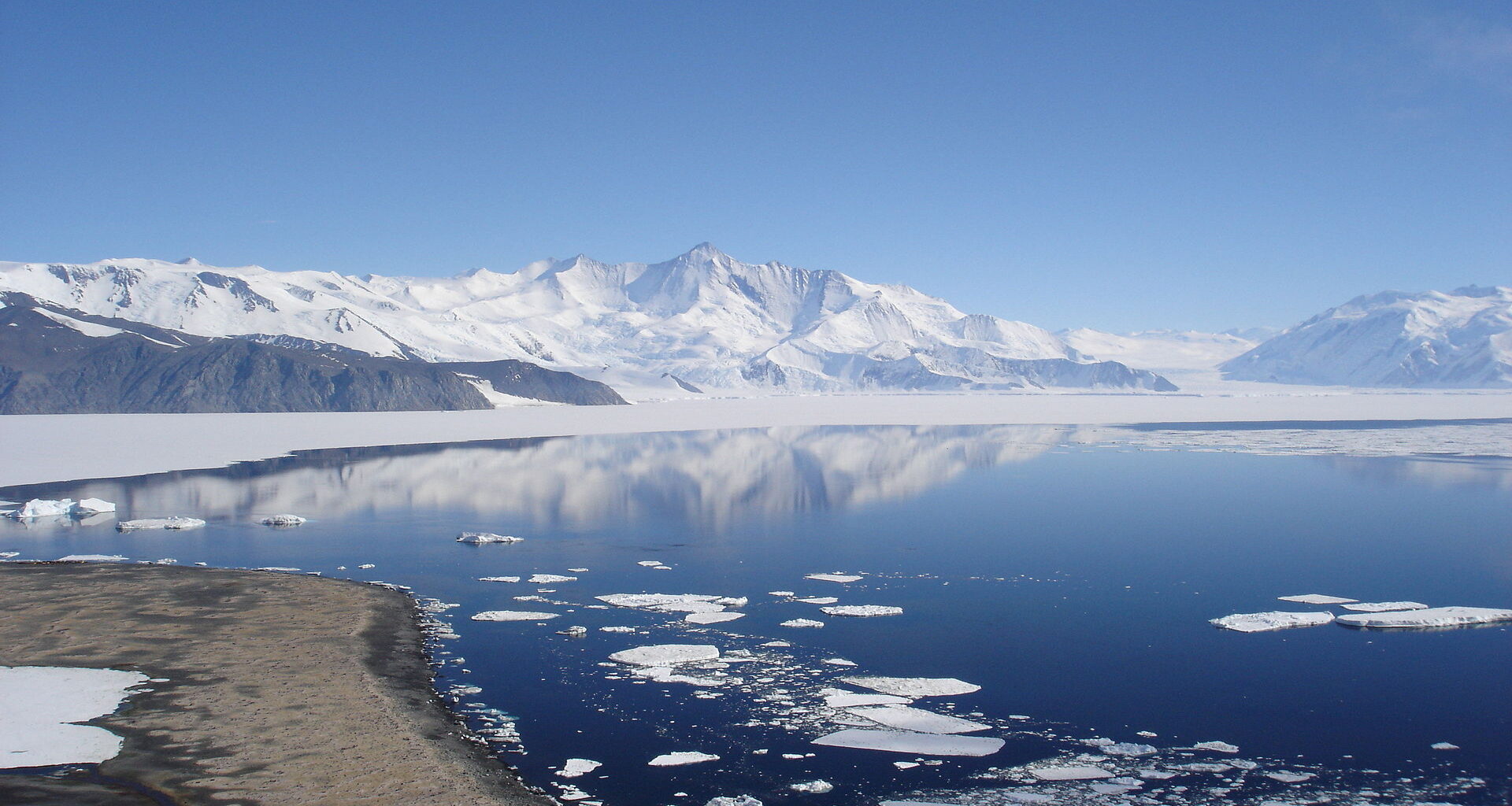
Antarctica has long sparked the imagination, characterized as the Earth’s southernmost, coldest, and driest polar desert. Ancient glaciers, expansive ice shelves, and towering mountain ranges create an awe-inspiring landscape. It also serves as a sanctuary for unique wildlife, including penguins and seals, while being a hub for extensive international scientific research.
Although previous surveys have provided insights, a lead climate scientist said to the BBC that the latest map was “a really useful product” because it fills crucial gaps that have persisted for decades. No researcher had penetrated these depths or mapped the ice sheet’s underlying terrain in such vivid, thrilling detail.
The research team analyzed the surface using high-resolution satellite imagery, followed by a technique in physics known as Ice Flow Perturbation Analysis (IFPA). They traced the landscape by studying how the ice moved around it.
Beneath a colossal 5.4 million square miles of ice sheet, the study documented a staggering 71,997 hills and mapped a valley that stretched 248.5 miles within the Maud Subglacial Basin. Beneath Antarctica, river channels stretched hundreds of miles, and some regions even evoked alpine landscapes, Live Science reported. Detected transitions between highland plateaus and low-lying basins revealed tectonic boundaries that hint at the dynamic geological processes at play.
Indeed, an entire world awaited researchers beneath the surface that exercised a direct influence on the surface.
The key to climate change
The wealth of valuable information unearthed by the study stands to become as immense in significance as the map, as the rapidly melting Antarctic ice remains one of the era’s biggest concerns.
As the BBC elaborated, this hidden topography will significantly influence the movement of glaciers. But most importantly, the speed at which they might disappear and displace themselves.
With the map, scientists can improve their predictions on how swiftly the Antarctic ice will contribute to global sea-level rise.
Read the study in Science.