
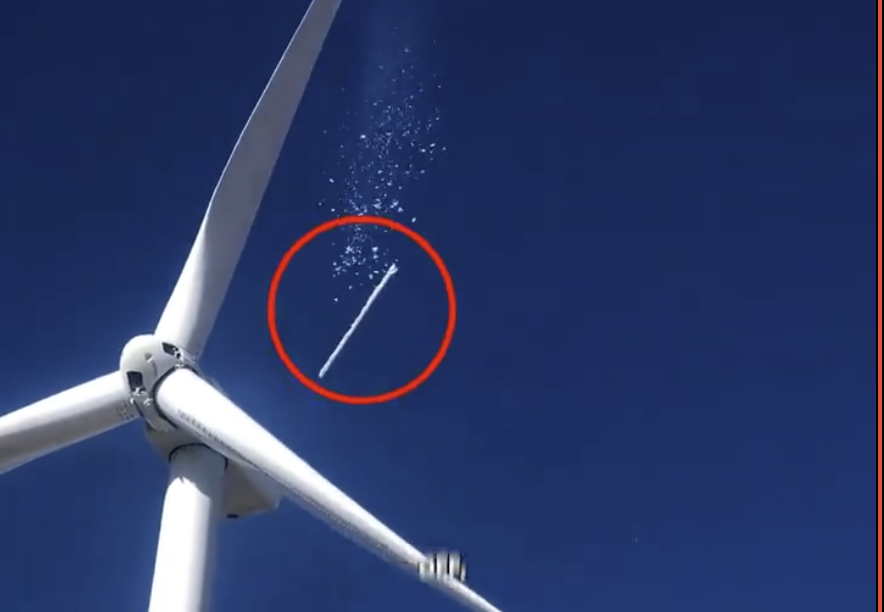
A recent TikTok video by @now.see8, which appeared a few days ago, served as a warning about the dangers of approaching a turbine after a snowfall. While snow is often seen as being dangerous when it is lying in heaps on your porch, snowfall can be even more dangerous when a snow blanket falls on a wind turbine. Two teens showed what could happen if you find yourself too close to a wind turbine after a snowfall. The risk is surely not one to be underestimated.
A relatively calm scene masking true danger
As per the video posted by a U.S. TikTokker, it becomes clear that the sight of a wind turbine after an icy storm may seem peaceful; however, this is not the case at all. Wind turbines that are far away look as if they have heaps of snow just frozen and stuck to them. While this sight may seem completely harmless, this is not really the case.
The social media post revealed the dangers of a wind turbine with blades that were not even moving. The reality is that snow does not simply melt away evenly when it accumulates on the blades. If the turbine rotates, the danger can be all the more since this ice can become dangerously loose.
Curiosity is turning into a rather close call with reality
Curiosity can lead to rather important observations. With 4,554 views, the reality of how dangerous wind turbines can be after an ice storm is reaching many citizens who are advised to take caution when walking underneath or too close to turbines after a snow storm. The video depicts two teenagers merely escaping what could have been far more harmful.
The more modernized wind turbines are designed with safety features and are kept at a distance from the roads, homes, and public areas. This reduces the risk of people or animals being injured by being too close to a turbine. However, this safety measure only works if citizens understand the reason why such turbines are placed away from humans and human activity. If safety measures are not taken seriously, and people walk too close to a turbine, they are putting themselves directly in harm’s way.
The lesson that can be learnt from a simple social media video
Although the shocking footage shared might seem like it is there to garner more likes, it does teach us a lesson. The truth is that it is not safe to approach a turbine immediately after heavy snowfall. Furthermore, it can be far more dangerous if a person is sent to clean the ice from the blades of a turbine. While frostbite, loss of grip due to the ice, or falling from a rather high height may be some realities faced when cleaning a wind turbine, more severe consequences can be faced.
While we are often bombarded with the news of how dangerous wind turbines are for birds, and of birds starting to behave strangely due to a stripy wind turbine, we never assume turbines are dangerous for humans, too.
The Danger of Icy Wind Turbines⚠️❗#usatrending #americanlife #mustknow #omgvideos #tiktokviral2k26
How do turbines tend to shed frozen snow?
Firstly, ice on turbines can turn into projectiles when they slip off the turbine’s blades, even when the blades are not moving. However, such projectiles flung off the turbine during rotation are all the more dangerous. With turbine tips traveling at speeds of 150 miles per hour, anything that breaks off gets ejected with a rather strong force. This melted ice can even fall 100 feet from the turbine itself.
While wind turbines are rather useful, they are not at all landmarks that require close observation. Even when the weather is far calmer, and the blades are rotating slowly or not rotating at all, it is best to stay away from a turbine. Keep clear of the turbine’s base and never assume that snow on a turbine’s blade is completely harmless. With turbines that are higher than the Statue of Liberty, one can only imagine the severity of snow projectiles falling from these tall turbines.
Disclaimer: Our coverage of events affecting companies is purely informative and descriptive. Under no circumstances does it seek to promote an opinion or create a trend, nor can it be taken as investment advice or a recommendation of any kind.