
Dr Emer MacSweeney, a neuro-radiologist at ReCognition Health, is recruiting some of the UK volunteers.
She said: “If this is successful, it provides a ubiquitous, accurate test which can detect the presence of abnormal amyloid protein in the brain without complicated, expensive investigations.”
Using biomarkers in the blood to identify Alzheimer’s risk is a rapidly developing field of research.
Last year US regulators, external approved a blood test for diagnosing Alzheimer’s disease. That involves a traditional blood draw using a needle and syringe.
Another study is under way in the UK looking at whether using blood tests improves both the diagnosis and treatment in real-world settings.
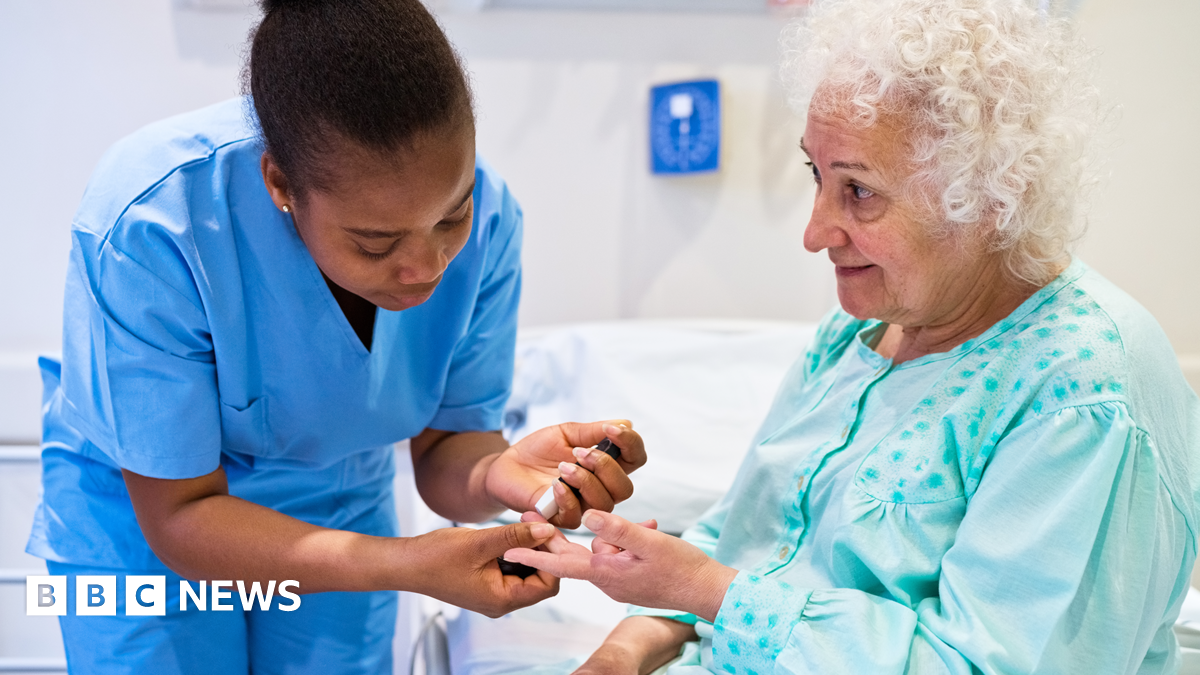
A key advantage of the finger-prick test would be that it could be carried out by individuals at home, and the sample be posted to a lab for analysis, as it does not require refrigeration.
There are hopes that blood tests could eventually be used as a screening tool for dementia for older adults.
To date, the study has enrolled 883 of the 1,000 participants with more than 360 completing all the tests.
This includes a mix of cognitively normal and mildly impaired people and some with early-stage Alzheimer’s.
At least 25% of volunteers will be from under-represented groups. The trial is expected to complete in 2028.