
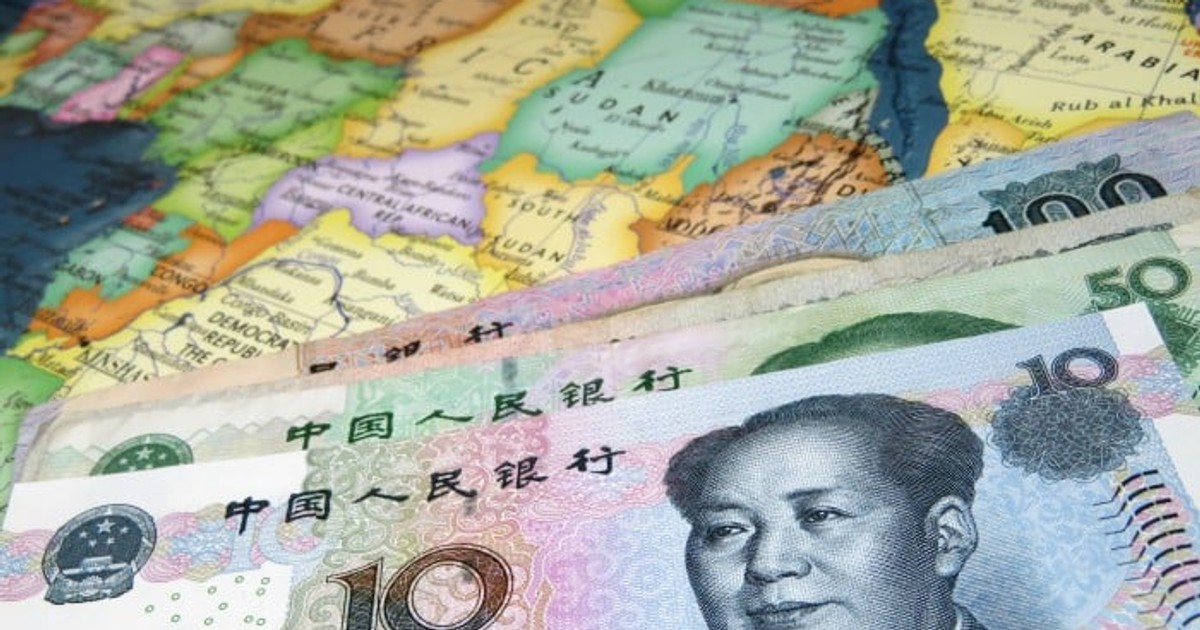
For decades, China’s influence in Africa was built on bricks and steel, roads, railways, ports, and other large-scale infrastructure projects that reshaped the continent’s physical landscape.
From funding highways in Kenya to building rail networks in Ethiopia, Beijing positioned itself as Africa’s go-to partner for development.
But China’s engagement is evolving. Today, the focus is shifting from concrete and construction to currency and finance.
While the Chinese yuan still accounts for less than 2% of global reserves, Africa is increasingly becoming a testing ground for Beijing’s efforts to expand the currency’s international role and reduce reliance on the U.S. dollar.
Surging trade with China, the world’s largest exporter, has driven wider use of the yuan in trade finance, with its market share rising from 2% to around 7% over the past five years, according to the People’s Bank of China.
Below are some of the ways China is expanding the Yuan’s footprint in Africa to reduce dollar dependence:
1. Zambia starts accepting mining taxes in Yuan
In December, Zambia became the first African country to officially accept China’s yuan for mining taxes and royalties. The Bank of Zambia confirmed that yuan payments began in October, marking a significant shift in how the continent’s second-largest copper producer manages its mining revenues.
Chinese mining companies are now settling part of their tax obligations in yuan, reflecting China’s growing influence as both Zambia’s largest copper buyer and one of its biggest creditors. According to the central bank, the move aligns with the country’s reserve-management strategy and reflects the realities of its export market.
2. Kenya converts dollar debt to yuan

In October, Kenya converted a portion of its Chinese debt into yuan, a move intended to ease pressure on its already stretched finances. The restructuring of its $5 billion railway loan from the Export-Import Bank of China into yuan-denominated debt is expected to save the country around $250 million annually.
3. Ethiopia explores yuan conversion for dollar debt
In October, Ethiopia began discussions with China regarding the conversion of part of its U.S. dollar-denominated debt into Chinese yuan. The East African country is exploring converting a portion of the $5.38 billion it owes China into the Asian nation’s currency. According to IMF data, China remains one of Ethiopia’s largest creditors.
Since its sovereign default in 2023, Ethiopia has been negotiating a broader debt restructuring of over $15 billion with multiple lenders. The potential yuan conversion is part of its wider strategy to manage debt more sustainably and reduce exposure to dollar fluctuations.