
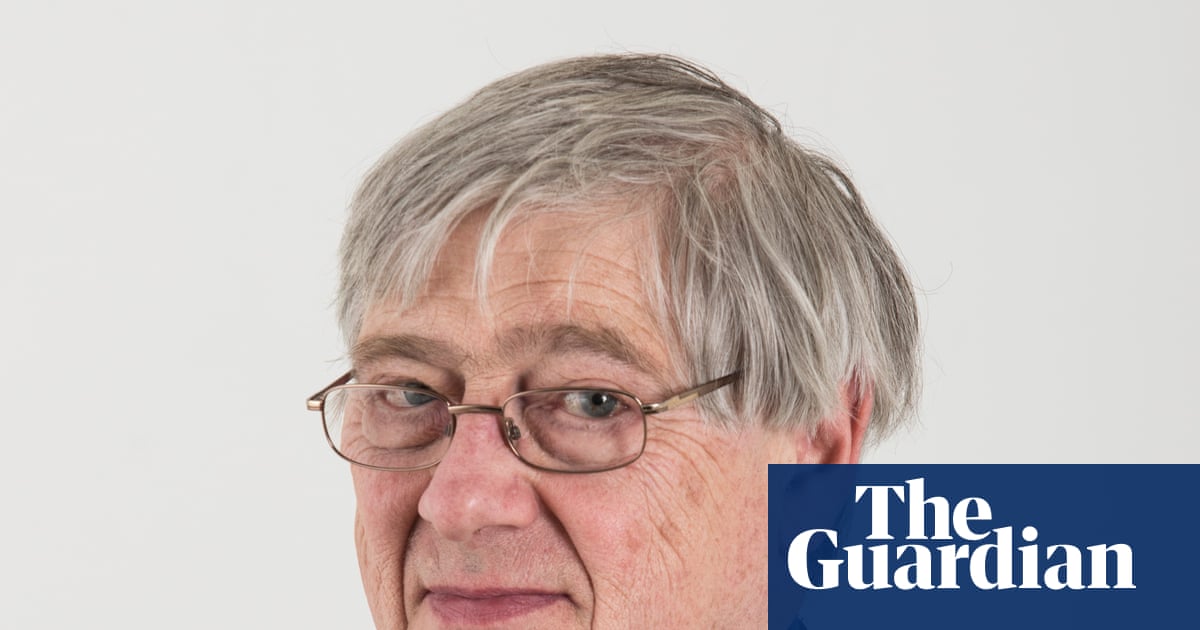
Andrew Clements, who has died aged 75 after a period of ill health, was for more than three decades the Guardian’s chief classical music critic. His style was a model of critical integrity – authoritative and intelligent, sometimes enthusiastic and sometimes slightly grumpy, dry-humoured yet never showy.
Music may say things that words cannot express, but he mastered the rare art of putting music into words, always using language with precision; reading him, you knew what a performance had sounded like. Best known for championing new music with tireless devotion, Andrew had much wider musical interests than many realised.
However, music was only one of his passions. Topping the list of other fascinations were natural history and Latin American literature, and these strands all came together when he reviewed the world premiere of Peter Eötvös’s opera Love and Other Demons – based on Gabriel García Márquez – at Glyndebourne in summer 2008. Welcoming the work, Andrew ended his review by saying that only the production disappointed “for its failure to evoke any real sense of place, despite the lavish use of video projections full of writhing bodies, insects and reptiles; someone might have pointed out to [the director] that there are no chameleons in South America”.
With such wide interests, Andrew could have taken several professional paths but worked in music journalism – at times as an editor as well as writer – almost all his adult life. But his first job after graduating was in the editorial department of the Open University, where he met Kate (Kathryn) Coltman. They married, and had two daughters, Lara and Holly; they separated in the 1990s.
Andrew served as music critic of the New Statesman for 11 years from 1977, also contributing to Time Out. He had a brief spell (1987-88) as editor of the Musical Times, and wrote for many years (1979-93) for the Financial Times, not only on classical music but also as the paper’s rock and pop critic. Later, in a Guardian classical review he would say that Brian Wilson’s God Only Knows was still the most perfect pop song.
Overlapping with his writing, Andrew was commissioning editor for books on music at Faber & Faber (the publisher’s connection to poets and poetry was not lost on him), midwifing several significant titles. He first wrote for Opera magazine in 1983 and joined its editorial board in 1990. When he succeeded Edward Greenfield on the Guardian in August 1993, the appointment was clinched at least in part by a recommendation from the pianist Alfred Brendel.
An unstinting admirer of some of the most challenging composers – Harrison Birtwistle, Luigi Nono, Elliott Carter, Luciano Berio, Helmut Lachenmann, Pierre Boulez and Iannis Xenakis among them – Andrew also lent critical support to many less well-known names in contemporary music.
He also had a fondness for the English pastoralist composers of the early- and mid-20th century, and indeed had grown up in Hucclecote, a village that has become a suburb of Gloucester. His mother, Linda, a domestic science teacher before her marriage, was from the Forest of Dean; his father, Joseph, who had grown up on a small family farm in Down Hatherley, to the north of Gloucester, made aeroplane parts for Dowty Aviation.
An only child, Andrew attended The Crypt school, a grammar in Gloucester, and was the first member of his family to go to university. He studied theoretical physics at Emmanuel College, Cambridge, and played the flute in a university orchestra. Contemporaries remember him as a little unsocial and enigmatic – qualities that later allowed him to maintain a professional distance and to write without fear or favour.
With such a background, Andrew was well placed to attend the Cheltenham music festival during its vintage years, and also the Three Choirs festival; this was his first musical landscape, and Elgar’s Dream of Gerontius held special appeal. He would remain more committed than most critics to covering the regional scene.
In 1992 he became a director of the Holst Foundation, honouring the Cheltenham-born composer, and the poetry of Ivor Gurney meant a great deal to him. Reading the Guardian’s Country Diary was a daily ritual (as was doing the paper’s Cryptic Crossword).
Music was not in the family, but his parents had been keen gardeners and lovers of the countryside. Andrew started collecting plants as a boy and was soon ordering Bhutan alpine seeds and indexing specimens. Birds, amphibians and reptiles were special interests, and he kept many creatures as pets – on one occasion, some burglars are said to have been frightened off by his poison dart frogs.
A holiday in Crete in 1979 – his first trip abroad – made a huge impression on him, and Greece would remain one of his favourite countries for the rest of his life. Bird-watching took him the length of South America, from Costa Rica to Ecuador and the Amazon to Patagonia. This he often did with his partner Amanda Holden, the opera librettist and translator, with whom he lived in London for several years. She died in 2021.
Andrew, who I was lucky to count as a colleague and friend for three decades, contributed to The New Grove Dictionary of Music, The New Grove Dictionary of Opera and The New Penguin Opera Guide. He wrote a compact account of the composer Mark-Anthony Turnage (2000). In opera, he responded not just musically but had a strong sense of theatre.
Pianists and the piano literature were close to his heart, and his penultimate review for the Guardian, of previously unpublished recordings by Radu Lupu, had a valedictory feel: “Of the many hundreds of pianists I must have heard in more than 50 years of recital going, a multitude that has included many of the greatest names of the 20th century, none gave me more consistent pleasure or a greater sense of wonder.”
An illness starting in early 2025 meant that Andrew’s last concert review (of the Dunedin Consort) appeared in early March. Despite these difficulties, he retained the sense of humour that countered an often gruff exterior. From his home in Oxfordshire he continued reviewing recordings; his final piece, about Nadia Boulanger’s opera La Ville Morte, was written just before Christmas and published at the start of January, by which time he had contracted the flu that led to his death.
Kate survives him, along with Lara, Holly and two grandchildren.
Andrew Joseph Clements, music critic, born 15 September 1950; died 11 January 2026