
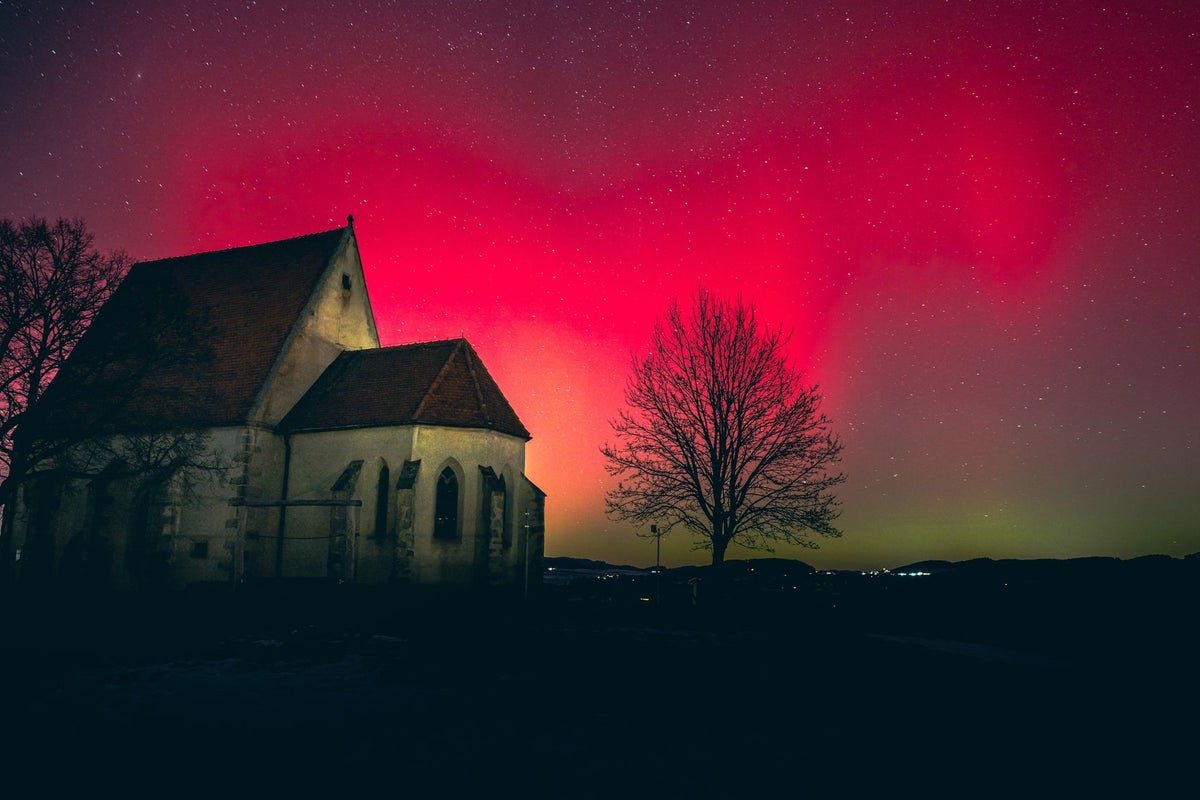
Your support helps us to tell the story
From reproductive rights to climate change to Big Tech, The Independent is on the ground when the story is developing. Whether it’s investigating the financials of Elon Musk’s pro-Trump PAC or producing our latest documentary, ‘The A Word’, which shines a light on the American women fighting for reproductive rights, we know how important it is to parse out the facts from the messaging.
At such a critical moment in US history, we need reporters on the ground. Your donation allows us to keep sending journalists to speak to both sides of the story.
The Independent is trusted by Americans across the entire political spectrum. And unlike many other quality news outlets, we choose not to lock Americans out of our reporting and analysis with paywalls. We believe quality journalism should be available to everyone, paid for by those who can afford it.
Your support makes all the difference.Read more
The UK’s night skies were transformed into a breathtaking canvas of green and pink on Monday evening, as the aurora borealis, commonly known as the Northern Lights, put on a spectacular display.
This natural phenomenon, usually confined to regions near the Arctic Circle, was visible across vast swathes of the country due to heightened solar activity.
Dazzling images captured on Monday showcased the celestial spectacle across Scotland, Northern Ireland, and Wales, extending as far south as parts of south-west, southern, eastern, and northern England. The dazzling displays will potentially continue in some areas on Tuesday.
The Met Office confirmed “severe geomagnetic storms” were responsible, producing “widespread auroras visible across the UK, with reports extending as far south as northern Italy.”
open image in gallery
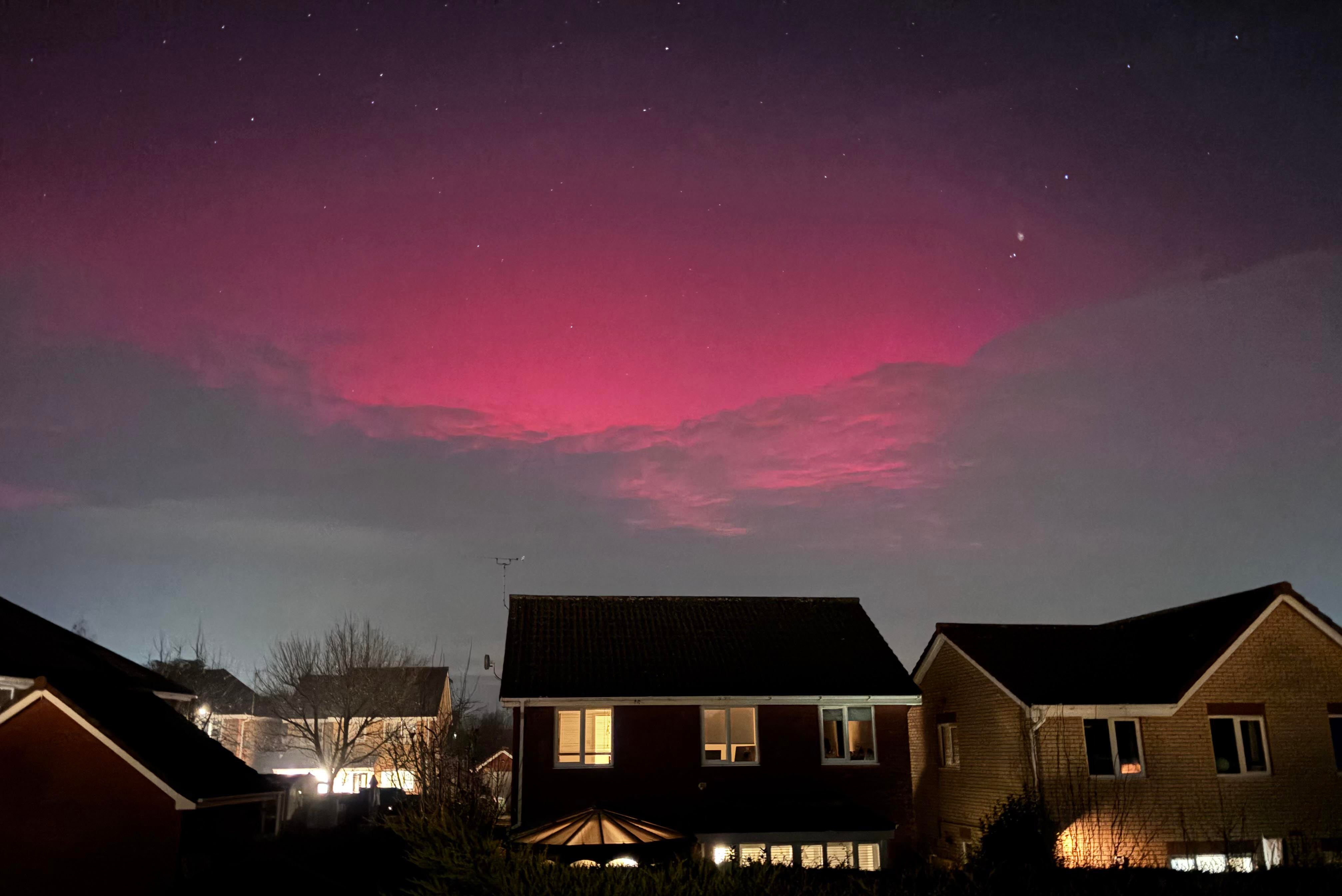
Northern lights illuminate the cloud cover over Rushmere St. Andrew, Ipswich, Suffolk (Joe Pickover/PA Wire)
The Met Office attributed the vibrant light show to a Coronal Mass Ejection (CME), where the Sun expels immense clouds of particles.
The best way to see auroras is to get away from areas with any light pollution and allow time for your eyes to adjust to the darkness.
open image in gallery
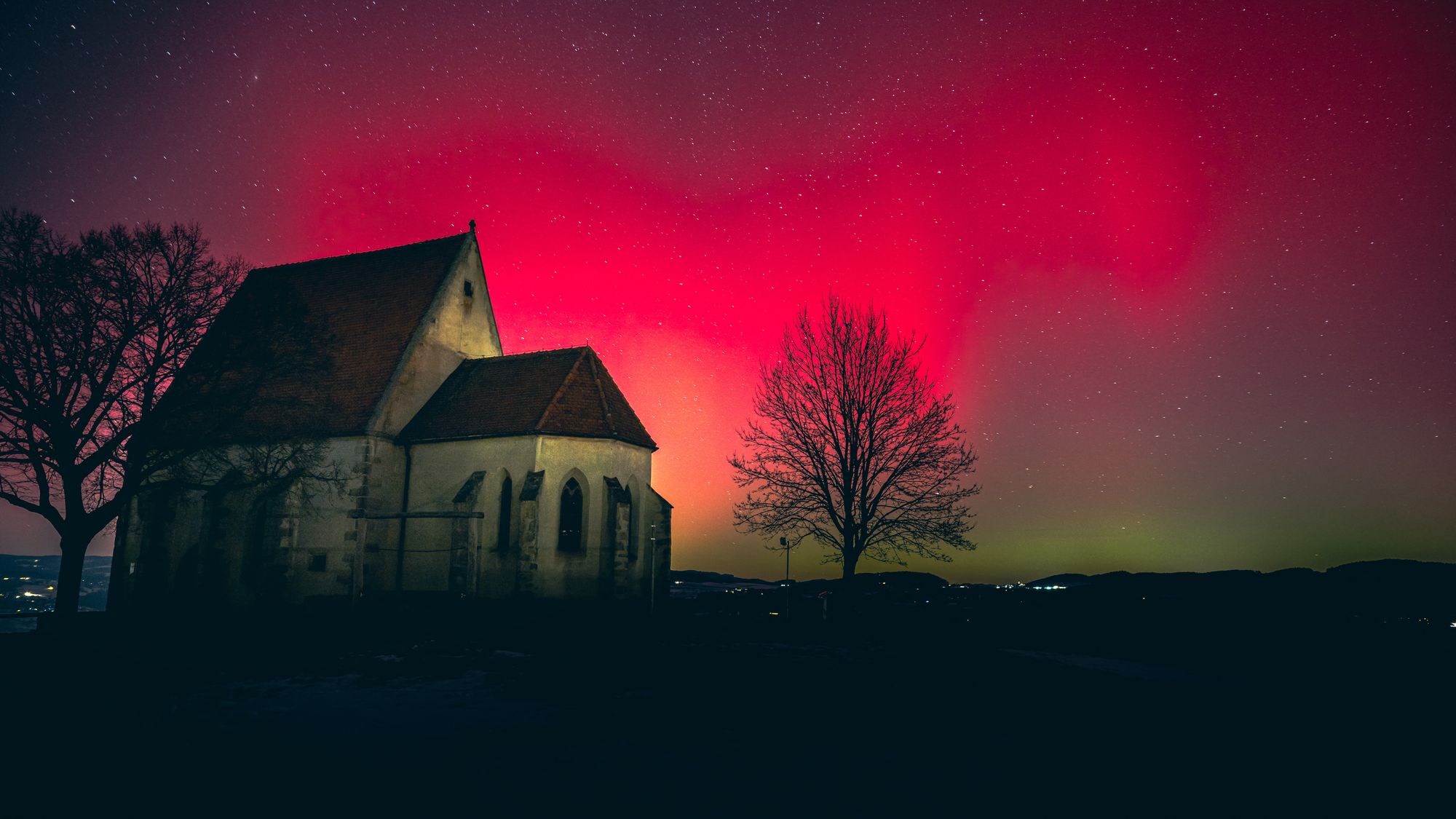
Aurora Borealis seen above der Wenzel church (Wenzelskirche) in Wartberg ob der Aist, Upper Austria (APA/AFP/Getty)
Krista Hammond, Met Office Space Weather Manager, said in a statement: “There is still some uncertainty around the exact timing of the CME’s arrival, but it is expected overnight tonight or tomorrow morning.
“The CME is likely to result in geomagnetic storming, giving the potential to view the aurora.
open image in gallery
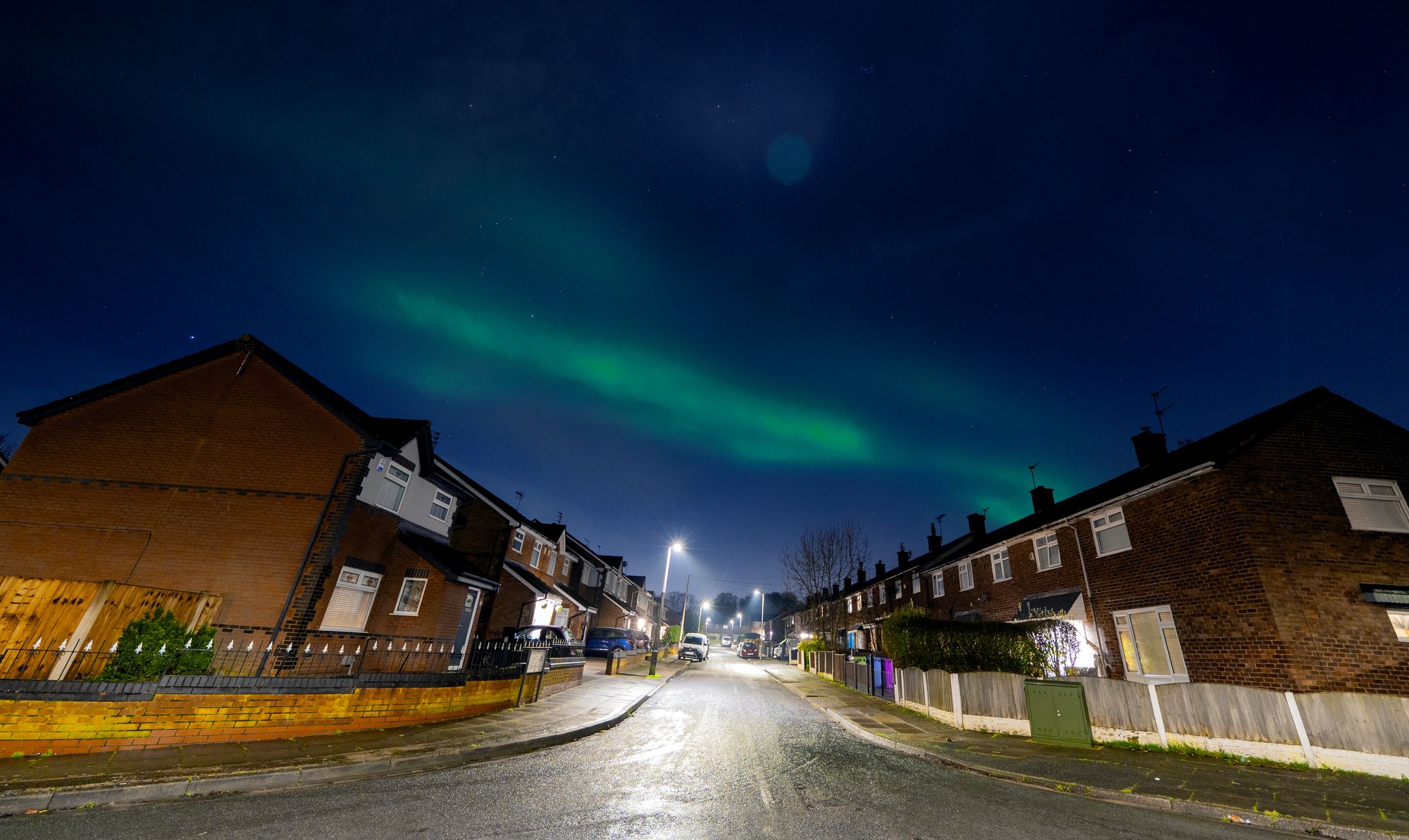
The Northern Lights are seen in the sky above Lee Park in Liverpool (Peter Byrne/PA Wire)
“However, sightings are dependent on the CME arriving during hours of darkness and clear skies. Unfortunately, cloud and rain on Tuesday evening may make viewing difficult, even if the timing is favourable.
“The effects of the CME may linger into Tuesday night, with aurora sightings possible across Scotland, perhaps also Northern Ireland and northern England, where skies are clear. This is likely to wane further by Wednesday night, perhaps with some glimpses possible from the far north of Scotland.”
According to the US National Oceanic and Atmospheric Administration (NOAA) Space Weather Prediction Centre, the best time to view them is usually within an hour or two of midnight.
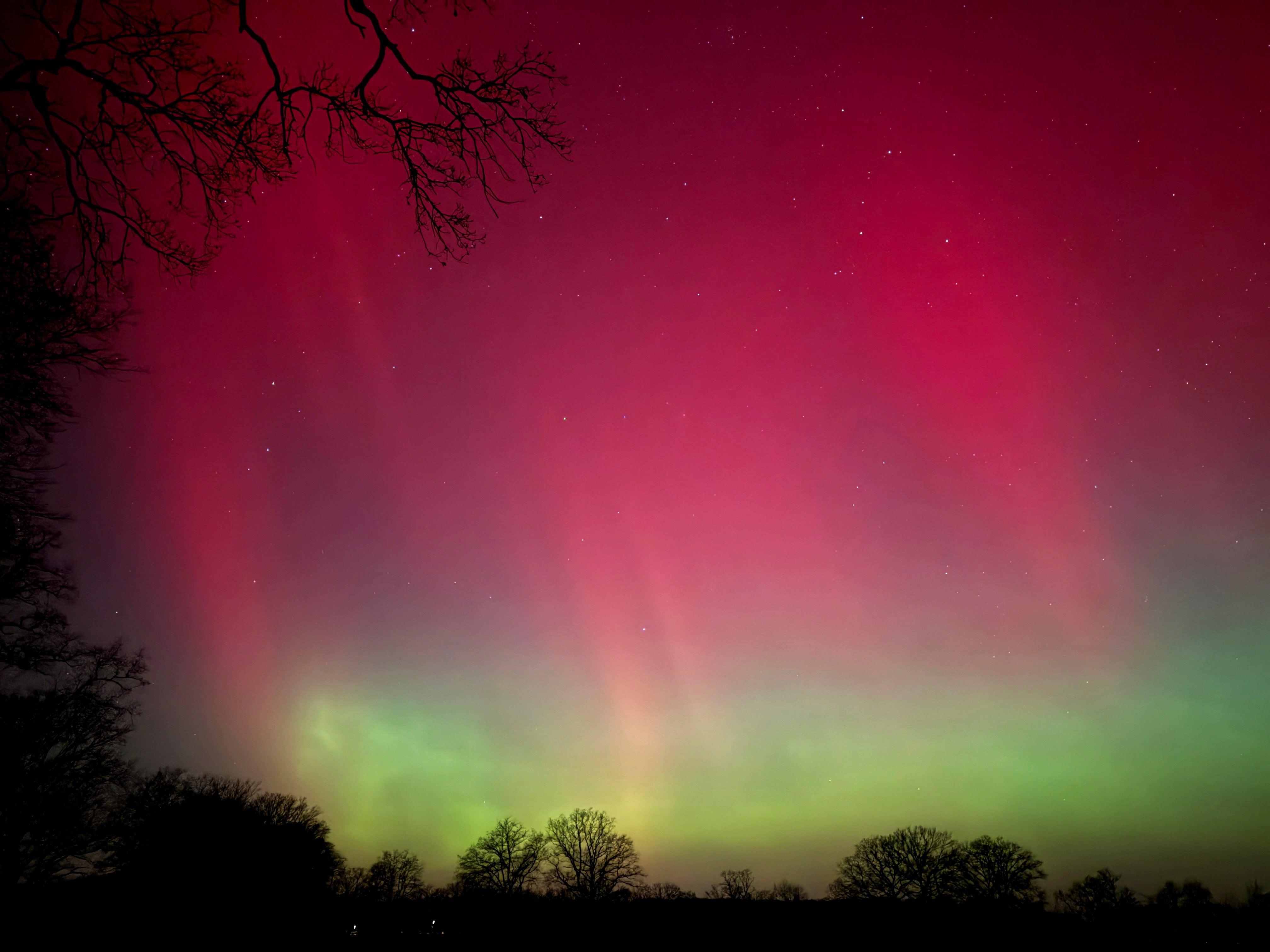
open image in gallery
The aurora borealis also illuminated the sky over Quickborn, northern Germany on Monday (REUTERS)
“These hours of active aurora expand towards evening and morning as the level of geomagnetic activity increases,” NOAA notes on its website.
“There may be aurora in the evening and morning but it is usually not as active and therefore, not as visually appealing.”
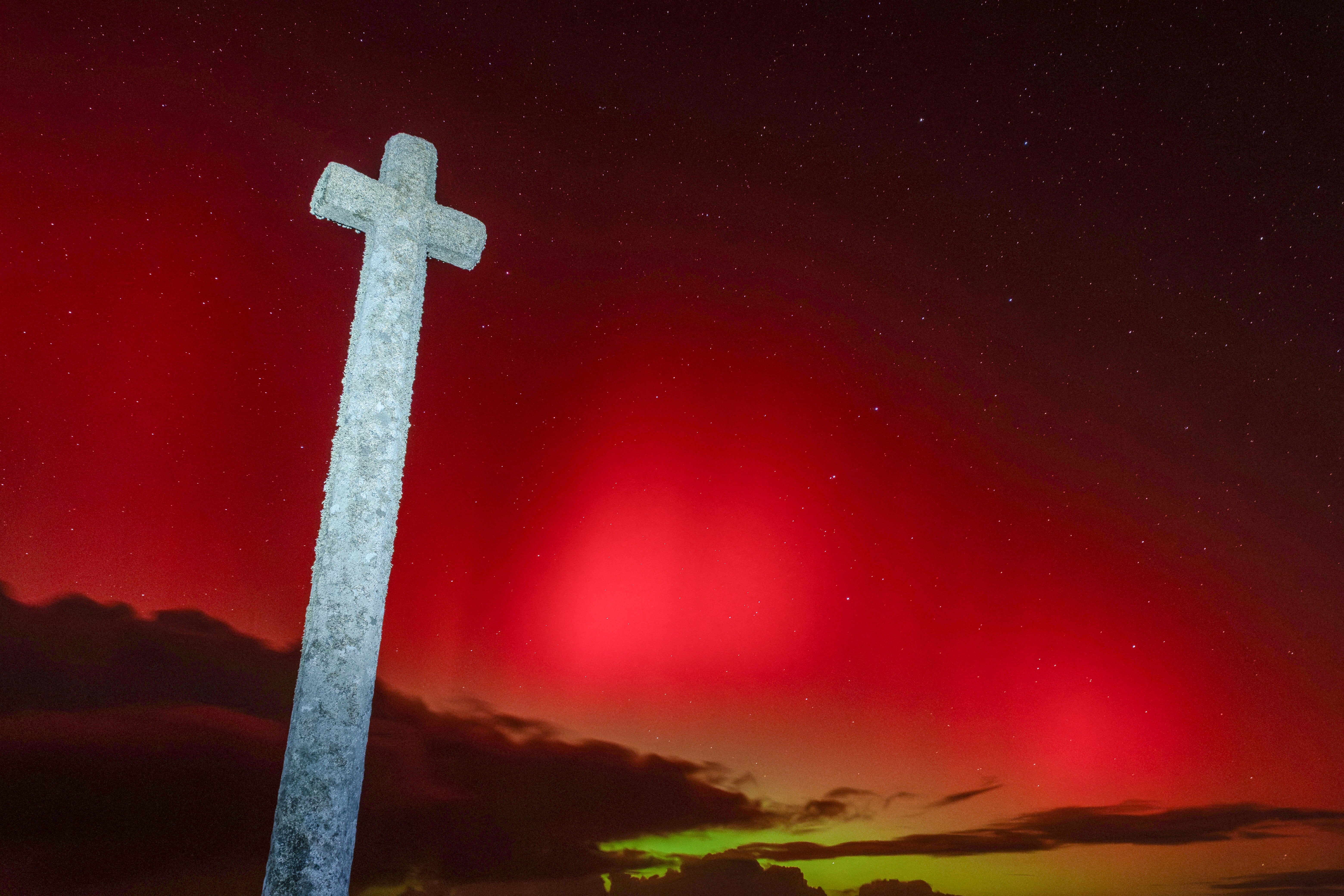
open image in gallery
The Northern Lights over Portsall, western France (AFP via Getty Images)
These particles, upon interacting with oxygen and nitrogen gases in Earth’s atmosphere, create the distinct colours. Oxygen atoms typically glow green, the most common hue, while nitrogen atoms produce purple, blue, and pink. While activity is expected to wane, glimpses may still be possible in parts of Scotland and Northern Ireland on Tuesday.