
If you have ever spent any time reading on social media about a new cycle lane coming to a road near you, then you will probably be aware of just how vitriolic the backlash to active travel infrastructure can be online. But does it represent how people actually feel about cycling? Researchers from Cardiff University may have the answer and have just published a new study looking into online cycling discourse via analysis of 36,000 posts on social media. So, why do cycle lanes get so much stick online?
Well, starting with that question, while criticism of cycling infrastructure and wider active travel schemes is often particularly noisy, the new study published in Travel Behaviour and Society suggests that from analysis of 36,696 UK tweets about cycle lanes and LTNs over a four-year period between March 2018 and June 2022, the majority are actually positive.
That’s not to say there were not spikes in negativity, the Cardiff University academics noting more negative sentiment around cycle lanes online in the summer of 2020, for example, when the government announced the emergency active travel fund to rapidly install pop-up bike lanes and other measures to improve cycling and walking in response to the Covid pandemic. However, the point remains, over the observed period, there were more positive tweets than negative ones, even if outspoken criticism can give the impression of more widespread opposition.
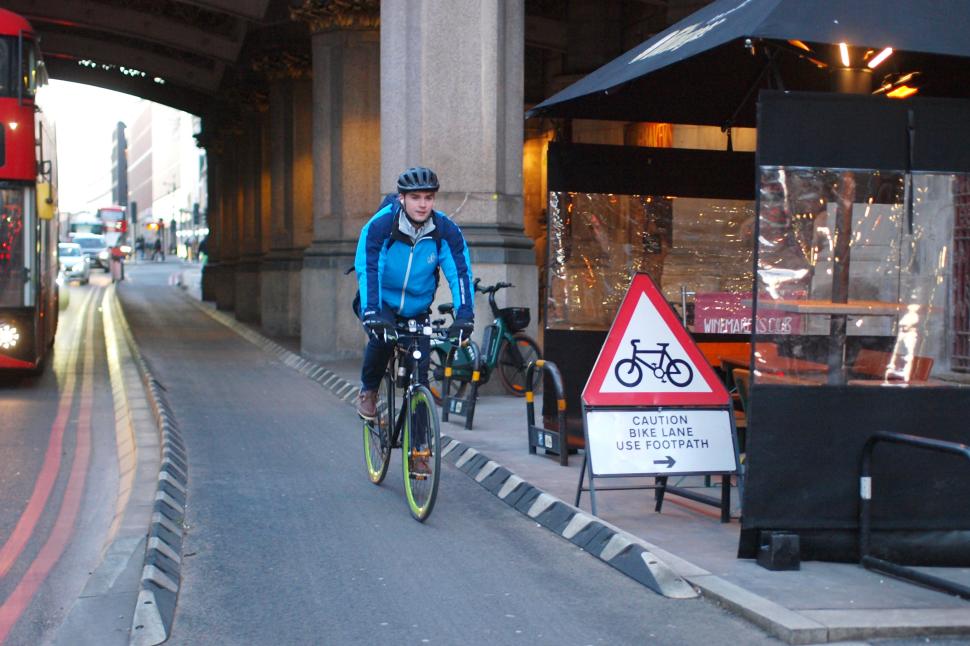 Cyclist in London caution bike lane use footpath – copyright Simon MacMichael (credit: road.cc)
While that is notable, perhaps the most interesting part of the study was when looking at the analysis of why people criticise cycle lanes on Twitter.
Sharing their study in a follow-up piece, authors Wouter Poortinga, Dimitrios Xenias and Dimitris Potoglou wrote: “So what are the key lessons of this research? First, visible opposition is not the whole story. Protests and headlines may give the impression that cycle lanes are deeply unpopular, but most people – including both drivers and cyclists – support new infrastructure and even traffic restrictions, as long as they are well designed and involve only modest changes. Parking is a sensitive point, but overall support for change is broader than the noise suggests.
“Second, the strongest opposition comes from those who see new cycle lanes and restrictions as an attack on their freedom to drive. This group is relatively small but may be among the most vocal. Their concerns need to be acknowledged, but also reframed in light of the reality that limited road space must serve everyone: drivers, cyclists, and pedestrians alike.
“Finally, it is not just about what gets built, but also how it is introduced. Much of the online debate considered in our social media study focused not on the principle of cycle lanes or low-traffic neighbourhoods, but on whether local people felt they had been consulted properly. Listening to communities can make the difference between a scheme being welcomed as a local improvement or rejected as a top-down imposition. This should involve everyone and not just the loudest.”
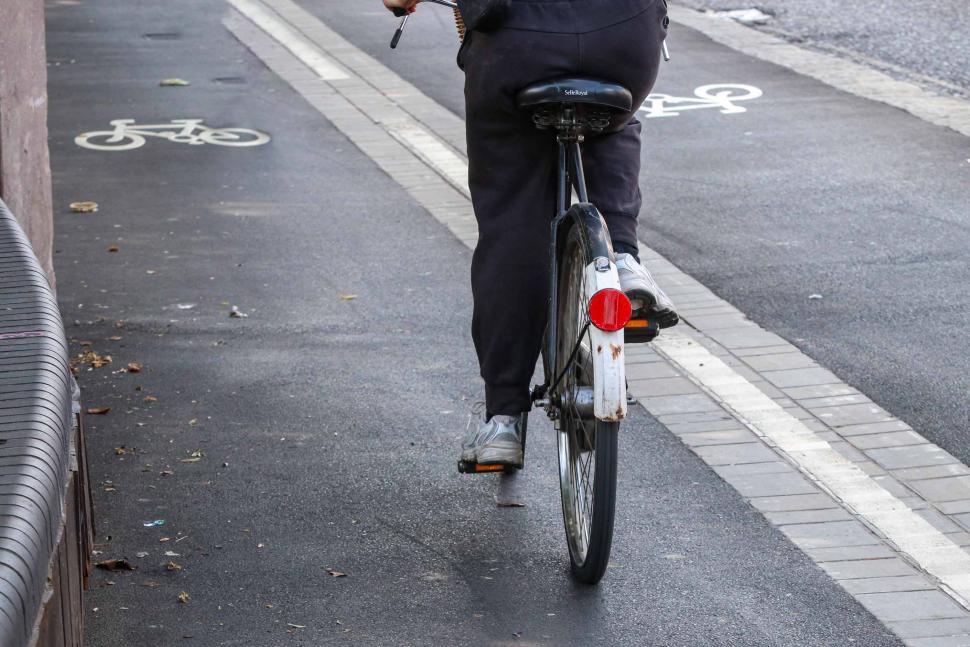 Two way segregated cycle lane.jpg (credit: road.cc)
The researchers suggested that the majority of cyclists and drivers actually agree on the principle of cycling infrastructure, but splits, criticism and opposition tended to centre around how projects are implemented, and by who. The study cited ‘politicisation’ of active travel, whereby critics may link infrastructure to the council or politicians supporting projects, likewise perceived lack of public consultation and comments about cycle lane design were also common in negative tweets.
Another observed pattern was negativity often moving from the subject of cycle lanes onto the behaviour of drivers, cyclists and pedestrians, for example, drivers parking on cycle routes, pedestrians stepping in, or cyclists jumping red lights or not wearing hi-vis clothing.
The researchers even suggested follow-up research could investigate “how rule-breaking behaviours influence perceptions of other road users and of the infrastructure itself, particularly in relation to safety”.
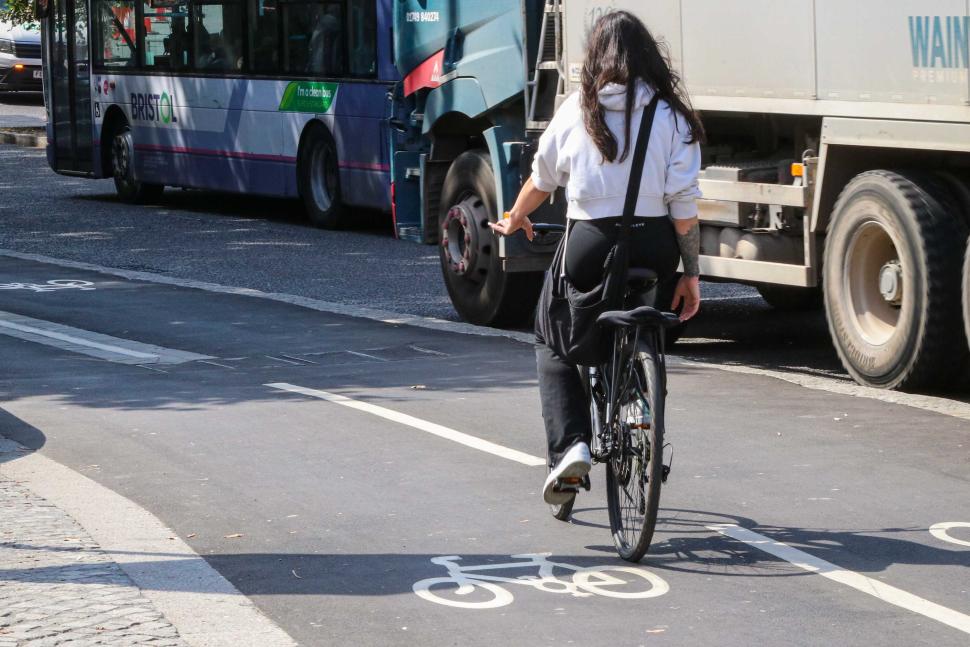 Commuting cyclist in cycle lane.jpg (credit: road.cc)
One area of surprise, the study stated, was that discussion rarely addressed broader benefits of active travel, such as climate change mitigation or public health improvement. The analysis suggested this infrequency points to Twitter discussions tending “not to consider the broader ‘big picture’ rationale for such infrastructure” and instead being primarily focused on “individual experiences and localised impact”.
> Cycling a couple of miles to work enough to boost heart health by as much as 30%, new study finds
In their conclusion, the researchers suggested the “limited connection” between cycling infrastructure and broader issues remains “an opportunity for improving communication strategies”.
By aligning messaging with larger societal benefits, the researchers suggested policy makers and local authorities may be able “to foster greater public support for street space interventions such as cycle lanes and LTNs”.
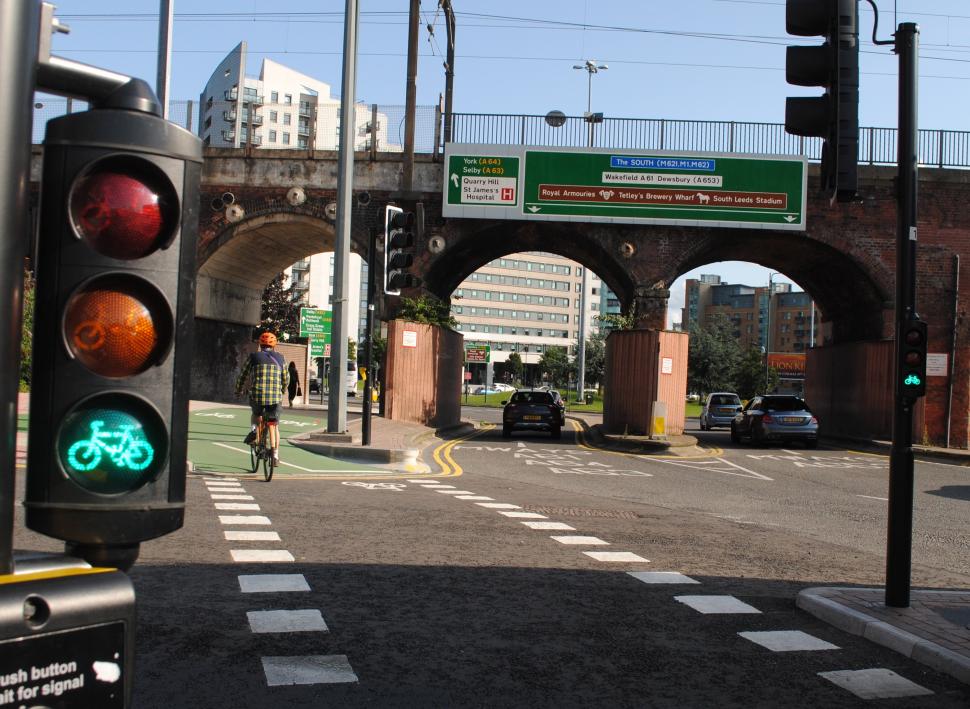 Leeds segregated cycle lane.JPG (credit: Richard Peace)
“Why do some people oppose cycle lanes and traffic restrictions so strongly?” they asked. “Part of the answer lies in identity. Our study found that those who strongly identified as ‘drivers’ were more hesitant about giving up road space to cyclists, while self-identified ‘cyclists’ were more supportive.
“But the biggest divide was not between cyclists and drivers. Both groups often preferred the same measures. The strongest opposition came instead from a small group who see new cycling infrastructure as an infringement on their ‘freedom’ to travel the way they want. This group consistently preferred the status quo over all options that would reallocate space to cyclists or restrict vehicle access.”
Research around cycle lanes has featured across the site numerous times in recent years, most recently when a report published by University College London found (quite unsurprisingly) that riders are more likely to experience dangerous incidents when using routes without bike lanes or cycle paths.
Another study from last year found that protected cycle lanes encourage significantly more people to cycle than painted routes, the six-year research by academics at the University of New Mexico and University of Colorado Denver suggesting that areas with protected cycling infrastructure experienced bicycle commuter increases 1.8 times larger than areas with ‘standard bicycle lanes’, 1.6 times larger than areas with ‘shared-lane marking’ and 4.3 times larger than areas that did not install bicycle facilities at all.