
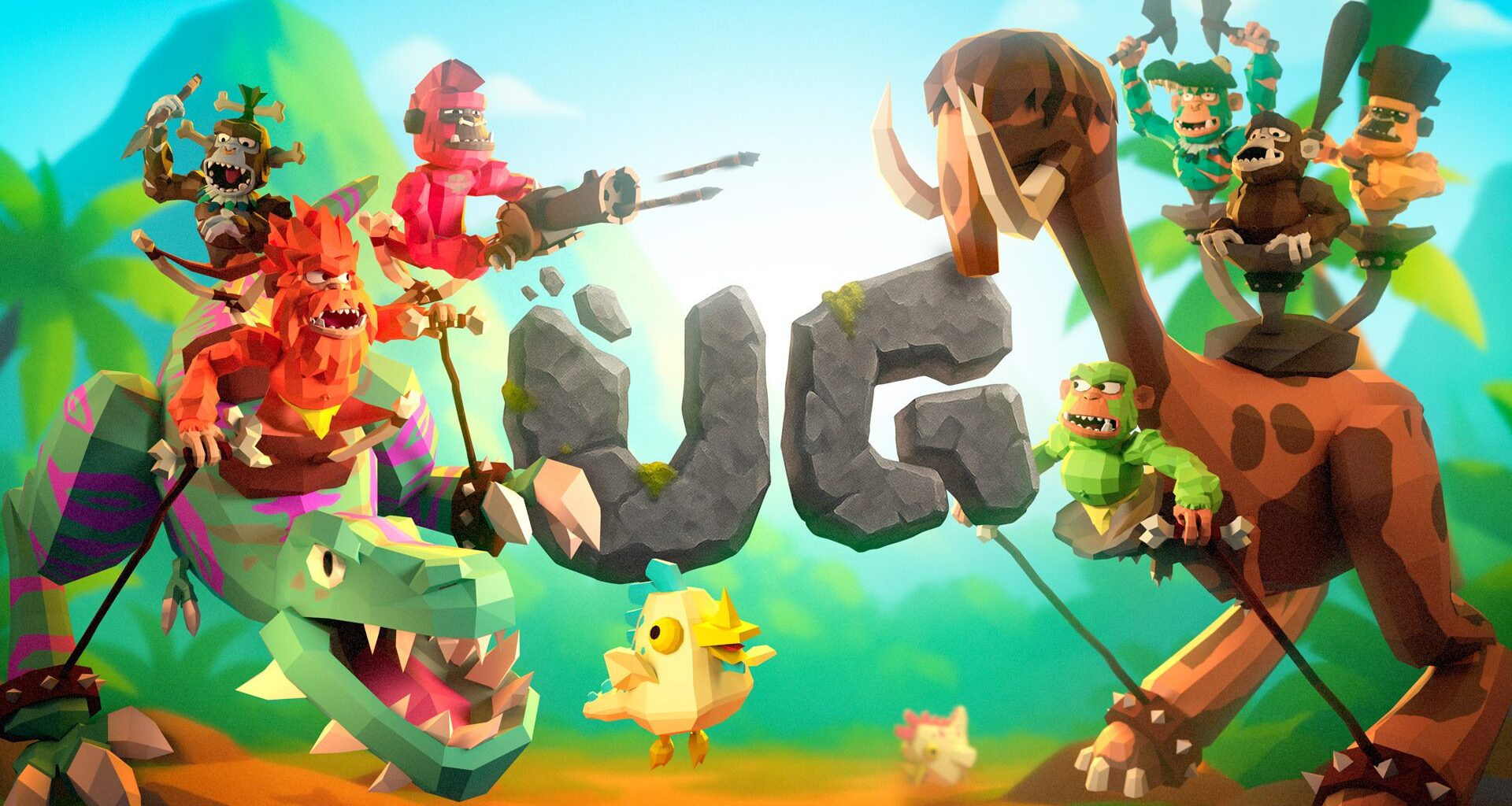
While a flurry of VR studio cuts and closures in the last 12 months has painted a picture of a deeply struggling landscape for VR developers, modern Quest success stories have largely flown under the radar. The free-to-play title UG, for instance, has exploded in both popularity and earnings, matching top titles like Gorilla Tag and Beat Saber in mere months. In an interview with Road to VR, the creators of UG have shared a rare look inside the success of Quest’s latest hit.
By the Numbers
Released on Quest less than six months ago, UG has quickly become one of the platform’s most popular, best-rated, and top-earning titles. The game shares broad similarities to the likes of modern VR games like Gorilla Tag (ie: free-to-play, social multiplayer, arm-based locomotion), but revolves around hatching, raising, riding, trading, and adventuring on virtual dinosaur pets.
The formula has been a hit with the Quest audience, blasting off to become the most-rated title on the Horizon store with 245,000 reviews. That not only puts it above contemporaries like Animal Company (180,000 reviews) and Gorilla Tag (167,000 reviews), but it’s also the best-rated of the three. UG has managed to maintain a 4.9 out of 5 star user rating, which is unheard of for a Quest game with so many reviews.
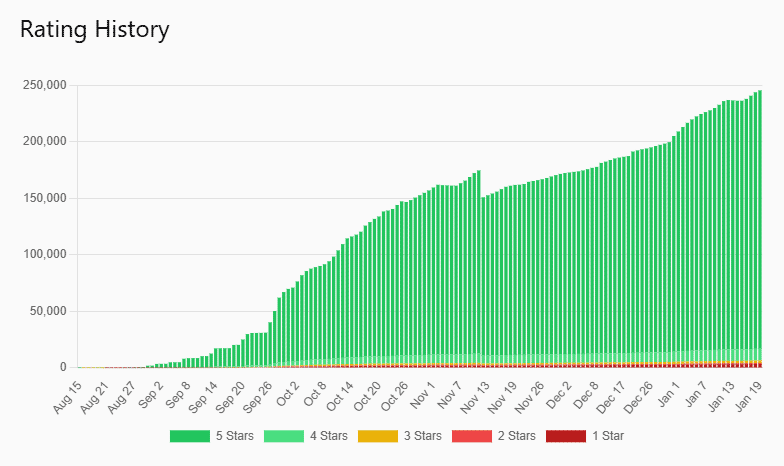 The number of UG reviews has rapidly surpassed every other title on the Horizon store | Data courtesy VRDB
In an interview with Road to VR, the creators of UG offered unique insight into the success of the game, revealing it has already reached 1.2 million unique users, averaging more than 100,000 daily active users, and a peak of 40,000 concurrent users.
“[UG‘s] retention and playtime have honestly exceeded anything we expected,” says Michael Murdock, lead game designer of UG and co-owner of the studio, Continuum. “The average player has now spent over 14 hours in UG, and that number keeps climbing as players keep coming back. Daily average playtime is usually close to an hour and has approached two hours at times.”
Now on the market for five years, Gorilla Tag certainly still leads the way in total revenue. But in terms of weekly revenue, UG is holding its own against Gorilla Tag. According to Meta’s “top-selling” chart, UG has been consistently among the top performers, including frequently stealing the top spot from Gorilla Tag. Murdock says the game has occupied the #1 spot “about 95% of the time” since UG’s launch.
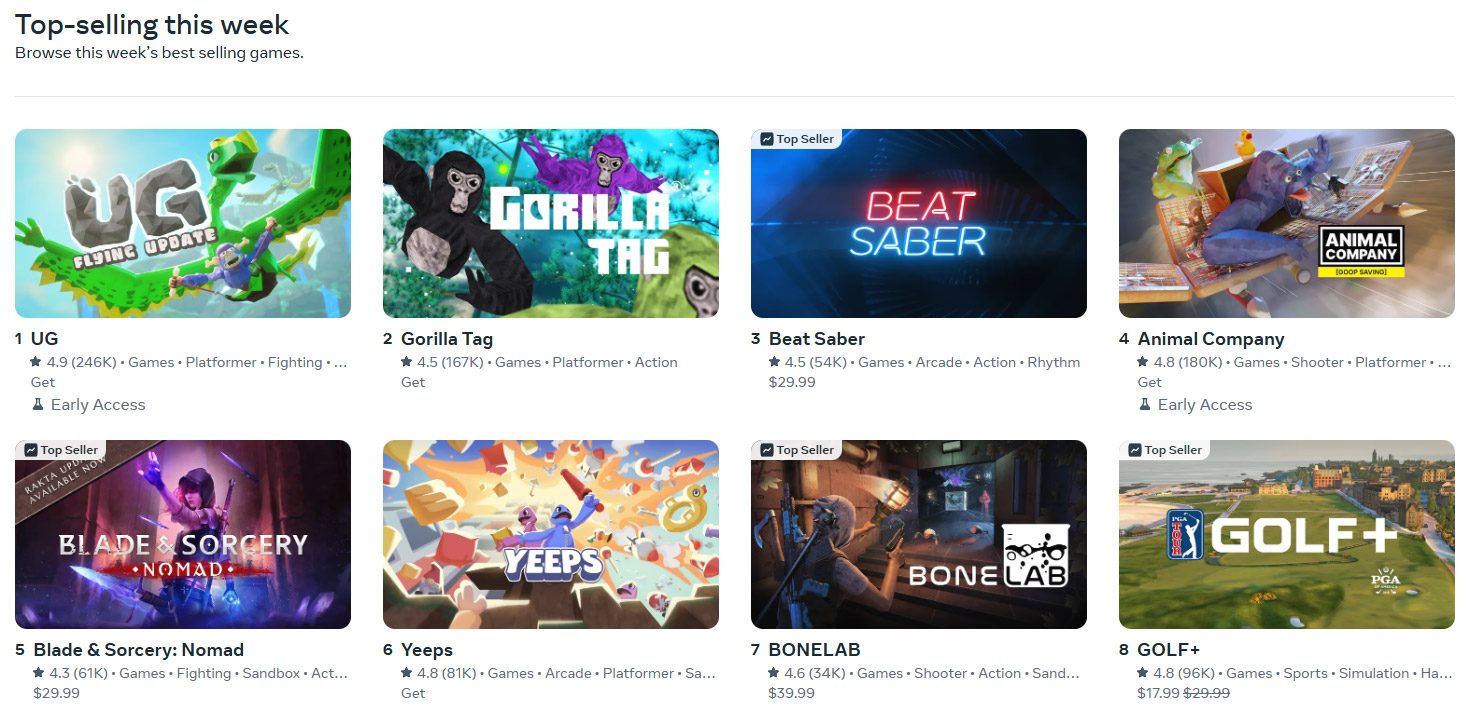 Data courtesy Meta’s Weekly Top-selling chart
UG’s success is more than a fluke. The studio behind the game, Contiuum, also built the Quest title Monkey Doo—another free-to-play multiplayer game—which, at 11,000 reviews, has been a relative success in its own right. But UG has reached another level entirely; not just in player counts, but revenue too.
“We are seeing an average revenue per-user (ARPU) of over $14,” says Murdock. “That is nearly 20 times what we’ve experienced in our other free-to-play titles [like Monkey Doo].”
The Past, Present, and Future of UG
Murdock walked me through the backstory of the game’s development, which starts with the formation of the Utah-based studio, Continuum, back in 2020.
“We started as a VR/AR agency making immersive experiences primarily for marketing and education. Over time, as we refined our skills and our team, it became clear that what we really wanted to build was VR games,” he says. “Before UG, we worked on the single-player version of Sail with Red Team Interactive in 2021. Internally, we also built Monkey Doo, followed by Cactus Jam, and we helped develop Prompt Party. Each of those taught us a lot about what works, and what doesn’t, in VR. Up until UG, we were still splitting our time between game development and agency work. Finally, we made the decision to stop splitting our attention and go all in on our VR studio.”
Development on UG started in October 2024, Murdock says. After validating the concept, the studio found funding.
“We took a six-figure sum from a strategic partner. In exchange, we agreed to a scaling revenue share from game sales. We did not give away any studio shares or IP ownership.”
Interestingly, the funding came from Trass Games, the studio behind yet another modern Quest success, Yeeps (2024). In many ways, Yeeps and UG are competitors in the VR market, but Murdock says the partnership has been nothing but positive for both studios.
“[Our funding partner] Trass Games (and we) don’t have a scarcity mindset when it comes to VR. Trass wanted to continue to make Yeeps their #1 priority while contributing in a meaningful way to another VR title,” he explained. “The collaboration continues, we meet weekly with them to talk ongoing strategy and updates. The success has seemed to be an absolute win-win and Yeeps is still going quite strong without much seeming cannibalism of the market.”
After receiving funding, the team developed the game for about eight months before launching an early access version in August 2025.
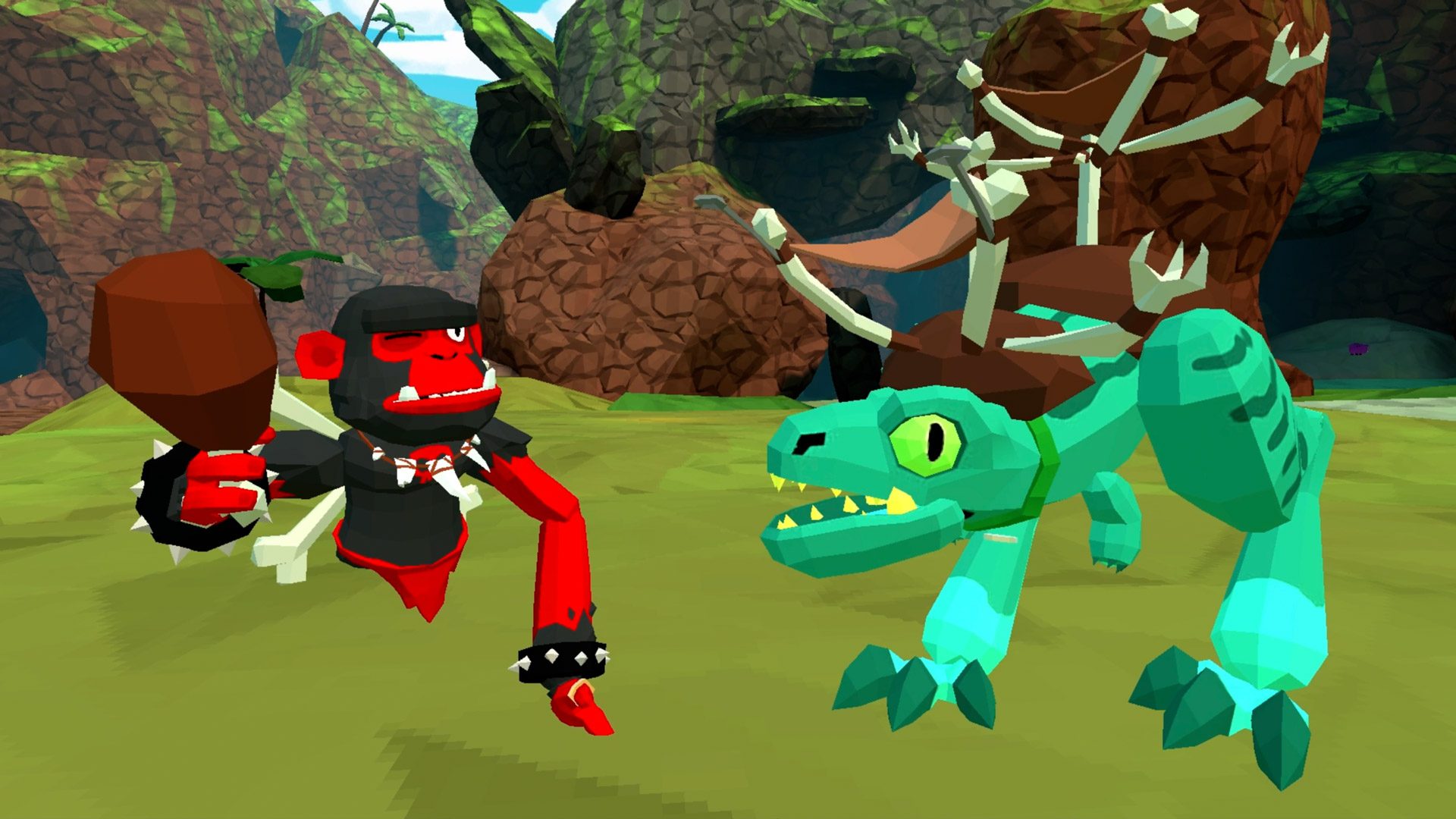 Image courtesy Continuum
The ‘dino farming’ aspect of UG is what makes it stand out the most from similar free-to-play Quest games. The idea, Murdock says, came from a wide range of inspirations spanning from his youth to the modern gaming landscape.
Growing up, I loved the movie Jurassic Park (1993). I can still remember being seven years old, and seeing it for the first time, sitting in the front row of a sold-out theater in Tucson, Arizona. That movie has been an inspiration. Plus I obsessively played Pokémon growing up. The idea of capturing, collecting, and riding dinosaurs naturally evolved into UG.
Games like Gorilla Tag, Yeeps, Animal Company, and Pokémon were all influences. Once I knew the general direction we were going I played an embarrassing amount of Adopt Me (in Roblox) to better understand their model for raising and trading pets. We didn’t try to reinvent anything that we didn’t have to, but instead we focused on putting our own spin on ideas that were already proven.
UG is still in early access and undergoing rapid development. The studio just launched a major update which added flying dinosaurs and a new flying boss for players to battle. And there’s much more on the roadmap, says Murdock.
“Coming up, we have dino training systems, swimming dinosaurs, PvP arenas, and of course a ton of new dinos. [The game world] was designed as a live-service world, so evolving the map and expanding the game over time is a big part of the plan.”
The full 1.0 launch of UG is expected in the second half of this year. To get there, the studio hopes to deliver “a more balanced and polished version of the game, with better quality-of-life features, a stronger release rhythm, and a deeper roster of dinosaurs,” says Murdock. “Building so fast with a small team meant launching with imperfections, but early access has helped us focus on what actually matters to players. We have worked closely with our community to refine and perfect our game little by little with every weekly update.”
The success of UG and its contemporaries is the clearest evidence of what Meta was formally communicating to developers at least as far back as early 2025: the majority Quest demographic has shifted younger, with more interest in free-to-play, social, and multiplayer content than the premium single-player VR games that once defined the medium.