
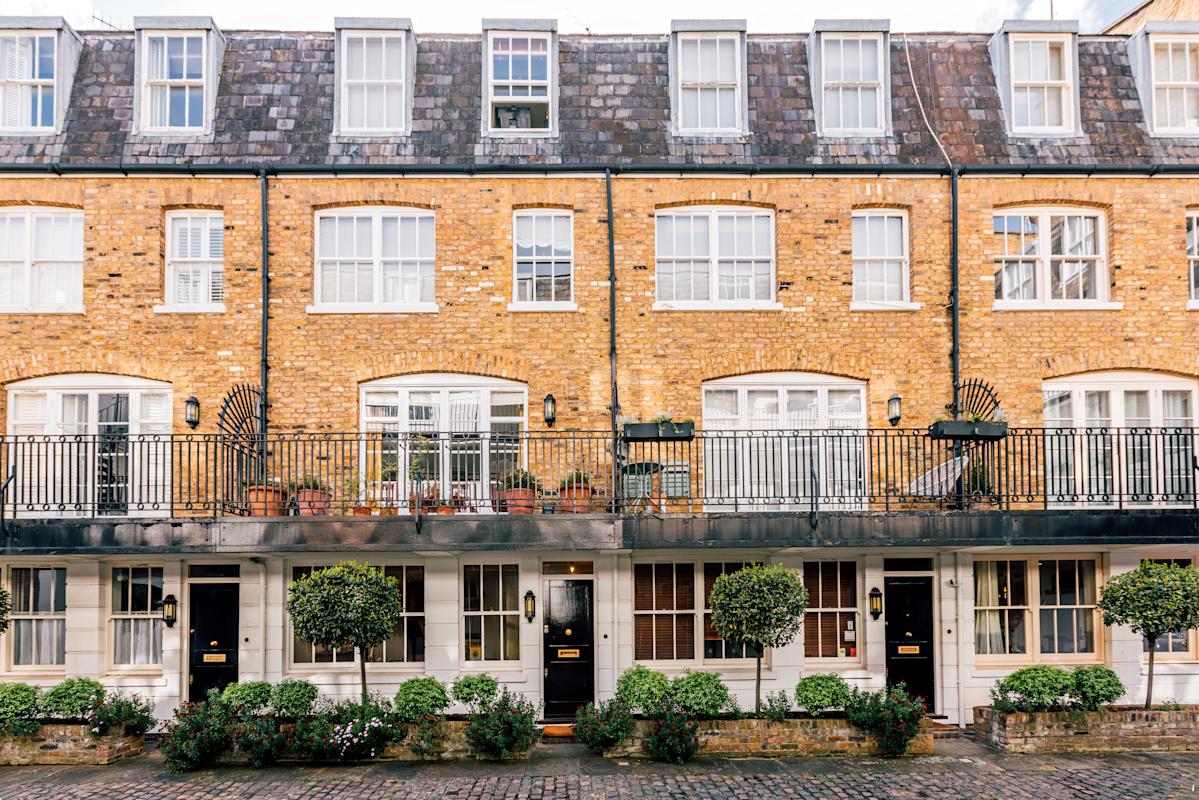
If predictions are to be believed, 2026 will be another year of relatively modest house price growth, with Knight Frank predicting a 3% increase between January and December.
It’s also the year when landlords can expect increased regulation with the Renters Rights Act coming into force, but, what will be the consequence of these and what other trends can we expect from the UK property market?
We spoke to six property experts to find out.
1) Limited impact of mansion tax
Those owning properties worth over £2m probably took a sigh of relief when they heard the budget in November. After months of speculation, the announcement of the mansion tax was not nearly as severe as predicted. As a result, it’s unlikely to have much of an impact at the top end of the market.
“A £7,500 annual tax increase won’t be a particular burden for the owner of a £10m house,” says Jamie Hope, managing director of Sales at Maskells.
Read more: Eight mortgage predictions for 2026
If anything, the budget spurred many prime buyers on with their purchases. “So far, the surcharge has not been a major factor in the decision-making process for buying clients and I don’t expect it to have a significant impact on the market this year. As one of our clients said: ‘I was waiting for a bomb and it never went off,’” says Jo Eccles, founder of buying agency Eccord.
While it’s unlikely to have much impact in 2026, there may be scope for future governments to make use of it. “If the mansion tax continues to increase over time, it could put pressure on asset-rich but income-poor owners, particularly retirees. However, I do not expect to see the real impact for several years after it comes into effect,” says Nathan Khider, owner of Nathan K Real Estate.
2) Blip in rental market between March and July
The big story of the 2026 rental market will be the implementation of the Renters’ Rights Act from 1 May. This legislation will have important implications for both landlords and tenants and likely lead to the market hitting the pause button around spring, just before the act becomes law.
“We anticipate a temporary market ‘blip’ between March and July as landlords and tenants adjust to the new regulations. This period will probably see a slowdown in turnover as both parties adopt a ‘wait and see’ approach. However, we expect this to be short-lived as the market adapts to the new landscape,” says Lisa Simon, head of residential sales at Carter Jonas.
3) Higher rental asking prices and stringent tenant vetting
The Renters’ Rights Act will have other, less-direct impacts, with landlords pricing higher to get the best deal and vetting their tenants more thoroughly as they’ll be harder to evict.
“Since ‘offers in excess’ are no longer allowed, landlords will simply price higher,” says Khider. “With rising rents, landlords will want the best possible tenants, so referencing will become much stricter.
“Where three or six months of bank statements might once have been enough, a full year may now be requested, along with personal references.”
4) Focus on property energy efficiency
Green credentials, including A-C EPC ratings and alternative heating systems, such as ground source heat pumps, will become increasingly attractive to potential buyers, according to Sarah Walker, owner of Walker Hall.
Read more: What is the new mansion tax? All you need to know
“On the green side, energy efficiency matters more every year, but in a practical way. It’s less about buzzwords and more about comfort and cost,” she says.
“Buyers are paying close attention to insulation, heating systems and running costs because nobody wants to move into a home that feels expensive, cold or difficult to improve.”
5) Houses continue to be most in-demand property type
Leasehold concerns, safety worries and the desire for more outside space have all put a dampener on flat prices in the last 10 years.
What’s more, with the cost of moving increasing, many buyers are skipping the traditional purchase of a one- or two-bedroom flat and going straight to buying a house where they can raise a young family.
This is a trend that looks set to continue throughout 2026, according to Hope. “Houses will remain the most in demand as families remain the largest active buyer group.”
6) Turning point for central London flats
That said, central London flats which have seen little, if-any, price growth in the last 10 years, may be undervalued so much that they now become attractive again.
 One expert expects the central London flats market to heat up in 2026. (In Pictures via Getty Images) · Mike Kemp via Getty Images
“I predict that central London will heat up at some point towards the latter part of this year. The logic is that it has had the biggest fall since 2016,” says Jon Byers, founder of Anderson Rose. “Some parts of central London (especially flats) are priced at 30% lower than they were in 2016, so what goes down will at some stage come up.”
Read more: Everything you need to know about second charge mortgages
Eccles agrees that this area of the market is poised for a resurgence. “We may be approaching a turning point for flats. They have struggled in recent years due to cladding issues and concerns over service charges, but we’re starting to see sentiment shift,” she says.
“In the first half of 2025, 85% of our buying clients were purchasing family houses, but since September, that’s flipped with around 70% now buying flats. The challenges haven’t disappeared, but buyers are seeing genuine value in the market and deciding that a flat purchase now makes more financial sense.”
7) Rise of ‘second stepper’ properties
Second-stepper properties are likely to become the hot ticket in 2026 as other areas of the market continue to struggle. These properties include large, three-bedroom flats or small houses, suitable for young families.
“We expect mid-range ‘second stepper’ properties to remain popular throughout the year,” says Simon. “This demand is driven by two factors: first-time buyers continue to struggle following the end of the Help to Buy scheme, while owners of high-end homes may be adopting a ‘wait and see’ approach ahead of the 2028 high-value council tax surcharge.”
8) Houses that support modern living
As people continue to shy away from big renovation projects, houses that are already designed for modern living will attract more interest and command higher prices.
“The homes that will be most popular will be those that are easy to move into and easy to live in, so well presented, well laid out properties with good natural light, good storage and flexible space,” says Walker.
“We’ll see continued demand for homes that support modern living, for example, a proper home office space, loft rooms, garden rooms, or simply an extra reception room that can flex. What’s become very clear is that buyers are far less romantic about taking on big projects unless the discount is substantial.”
9) A smoother house-buying process
Government proposals announced in 2025 are aimed at speeding up the home buying and selling process. It currently takes between three to six months to buy a property in the UK, and the new proposals aim to reduce this to encourage more people to move.
“These changes are mainly focused on speeding up transactions and reducing the rate of fall-throughs. Anything which will help facilitate smoother, quicker and less onerous transactional administration will certainly give households increased confidence to buy and sell homes and this could therefore stimulate activity,” says Simon.
Read more:
Download the Yahoo Finance app, available for Apple and Android.