
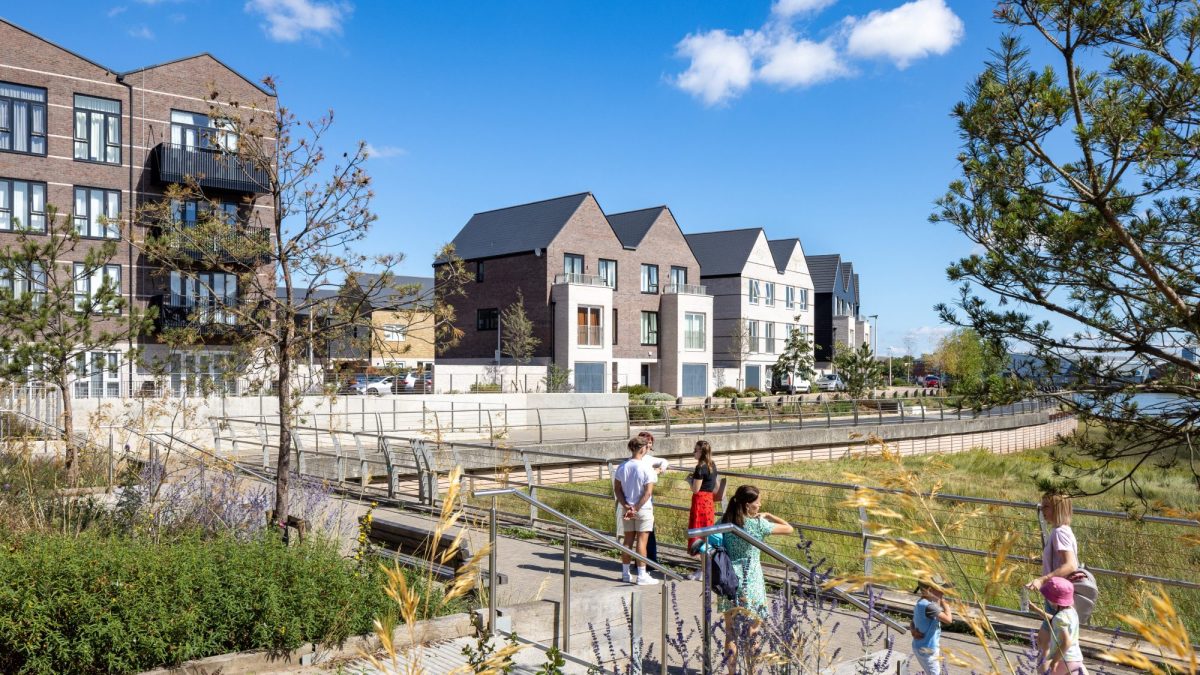
No more “cookie-cutter neighbourhoods” will be allowed under government plans to win over “Nimbys” with contemporary homes.
In a departure from Labour’s previously touted visions of streets with period-type terraces or Edwardian-style mansion blocks, new planning guidance favours developments “that reflect modern life” with room to work from home.
In its push for 1.5 million new homes, the Ministry of Housing, Communities and Local Government praised developments with modern architecture and green walkways in Leeds, Basildon and Rochester as examples to follow.
Officials highlighted homes in the Climate Innovation District in Leeds as “walkable and wheelable to a primary school, care home and leisure facilities”.
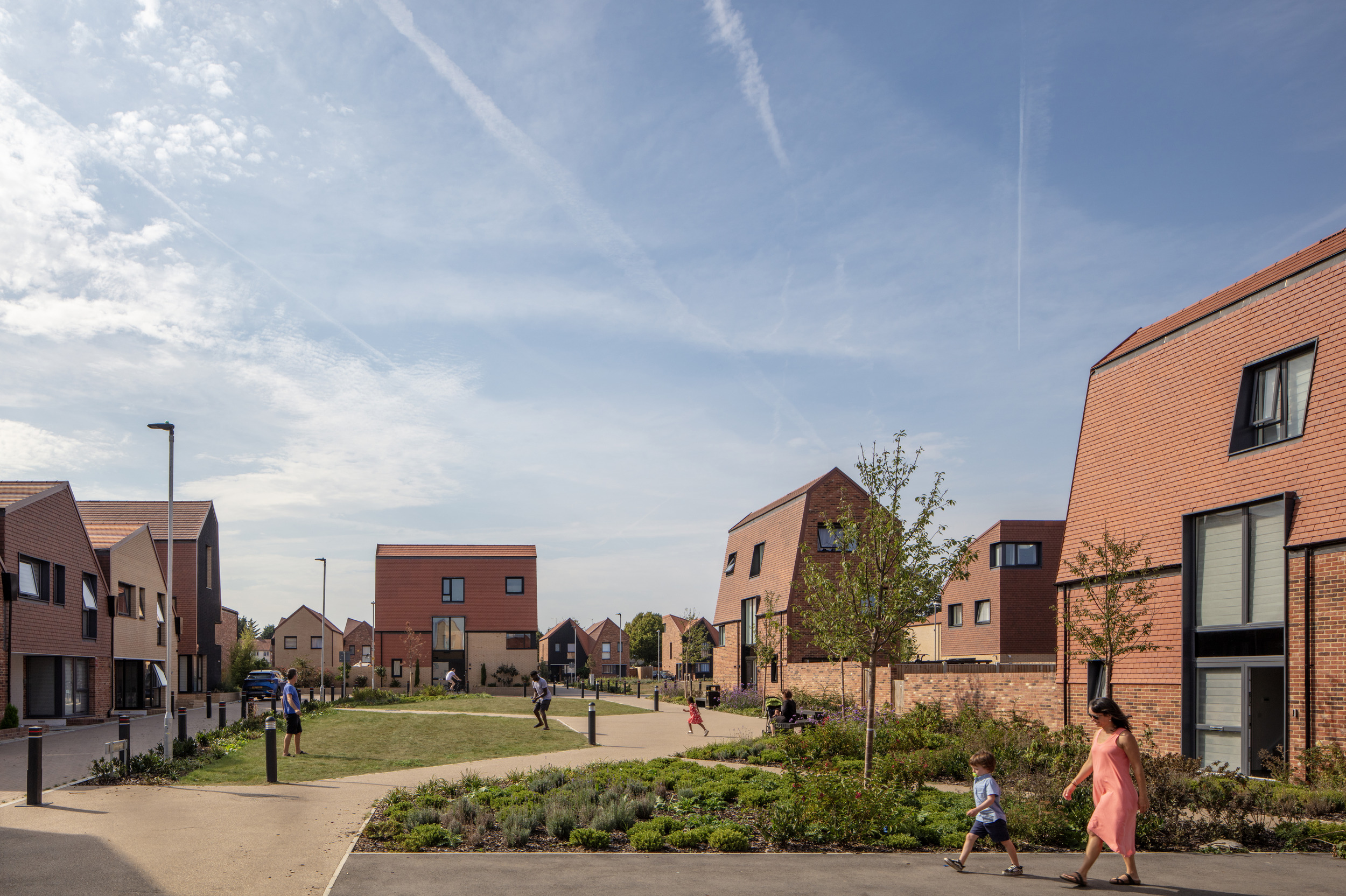
Beechwood Village in Basildon
NICK KANE
At Beechwood Village in Basildon, Essex, a mix of affordable and private homes with asymmetrical roofs inspired by the Arts and Crafts movement were factory-built a mile from the site, with homes customisable by residents. They sit in a network of pathways to nearby parks. “Quieter streets mean neighbours can connect, children can play safely and older residents can stay active,” the ministry said.
New homes at Rochester Riverside in Kent were praised for a “diverse mix” of family houses, maisonettes and flats with a “sense of place” on the banks of the River Medway and views of Rochester’s castle and cathedral.
The examples shy away from the images of Victorian-style townhouses released by Angela Rayner, the former housing secretary, to show what new development should look like. Those images were by Create Streets, a consultancy whose boss, Nicholas Boys Smith, had heavily influenced the Conservative government’s drive to build “beautiful”.

Labour had previously promised to cover Britain in Edwardian-style mansion blocks
CREATE STREETS
While Labour subsequently dropped a requirement for “beauty” imposed by the Conservatives, Sir Keir Starmer has said homes must be “well-designed”. When visiting the King’s period-style new town at Nansledan in Cornwall, the prime minister cited “variation” and “roads that aren’t all straight” as important elements of good design.
Guidance published on Wednesday will say developers should build homes with home-working space, storage for bins and bikes, and flexible layouts that adapt as families grow.
It sets out how neighbourhoods should have lots of green space and be located within walking distance of shops and businesses, to support local jobs and cut travel costs.
“Streets will prioritise walking and cycling, with dedicated routes linking homes, schools, places of worship, shops and parks,” the housing ministry said. This would “create safer streets for children [and] stronger communities that represent 21st-century living. There will no longer be cookie-cutter neighbourhoods,” it added.
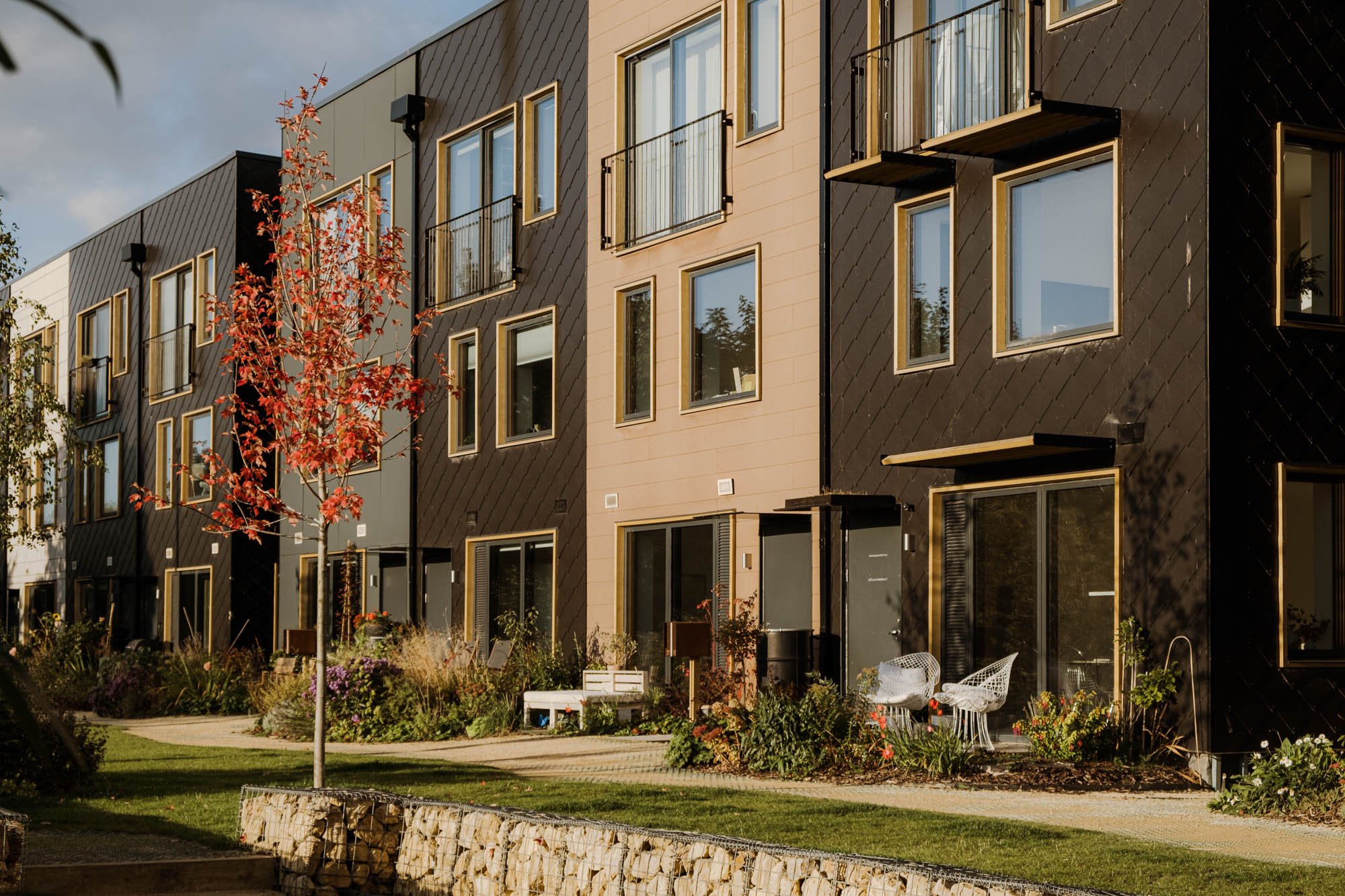
The Climate Innovation District in Leeds, an energy-efficient development just outside the city centre
CITU
Matthew Pennycook, the housing and planning minister, said the new design guidance “will help create more high-quality, well-designed, attractive and sustainable buildings and places. By making exemplary development the norm, not the exception, more communities will feel the benefits of new development and welcome it.”