
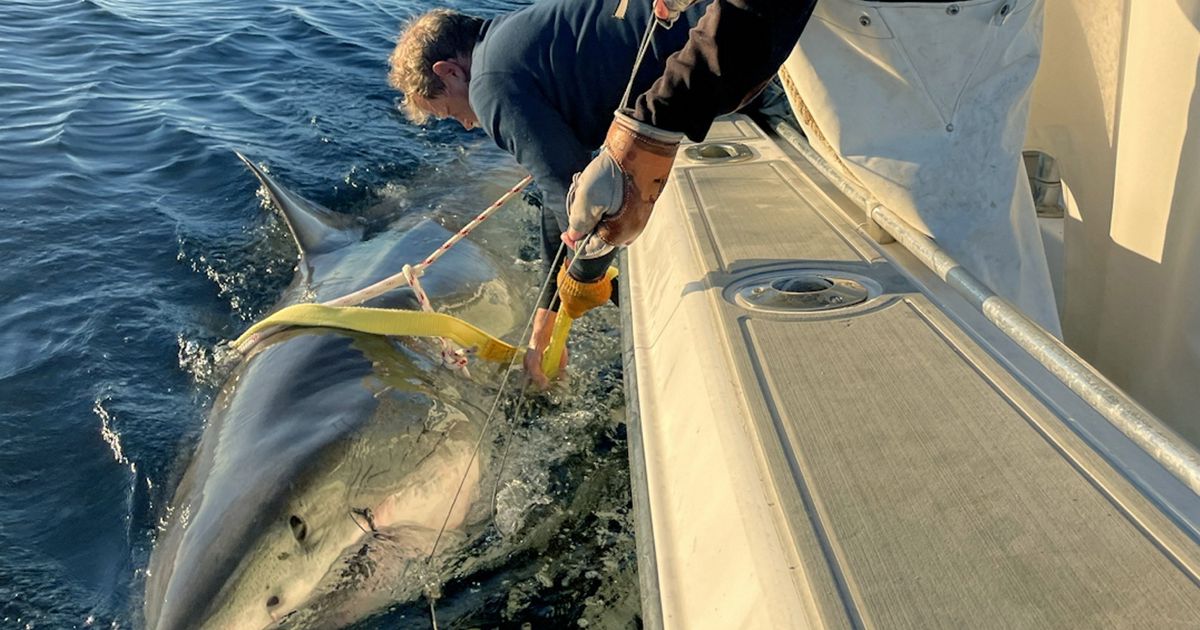
The massive shark has completed a lengthy journey with scientists now keen on observing its behaviour as it returns to warmer waters where Brits enjoy their holidays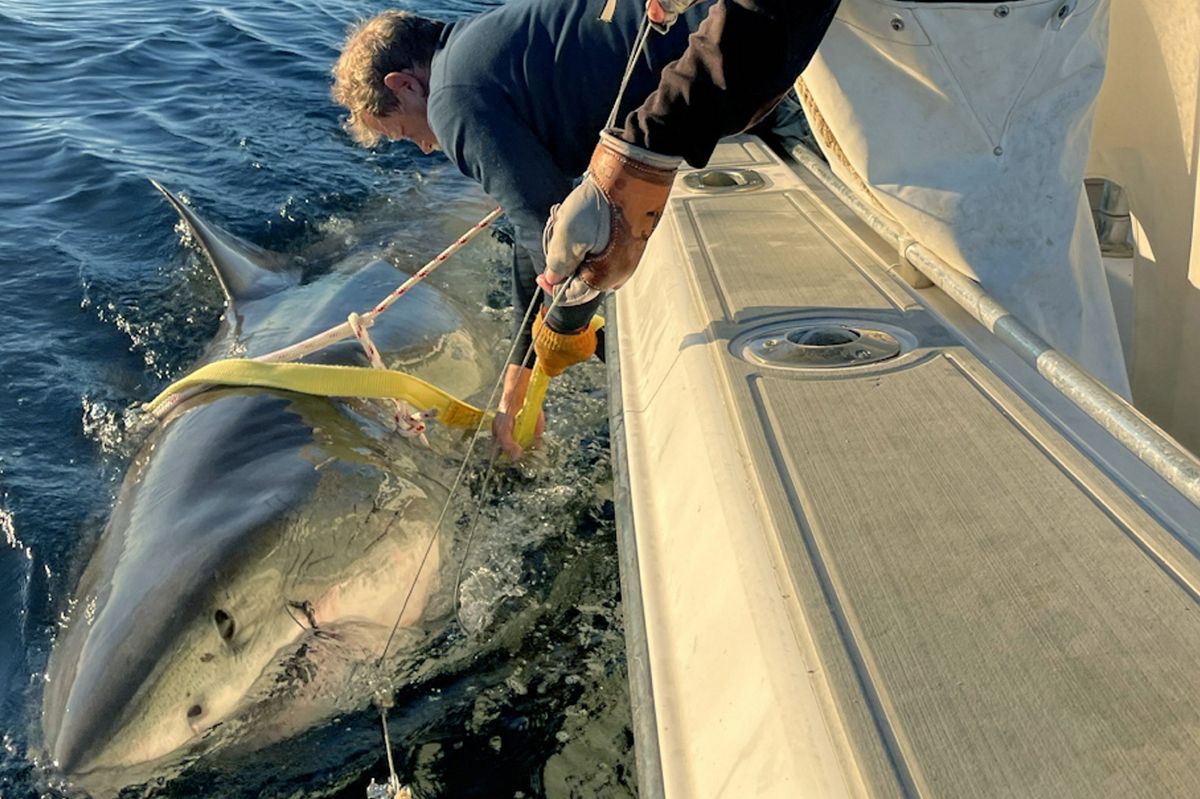
Contender is the largest great white shark ever recorded (Image: OCEARCH / SWNS)
The world’s largest male great white shark ever recorded has returned to a holiday hotspot.
Shark Contender returned to the warm waters of Florida following an extraordinary year-long journey that took him to the Gulf of St Lawrence, in Canada. The timing of the 14 foot, 1,700 lbs creature’s return has been closely observed by researchers, as it aligns with what they believe could be a critical late-winter and early-spring mating period for the sharks.
Chris Fischer, founder of marine research organization OCEARCH, said scientists are eager to better understand the reproductive behaviour of these apex predators – an area where limited data exists. “We’re trying to understand the reproductive activity around these animals,” Fischer said.
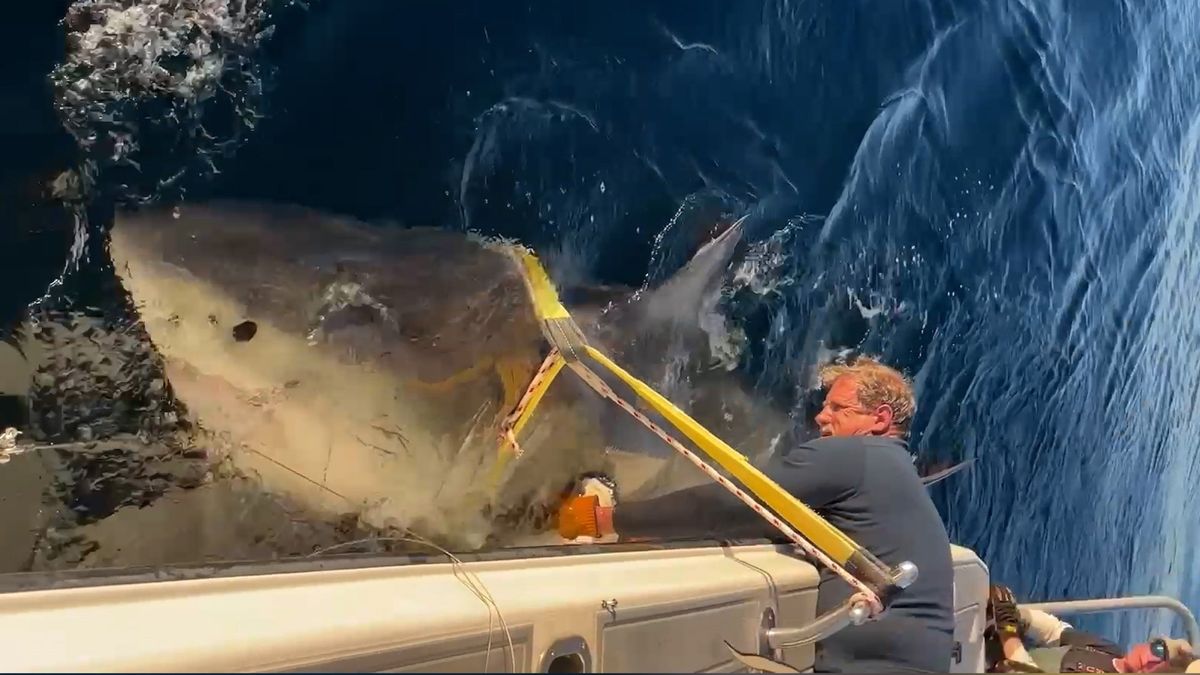
Contender arrived back in Florida early this month (Image: OCEARCH / SWNS)
READ MORE: Sydney shark horror as three attacks in 24 hours leave boy, 13, fighting for lifeREAD MORE: Monster pregnant deep-sea ‘dragon’ shark washes up on popular tourist beach
“Of the few clues we have, it seems like we need to be paying attention to the late winter and early spring area.” Contender was tagged just one year ago, on January 17, 2025, off the Florida-Georgia border.
Since then, he has completed one of the most extensive migrations recorded for a great white shark in the region. Fischer said Contender travelled all the way into the Gulf of St. Lawrence, spending significant time near the Brunswick area before beginning his journey back south.
Researchers say the shark’s return to Florida waters during this time window makes him especially valuable for studying potential mating behaviour. “It’ll be very interesting to watch this mature male white shark,” Fischer said.
“When will he be looking to mate? And could that be in the late winter and early spring, and where will he be?” The research team is also watching to see whether Contender encounters other mature sharks during this period.
Fischer noted that other tagged mature great whites – including Breton and Goodall – could provide critical data if their paths converge. “Most importantly, will there be other mature male white sharks like Bretton and mature female white sharks like Goodall and others that are in that similar region at the same time?” Fischer said.
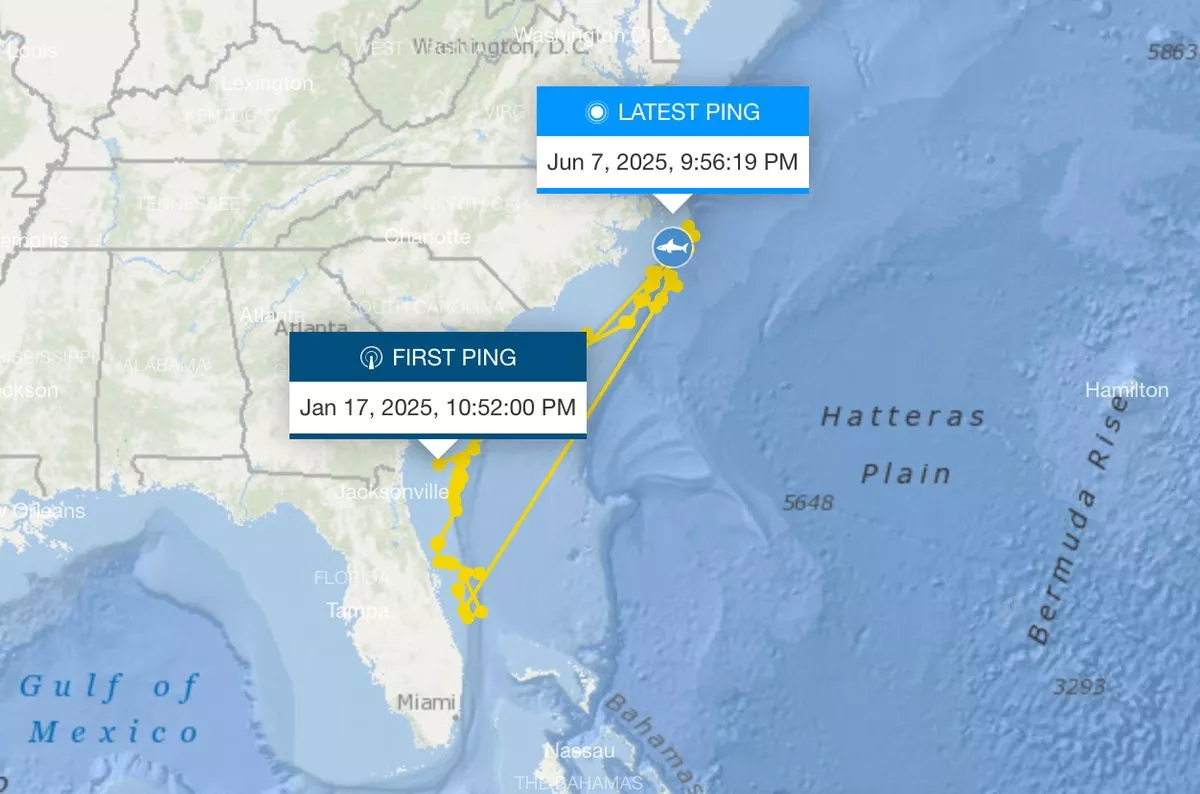
The shark travelled a great distance (Image: Ocearch)
Such convergence could give scientists rare opportunities to study great white reproduction through satellite tracking, blood sampling, and hormone analysis – areas of research that remain largely unexplored. OCEARCH has been at the forefront of great white shark research, using satellite tags to track movements across thousands of miles and international waters.
Fischer said the next two to three months will be especially important in understanding whether Contender’s movements are linked to mating behaviour. “What could his track reveal this winter that’s associated with mating?” Fischer said.
“That’s what we all have our eyes on for him over the next 60 to 90 days.”