
(Credits: Far Out / Oren Jack Turner / Wanda von Debschitz-Kunowski)
Wed 21 January 2026 16:17, UK
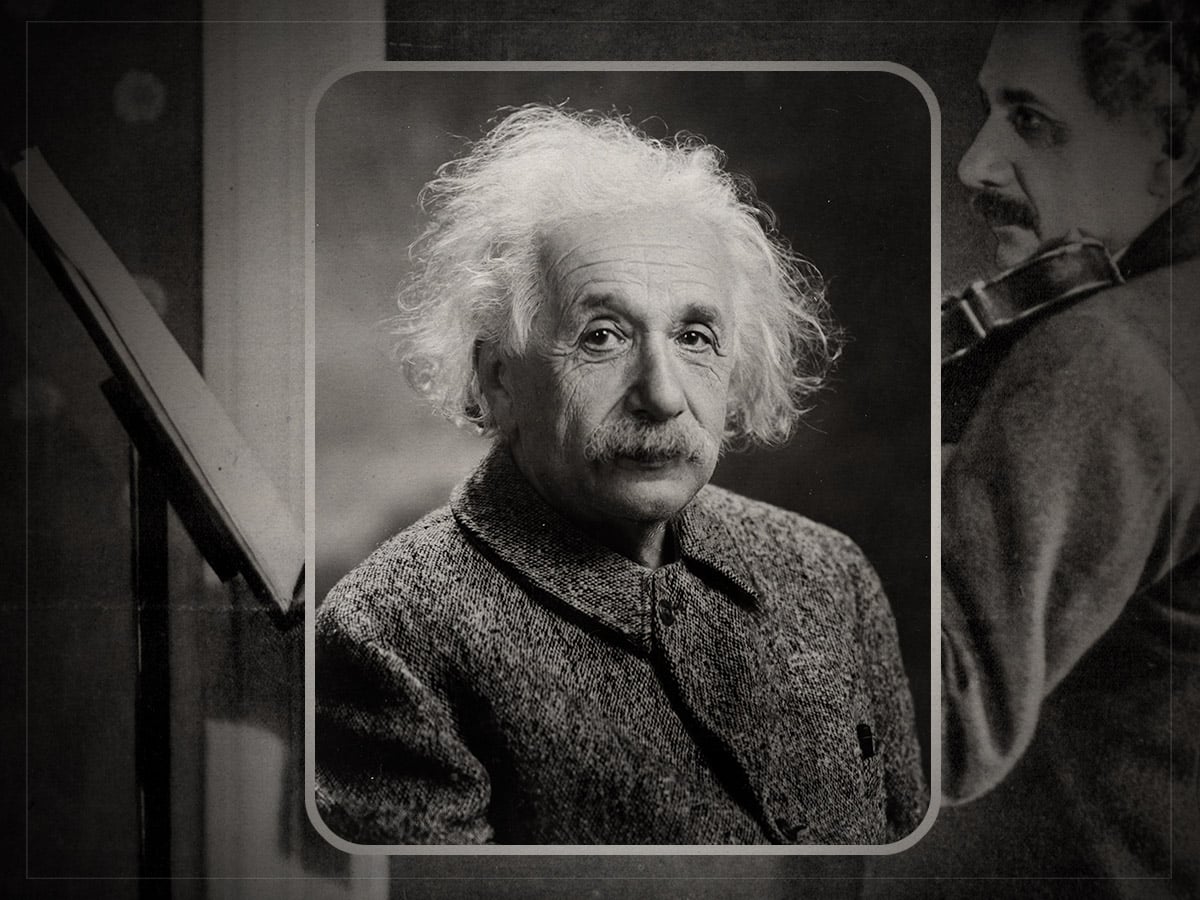
Music has inspired many pioneers throughout history, but it played a very special role in the development of the conceptual thinking of Albert Einstein. In fact, his love for music wasn’t just a passing infatuation but an enduring passion that shaped his views of the world as well as his vision of the universe.
Having developed an interest in music from an early age, Einstein later claimed that he would have wanted to be a musician if he hadn’t dedicated his life to science. He once wrote: “If I were not a physicist, I would probably be a musician. I often think in music. I live my daydreams in music. I see my life in terms of music… I get most joy in life out of music.”
Einstein’s mother was the musician in the family who urged him to learn how to play music but at the age of five, the future Nobel Prize winner wasn’t too moved. It was only when he was 13 that he was transformed by music, having discovered the violin sonatas of Mozart which inspired him to learn to play the violin on his own.
While Einstein always maintained his love for Mozart, he wasn’t moved by Beethoven’s work even though he was quite adept at performing his compositions. When he was in high school, Einstein actually played Beethoven’s violin sonatas for an examiner who claimed that the young boy had an incredible passion for music and his performance showed great insight.
In addition to Mozart, Einstein was also a huge admirer of Bach and often played the ‘Concerto For Two Violins’. Many have claimed that Einstein was surprisingly talented at playing the violin, including his second wife, Elsa, who revealed that she had fallen in love with the physicist because his rendition of Mozart was sublime.
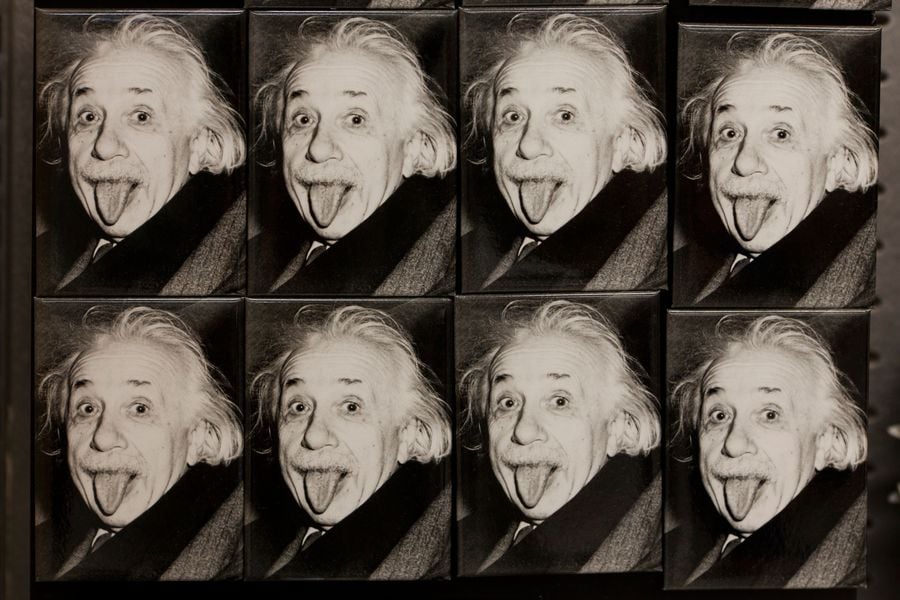 A world-shaping scientist and a cheeky so-and-so, Albert Einstein. (Credit: Alamy)
Alongside Mozart and Bach, Einstein’s favourite composers included Vivaldi, Schubert, Scarlatti and Corelli. He absolutely hated Wagner and famously said, “I admire Wagner’s inventiveness, but I see his lack of architectural structure as decadence. Moreover, to me his musical personality is indescribably offensive so that for the most part I can listen to him only with disgust.”
Some scholars have claimed that his conceptualisation of theoretical subjects such as gravitational waves were influenced by his deep understanding of musical structures. Even if such claims are far-fetched, he definitely incorporated music into his working process and often use music to get past obstacles.
Talking about his approach to problem-solving and his unique working process, Einstein once provided details about his routine: “First I improvise and if that doesn’t help, I seek consolation in Mozart; but when I am improvising and I feel I am achieving something, I need the clear constructions of Bach to get to the end.”
Through the works of the aforementioned visionaries, Einstein found the adequate inspiration to venture into uncharted territory, which changed our theories about the universe forever. Einstein’s relationship with music only proves that the union of science and art can lead to unimaginable progress and unprecedented creative discoveries.
The relationship between genius and inspiration is often reduced to a neat little myth, as if great ideas arrive fully formed in a flash of lightning. With Einstein, the reality was gentler and far more human. Music was not a decorative hobby running alongside his work, it was part of the machinery, a private language that helped him order the world when words and equations were not yet ready to cooperate. When he said, “I often think in music”, he was not being poetic for the sake of it; he was describing the mental space where possibility first begins to take shape.
That is what makes his musical life feel so instructive rather than merely charming. Mozart gave him joy and a sense of inevitability, Bach offered structure when he needed to build something solid, and the violin became a way of moving through frustration without abandoning the problem. Whether or not any single theory can be traced directly to a specific sonata misses the point.
Music helped Einstein remain curious, patient, and open to pattern, and those qualities are the real bridge between art and discovery. It is a reminder that breakthroughs are often less about raw intellect than about finding the rhythm that lets your mind keep going.
Related Topics