
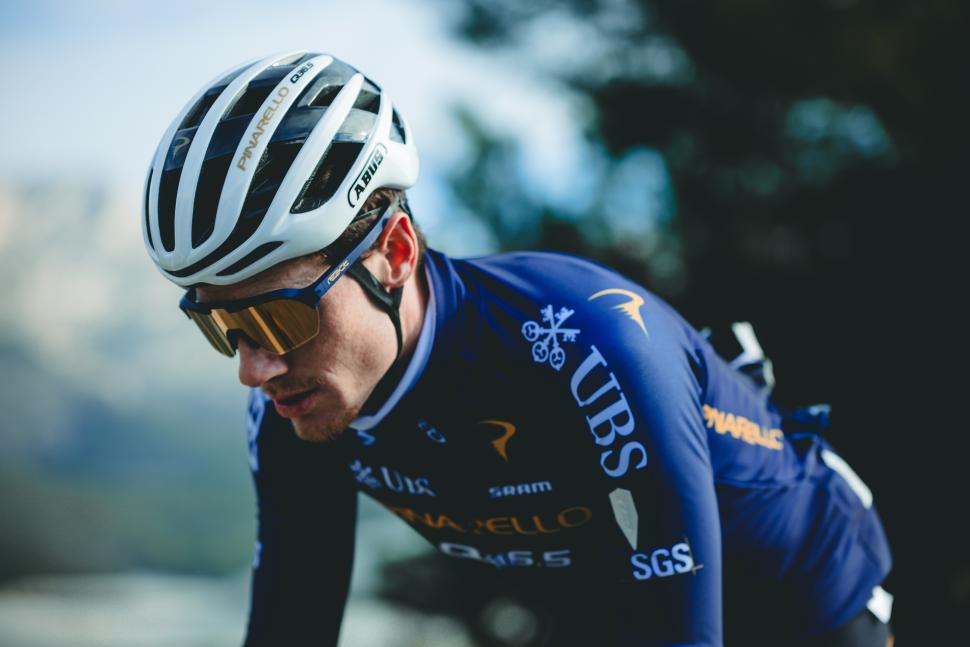
Former Tour de France green jersey Sam Bennett has spoken at length to road.cc about a heart procedure he underwent in November, with the Irish sprinter opening up about the subject today.
The 35-year-old won two stages plus the maillot vert at the 2020 Tour and then took two stages at the Vuelta a España two years later. However, he was forced to withdraw from that race with Covid-19 and hasn’t been able to return to that level.
It’s not certain, but it appears possible that heart symptoms which became fully apparent in November may have been hampering him for some time before that.
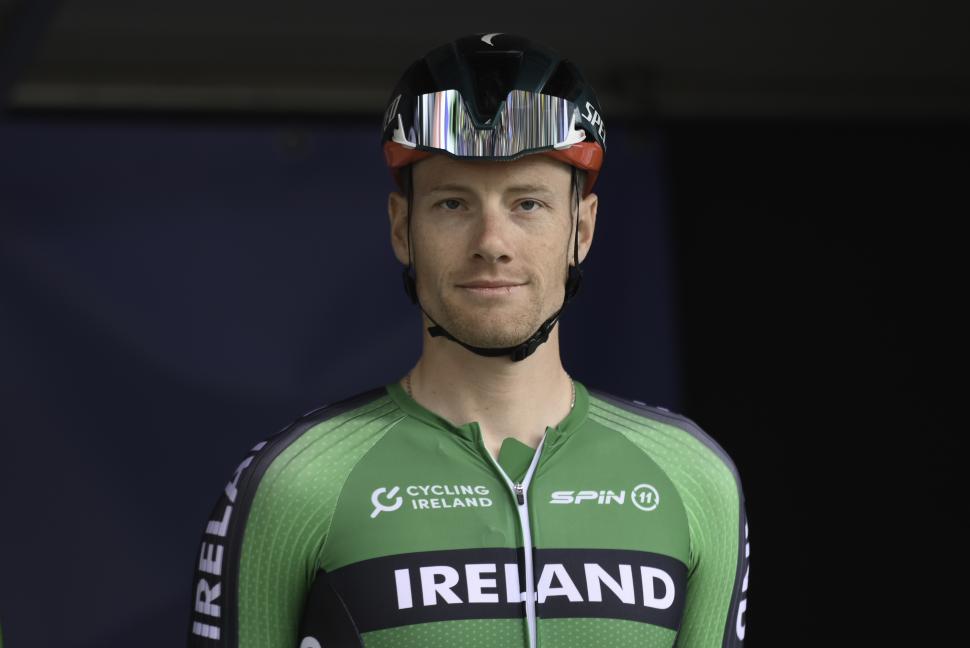 Sam Bennett, 2023 Glasgow worlds (credit: Alex Broadway/SWpix.com)
“The atrial fibrillation came on around the 13th, 14th of November, but I think it was underlying for quite a long time,” Bennett tells road.cc in what was a very frank 30-minute interview. “I was actually at Rouleur Live with my previous team, and I went back to the hotel room that night. I went to sleep and had some light flutters, and then some palpitations.
“I didn’t know what was going on. Then I remembered that I was wearing a Whoop and was able to check ECG, and it showed me that I had AFib, atrial fibrillation. I rang the team and they were absolutely amazing.
“They got me straight into specialists in London the next morning. I spoke to three different specialists. We decided to go with one in Frankfurt, Germany, then four days or five days later, I had the ablation, which was a success.”
Atrial fibrillation is an issue where the heartbeat becomes irregular and often faster than normal. It is related to the electrical signals in the heart, and is treated by a procedure called ablation.
“It’s quite straightforward,” Bennett explains. “They go in from the vein of the leg, close to the pelvis. They go in and they burn off the incorrect parts of the heart. Then what they do is they speed up the heart, I think using adrenaline, and they see if there are any other paths that can cause an irregular heartbeat.
“I’ve heard of some people getting it done while they’re awake. I was asleep, so it was super easy. And when you’re stuck in AFib for a few days and you come out on the other side, it was so smooth and so calm.”
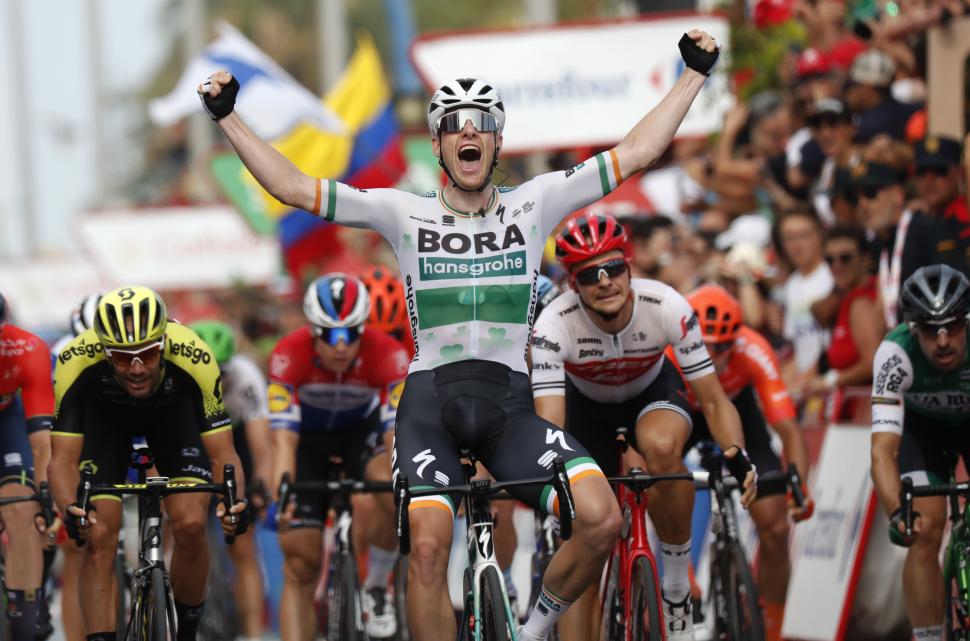 Sam Bennett, 2019 Vuelta a España (credit: PhotoGomezSport)
Bennett had to go on blood thinners for a period following the operation and, due to the risk of excessive bleeding had he crashed, he was unable to train on the road. His procedure was a little more complicated than some ablations due to the location within the heart that had to be corrected, meaning it would take three months for his heart to completely heal.
As a result he and his new Pinarello Q36.5 Pro Cycling Team decided to take things slowly. While he did return to the bike at the end of November, he caught flu after New Year’s Day and that further delayed things.
“They say when you have the flu, it’s not great for the heart. So I was really cautious then,” he says. “I really backed off.
“Then I went to the training camp, and I was at zero. Like, really zero. But actually, we had a great week. The progression was really quick, so I was super happy with that.”
Bennett reckons his return to proper training was only around January 10th or 11th. Barring any other delays, he hopes to return to racing in the middle to end of March. But, given his journey in recent years, getting going a few weeks later than usual is not a concern.
“It didn’t feel right the last few years”
In 2020 and early 2021 Bennett was the undisputed top sprinter in the sport. He won two stages plus the green jersey in the Tour de France and then dominated the fast finishes the following spring. He suffered a knee injury while training and missed the 2021 Tour plus much of the rest of the season as a result, but appeared close to his best again when beating Mads Pedersen to win stages one and two in the 2022 Vuelta.
However, Bennett caught Covid-19 and had to withdraw from the race. He hasn’t won a WorldTour event since.
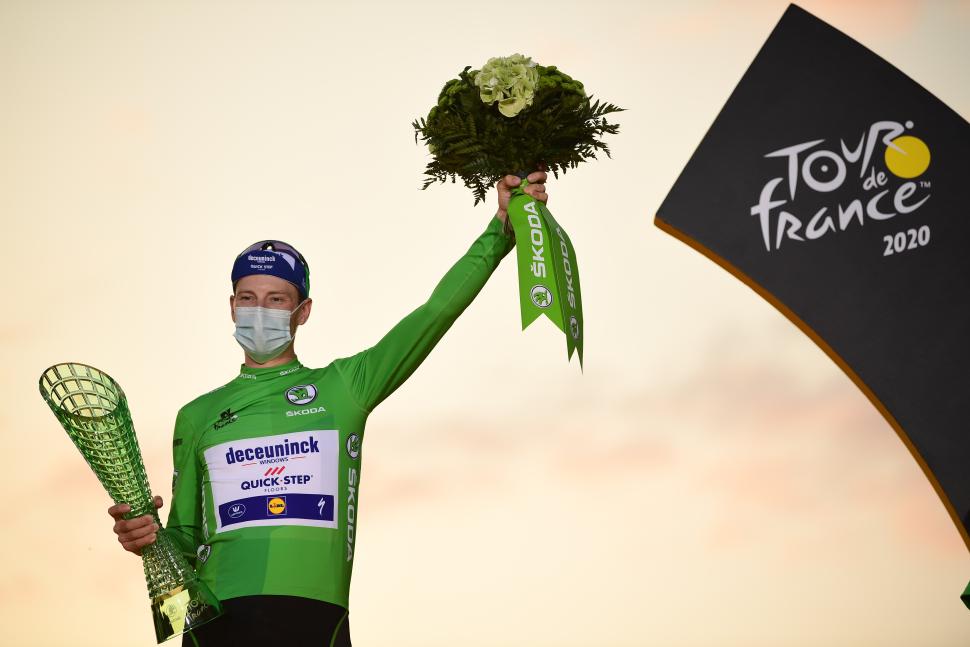 Sam Bennett wins the green jersey, 2020 Tour de France (credit: ASO/Pauline Ballet)
Given what he has been diagnosed with, and the link between Covid and heart issues, does he think the two are related?
“I don’t want to be the conspiracy theorist,” he laughs, “But it was from 2022 onwards that there was something going on.
“I don’t know how or what, if it was this or something else, but there was something. As a cyclist, you’re hyper aware of your body, like, maybe too much. It didn’t feel right the last few years. The timeline matches, but I can’t say whether it is or not.”
He is clear though that something was affecting him in sprints.
“I can’t be guaranteed that this has been the reason. If it is, it would explain a lot, because in training, I’ve been hitting some of my best numbers, in terms of general fitness and peak power and everything. But I couldn’t replicate the power in races. I could do it to a certain point, and then the body would just hit a limit.
“I discussed it with the heart specialist, giving him feedback of what I felt in the last two, three seasons. It’s not a given, but it’s possible that I was having mini episodes going into sprints. Because I always felt something. I couldn’t push, I would go into the sprint, and I’d be fine, and I’d go to get off the saddle. I wouldn’t be full of lactate, but I just had to sit back down. And it was just super strange.
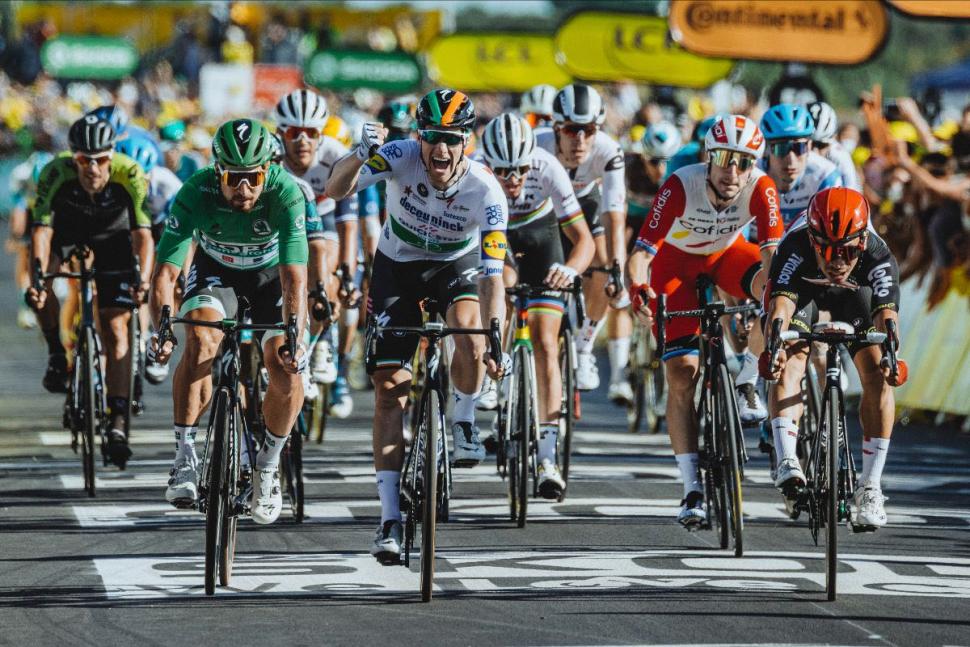 Sam Bennett TdF stage win 2020 – 1 (credit: SWpix.com)
“I don’t know if it is the same for everybody, but the specialist said that with the way I went into AFib, my top two chambers were beating twice as fast as the lower two chambers. He said it is possible that in the sprints, the top two start going to AFib and then you lose 30 per cent of the pumping power. You do lose that performance.
“I don’t want to put everything on this idea. It is a possibility, but it might not be the case. So I’m conservative with that part. But if it was, if the future shows that it was a problem, I’d be super happy to know the reason.
“I did feel flutters or palpitations in the sprints, but I just thought, ‘oh, good coffee’,” he laughs.
“You do have fear of the unknown”
Bennett’s case is far from the first example of heart arrythmia in sports. Multiple studies have shown that endurance exercise can increase your chances of developing the condition. Chloé Dygert, Robert Gesink, Nick Nuyens and Zdeněk Štybar are just a few of those who underwent surgery; each were able to return to the sport.
Bennett said he is aware of many other riders who were similarly affected, although understandably he didn’t want to name them due to their medical privacy.
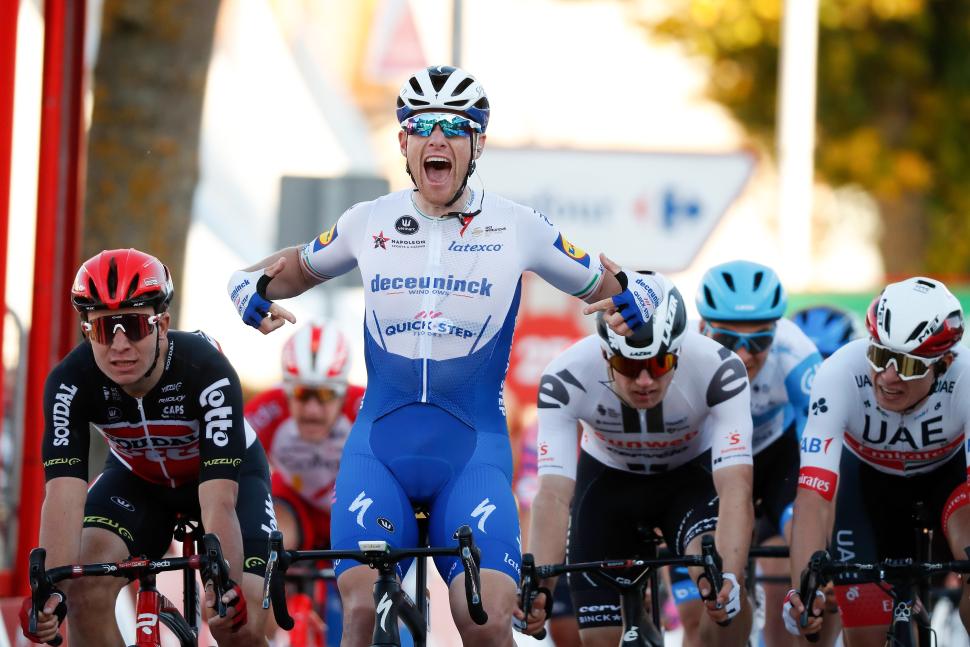 Sam Bennett, 2022 Vuelta (credit: PhotoGomezSport)
Bennett’s AFib was most pronounced that night in London in November but, in retrospect, he said he wasn’t feeling well in the days beforehand and did have flutters in training. He was undoubtedly frightened at the time but is keen to underline the condition is not unknown, and it is correctable.
“You do have the fear of the unknown in the moment,” he says. “You have these sensations and you’re not quite sure what’s happening. But this is the main reason why I want to share the stories, because you do hear that this is quite common.
“A lot of people are having AFib and then ablations. There is a fear of the unknown when it happens, but for younger cyclists or people in the general public, I wanted to share this so that they understand it.
“They don’t have to be afraid. Once you go after it and treat it, you can recover fully and get back to top level again as an athlete. And for a normal person, you can have a long normal life.”
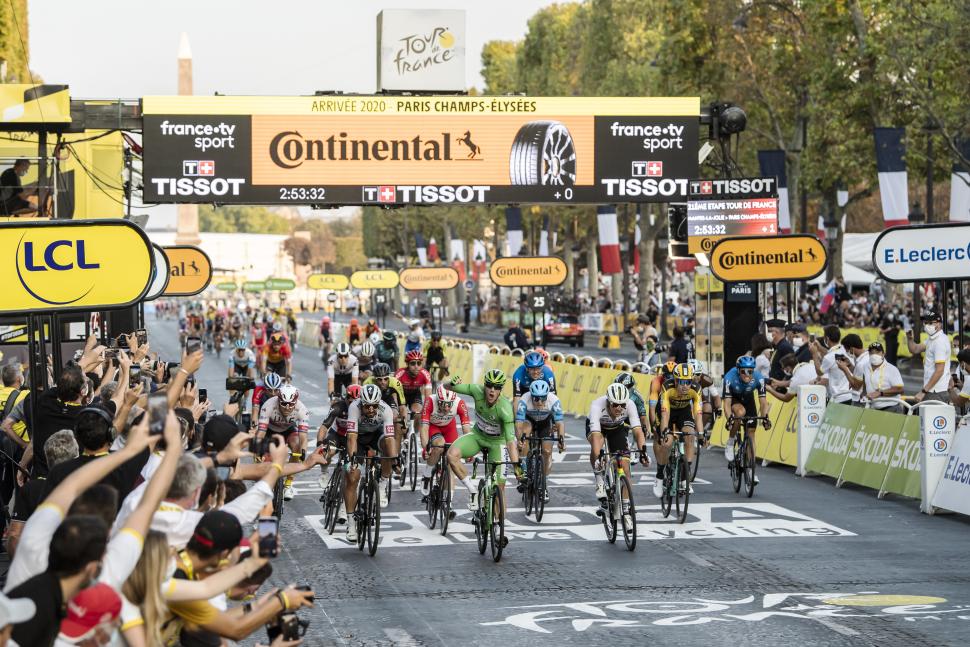 Sam Bennett wins in Paris, 2020 Tour de France (credit: ASO/Alex Broadway)
It goes without saying that any heart issues should be fully investigated to discover the cause, rule out danger, and to determine the right form of treatment.
Bennett believes that modern technology can help get a head start on determining what exactly is going on.
“If I was going to share one message, it is that if people can afford it, having a smartwatch that has ECG means they can catch it in the moment. A lot of the time they might feel something, but they are not sure what it is. They go to a specialist, they describe it, and they don’t know what’s happening.
“With the smart watches, the ECGs might not be the most accurate, but they’re enough for a specialist to see what’s happening and to really go from there.”
“I still get that pain in my gut when I lose a race”
Bennett is now getting ready for the new season, his first with Pinarello Q36.5 Pro Cycling. It’s a fresh start after two years with Decathlon Ag2r La Mondiale. He took several wins there but was never quite at his best. He says he did feel himself at the Four Days of Dunkirk in 2024, where he won four stages plus the overall, but otherwise didn’t quite click.
He’s not 100 percent certain the AFib was what was holding him back in the years since his last WorldTour win at the 2022 Vuelta, preferring to wait and see how he performs before getting his hopes up. But it’s certain that something wasn’t quite right. If his heart was indeed the issue, there is every chance he could have his best season in years.
“The only way to look at it is, I’m still hitting the numbers in training,” he says. “I’m here in the new team, new opportunity, and they’re doing amazing work. I have to say what they’re doing is quite impressive.
“It was difficult in December, watching all these guys doing all these tests and progressing. I wanted to be there with them and to test myself and to see what I can become, but there’s still time. I think if I get healthy now, and I have an amazing team with amazing support, I have everything in place. If I can’t do it here, I can’t do it anywhere. So I’m quite confident that I’m in the best place to come back, to reach the best level possible.”
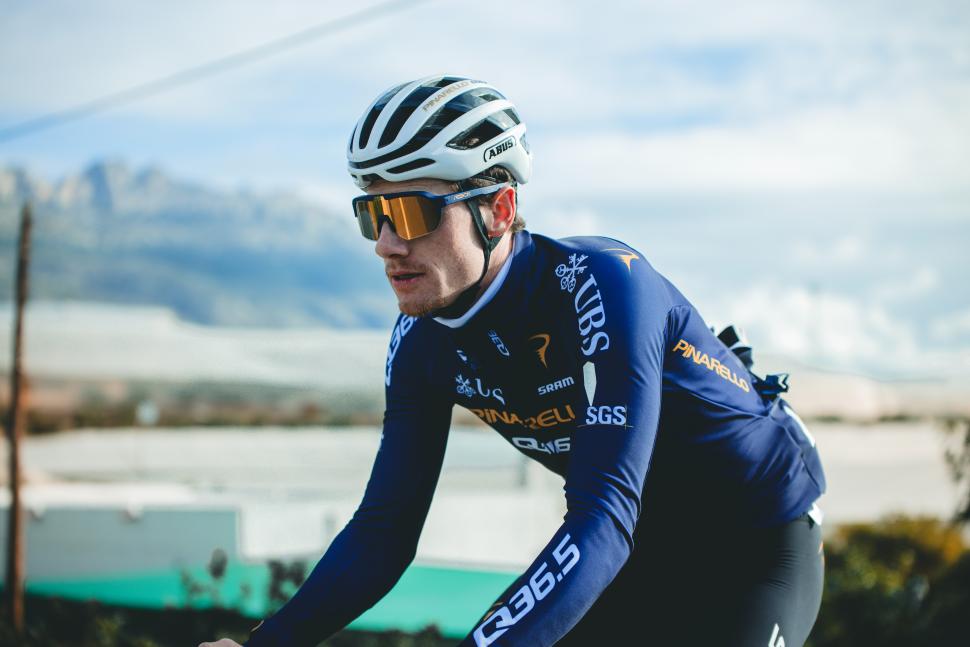 Sam Bennett (credit: Pinarello Q36.5 Pro Cycling Team)
What helps Bennett is the presence of head coach Kurt Bogaerts. The two worked closely together before as part of the An Post Sean Kelly team, with Bogaerts helping Bennett get out of a post-injury slump in 2013. He almost walked away from the sport but with encouragement and guidance from Bogaerts and Sean Kelly, Bennett won a stage of the Tour of Britain and secured his first pro contract.
Bogaerts knows what it takes to get the best out of him, and Bennett is hungry to deliver.
“I just want to hit my best level again,” he says. “I still get that pain in my gut when I lose a race. It f**king kills me. What’s frustrating is when you’re watching guys in front of you and you’re like, ‘I know I can beat these guys.’ But I can’t extract the performance.
“I’m looking down, and I can see my Watts are low. I can see I’m there with them. I’m there, and I just can’t hit what I know I can hit. And that kills me.”
Suffering defeat after defeat has been a very difficult experience for a rider with over 70 wins, but he’s kept plugging away.
“I think what keeps me going is when I get the glimpses of form and I see the numbers are right. I suppose I’m a bit resilient as well. Or else I’m just stubborn,” he laughs.
“I just want to be in the races competing. I don’t want to be making up numbers, getting killed in every race. I want to be at my best level. And then if I reach that, then of course if I hit certain targets, that I get my opportunity in Grand Tours, or whatever it may be.
“If I’m not at the level, I don’t want to waste anyone’s time. I want to be realistic. I don’t want to take places from other riders who deserve it more than me. I don’t want any gifts, It’s more black and white.
“I am pretty positive I’ll hit the level, and I’ll be able to show my true colours and race at the top level again.”