

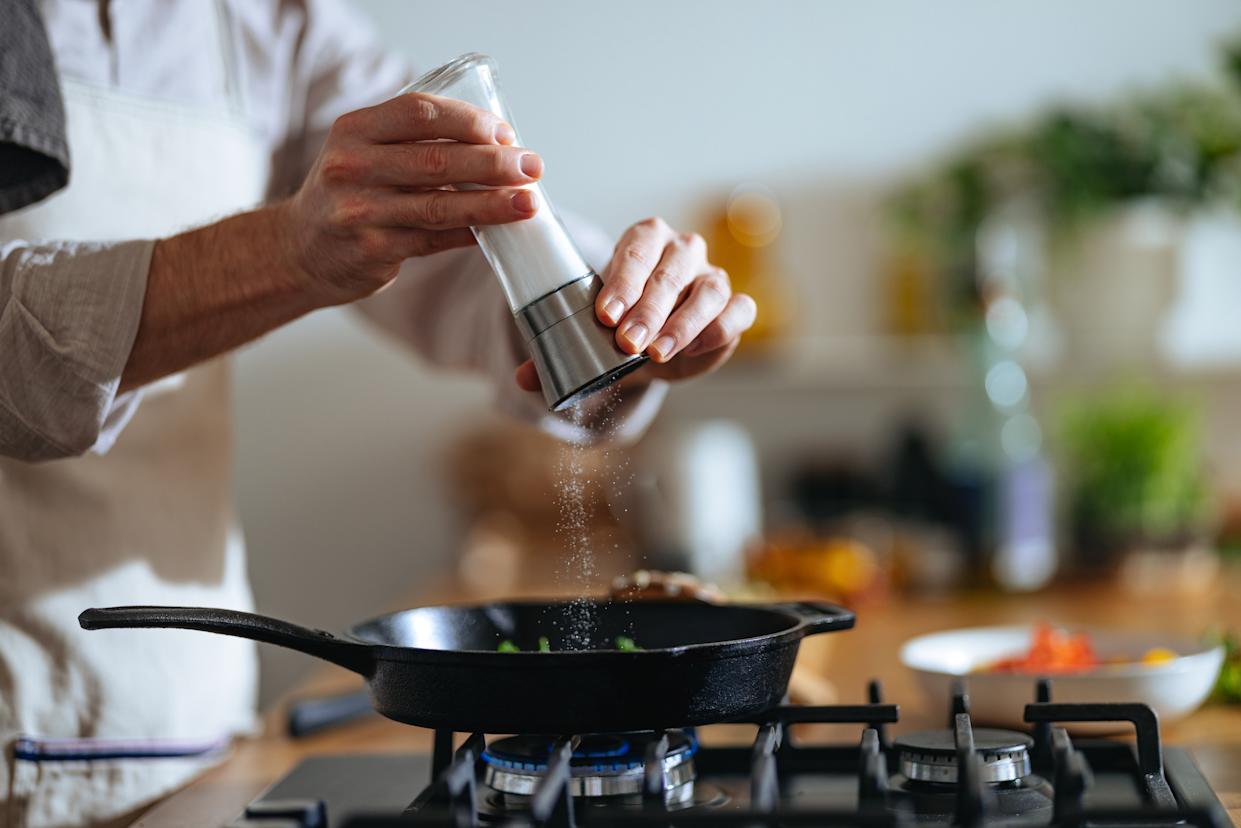
Excessive amounts of salt can have long-term health effects.
(miniseries via Getty Images)
Any chef will tell you that salt equals flavour. And they’re not wrong. There’s plenty of research that confirms salt enhances the flavour of food. There’s a reason it’s a kitchen cupboard staple, after all. However, too much salt can lead to major health issues.
According to a recent study by the British Heart Foundation (BHF), the amount of salt that adults in England consume daily is equivalent to 22 bags of crisps. That’s approximately 40% more than the NHS-recommended maximum of 6g.
A YouGov survey of more than 2,000 adults also found that over half (56%) of Brits struggle to estimate their daily salt intake, highlighting the limited awareness around salt and how it affects our health.
Dell Stanford, senior dietitian at the BHF, says: “Most of the salt we eat is hidden in the food we buy, such as bread, cereals, pre-made sauces and ready meals, so it’s often hard to know exactly how much salt we’re consuming.”
On average, women are more sensitive to salt than men, so their blood pressure is more likely to rise when they consume more sodium. This is often down to hormonal changes during the menstrual cycle, pregnancy and menopause, which can affect how the body handles sodium and regulates blood pressure.
If high salt intake is left unaddressed, it can lead to high blood pressure, increasing the risk of heart failure, kidney damage and other cardiovascular complications.
Action on Salt states that, if everyone in the UK reduced their daily salt intake by as little as 1 g, it would prevent more than 4,000 heart attacks and strokes every year.
Here are some signs to look out for if you suspect you’re consuming too much salt in your daily diet.
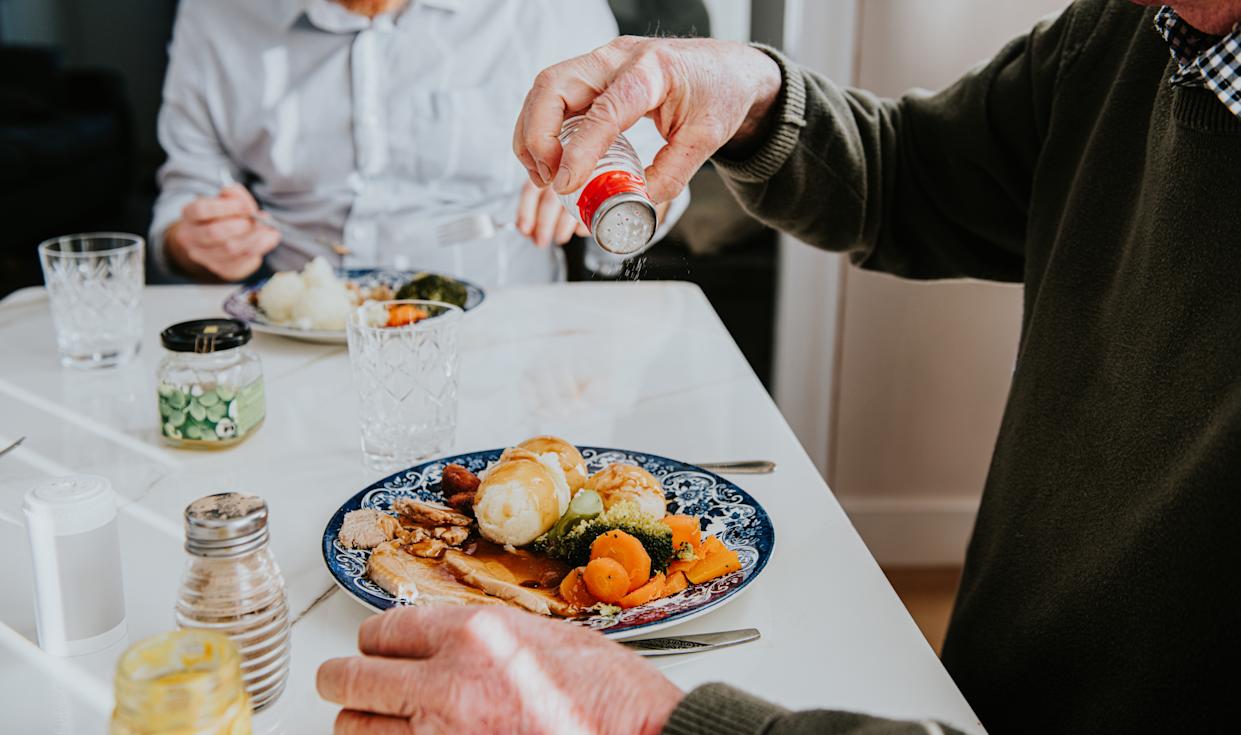
There are a number of signs you might be eating too much salt, including intense thirst, bloating and headaches.
(Catherine Falls Commercial via Getty Images)Signs you’re eating too much saltYou’re ridiculously thirsty
If you’re noticing intense waves of thirst, you may be consuming too much salt.
This happens when your body needs water to dilute the excess sodium that has been absorbed into your bloodstream.
Even small rises in sodium can make you feel thirsty. That’s why, after eating a takeaway, you might feel extremely thirsty. Chances are that it contained a high amount of salt.
You’re regularly bloated
One of the most common signs you’re eating too much salt is bloating. You might notice your face looks puffier than usual or that you feel swollen throughout the day – this happens because your body holds on to water after consuming excess salt. This is to keep sodium levels balanced, thereby increasing blood volume and causing bloating.
Registered dietitian, Aisling Piggot, says, “Lots of salt can have an osmotic effect on the gut, drawing water into the stomach and causing bloating and excessive gas.”
You’re experiencing frequent headaches
There is research that suggests headaches and migraines can be linked to a high salt intake.
A study from 2014 found that, when participants reduced their salt intake, there was a reduction in the number of them suffering from headaches. In contrast, other neurological research from 2016 showed that a history of severe headaches or migraines was correlated with lower dietary sodium.

Too much salt can cause frequent headaches and migraines.
(Olga Rolenko via Getty Images)You’re going to the toilet more
Whether you’re urinating more throughout the day, or the urge is waking you up in the middle of the night and impacting the quality of your sleep, there is evidence to suggest that the more salt you consume, the more you need the toilet.
In a study of over 300 volunteers, researchers from Nagasaki University in Japan found that reduced salt intake led people to urinate less.
A separate report also discovered that lowering daily salt intake helped lessen urinary urgency and frequency – symptoms of an overactive bladder.
You’re suffering from increased fatigue
That constant bloated feeling from water retention can also leave you feeling tired and sluggish. This is because your body is working hard to restore fluid balance and flush out excess sodium.
Foods you might not realise can be high in sodium
Sandwich meats like ham and salami
Protein powders and shakes
Salt is essential to human physiology – but only in moderation.
(miniseries via Getty Images)Simple ways to reduce your salt intake without losing flavour
➡️ Season with different herbs and spices for added flavour
➡️ Choose low-sodium or no-added-salt versions
➡️ Limit sauces or ask for them on the side when eating out
➡️ Eat more natural foods and avoid ready meals