
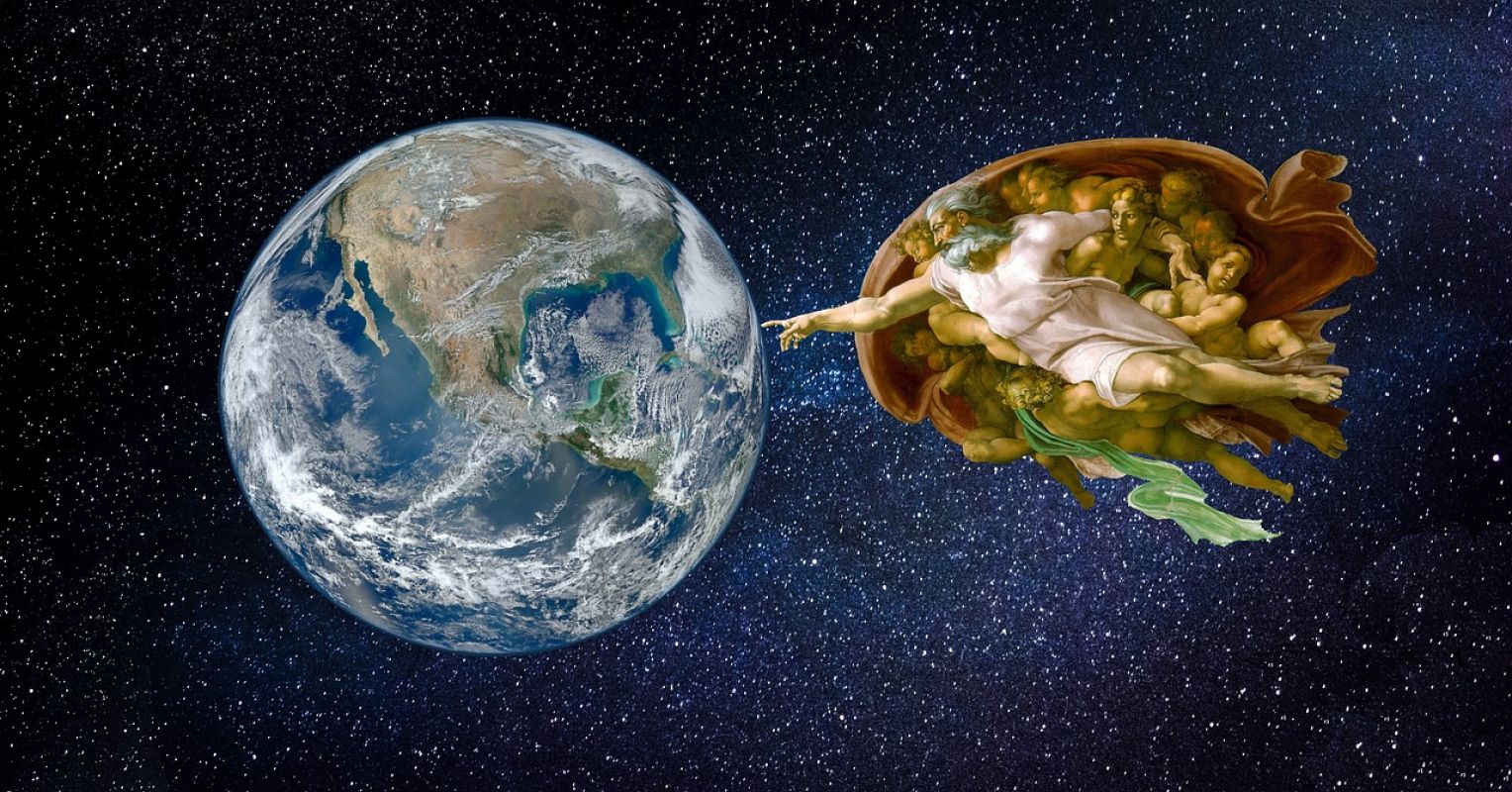
In the second line of the Hebrew Bible, before light, before land, before anything with a respectable shape, the world is described as tohu v’bohu. Depending on the translation, this primordial state is rendered as “formless and void,” “empty and waste,” “invisible and unformed,” or, more poetically, “chaos with a pulse.”
Which is to say: The universe began as a mess.
On my podcast, Fifty Words for Snow, where my cohost Emily Garcés and I hunt for words English forgot to invent, we recently talked with philosopher Peter Rollins about this ancient phrase and immediately felt its modern relevance. Because tohu v’bohu is not just a theological curiosity. It is the emotional landscape of anyone who has ever opened a blank document and thought, “I have absolutely no idea what I’m doing.”
In creative culture, we sometimes call this phase the “shit draft.” Get it all down, we’re told. Don’t judge it yet. Allow it to be terrible. You can fix it later. This advice is practical, but emotionally bleak. It frames the beginning of creation as garbage.
What if we renamed it?
What if, instead of the shit draft, we called it the tohu v’bohu draft? The stage where everything is formless, chaotic, and brimming with unruly potential. The phase where you are not producing waste, but standing at the edge of a small personal genesis.
Suddenly, you’re not failing. You’re cosplaying God.
The Creative Power of Nothing
Rollins pointed out something quietly radical about this word: It names a kind of productive nothingness. Not empty in the sense of barren, but empty in the sense of unclaimed. Like a blank canvas that looks useless until the first reckless brushstroke lands.
This reframes creativity itself. We often imagine artists as people who pull brilliance out of thin air. But creation doesn’t come from nothing. It comes from this strange middle state. A bubbling confusion. A cloud of half-thoughts. A mental junk drawer where old ideas, overheard phrases, emotional residue, and forgotten memories collide.
In other words, tohu v’bohu is not the absence of creativity. It is the compost pile.
Present Absence and the Engine of Desire
Rollins also spoke about what philosophers call “present absence.” Jean-Paul Sartre used the example of waiting for someone in a café who never shows up. Their absence is not neutral. It has emotional weight. You feel the shape of what isn’t there.
That gap is not empty. It is active.
This is also how creativity works. The thing you cannot quite say yet. The idea that keeps circling but refuses to land. The sentence you keep revising without satisfaction. That friction is not a problem to solve. It is the engine itself.
We are animated by what remains unresolved.
Why Mystery Works Better Than Clarity
You can see this dynamic everywhere. The Mona Lisa has become the most famous painting in the world not because we understand her smile, but because we don’t. The ambiguity is the magnet. If Leonardo had helpfully labeled her emotional state with a Post-it note, the line at the Louvre would disappear overnight.
The most successful lingerie brand on the planet is not called Victoria’s Transparency. It’s Victoria’s Secret. Desire is built on partial revelation. What is withheld creates movement. What remains enigmatic invites attention.
This doesn’t only apply to romance. It applies to stories, art, friendships, religion, and even marketing. We are drawn toward what leaves space for imagination.
Naming Nothing Changes Everything
During our conversation, Rollins brought up “zero.” Before zero existed, numbers represented only things. Quantities. Objects. Stuff you could count on your fingers. But when humans invented a symbol for nothing, mathematics changed.
Absence became operational. New equations became possible. Imaginary numbers emerged. Entire fields of knowledge opened up. Progress did not come from adding more things. It came from learning how to work with nothing.
Giving language to absence reshapes reality.
That is part of what makes tohu v’bohu feel so psychologically useful. It gives dignity to the uncomfortable pre-creation stage we usually rush through or try to suppress. The awkward first draft. The emotional fog before clarity. The confusing season of life when everything feels unformed.
Instead of interpreting that phase as failure, this word invites us to see it as structural. Necessary. Even sacred.