
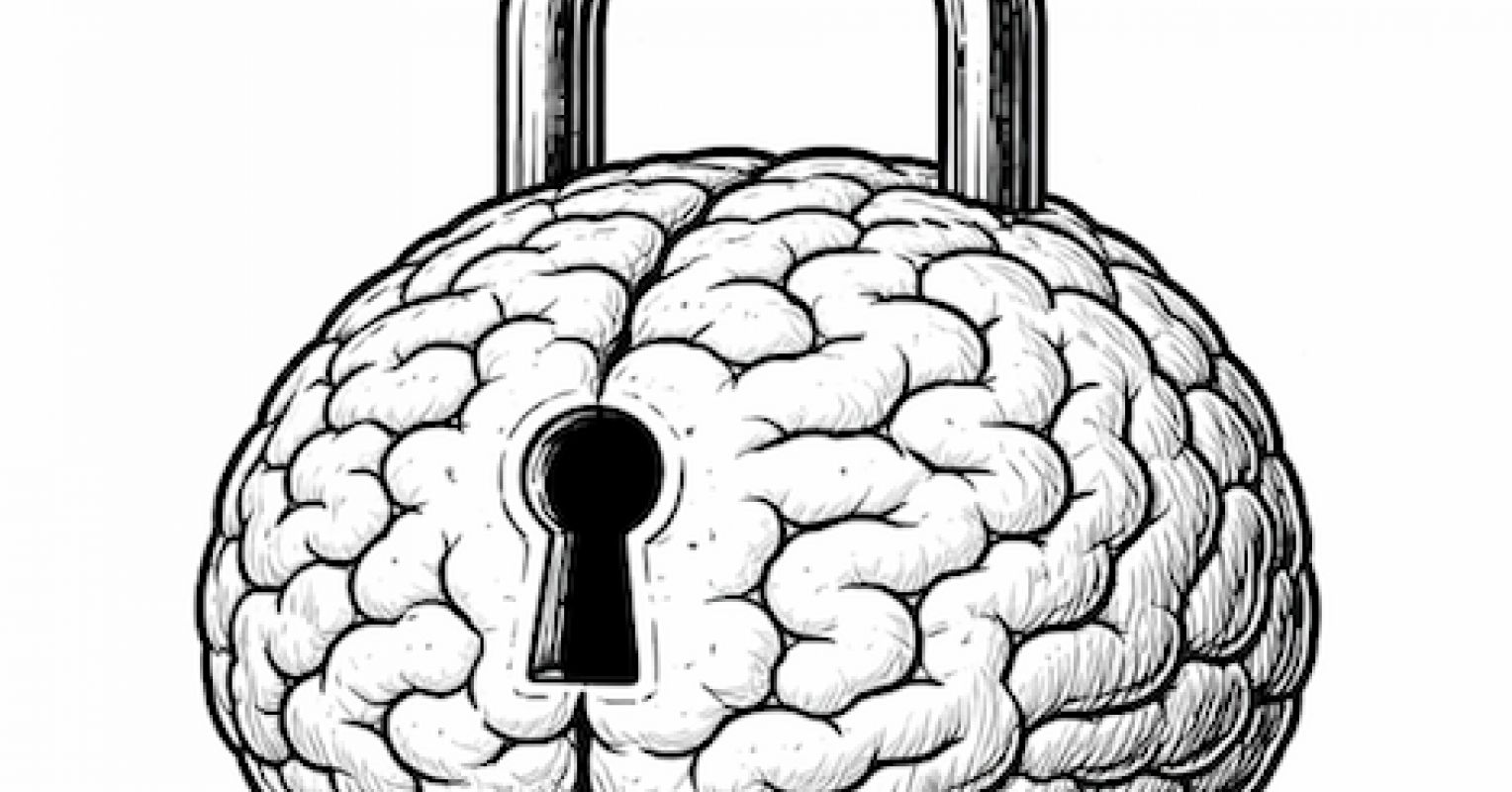
First came Gutenberg, who unlocked words by taking them from the scribe’s hand and placing them in the machine. Recorded thought could now travel and persist. The work of the mind began to shift from preservation toward interpretation. Then came the internet, which unlocked facts. The library collapsed into a search box, and recall gave way to retrieval and synthesis. Knowledge became less something we carried and more something we could summon.
I’ve often said that large language models unlock thought itself. They generate content with a fluency that resembles understanding. The cognitive task appears to be shifting again, this time from synthesis toward thinking itself. The progression feels intuitive as each step moves closer to the core of cognition. Each technology seems to extend a deeper layer of mental work.
And yet, this last step feels different and even disconnected. It’s not just more powerful, but different at a fundamental level. My sense is that we are no longer adding another rung to a ladder, but changing the basic structure itself.
From Extension to Externalization
Every previous cognitive technology functioned as an extension of an already-formed mind. Books extended memory. Indexes and search engines extended recall. Calculators extended arithmetic. Simply put, they were prosthetics for thought, not substitutes for its formation. What is emerging now is something else entirely. For the first time, the process of arriving at a coherent answer no longer has to occur inside a human mind. It can be generated elsewhere and delivered whole.
This is what I have called anti-intelligence. It names a form of output that is fluent, and often correct, yet produced without the interior struggle or the moment of comprehension that has always accompanied human knowing. Anti-intelligence is language severed from epistemic interior. And because of this, the history of tools has crossed into the history of cognition itself.
From Tool to Partner to Climate
Our relationship with this shift has already moved through stages. At first, AI appeared as a tool, something we used. Soon after, it came to be experienced as a partner, a collaborator in drafting, coding, diagnosis, and ideation, a presence that could participate in the production of thought.
But for those now growing up with it, AI will be neither tool nor partner in the traditional sense. It will be a climate.
A child who turns to a conversational system with a question is not simply using an instrument. They are forming a mind inside a medium that offers coherence before confusion has time to fully form. Development begins to occur within an environment where answers precede struggle and synthesis arrives before experience.
This is the deeper implication of growing up in an anti-intelligent world. It’s not a story about laziness or dependency. It is a story about ontogenesis, about the conditions under which minds learn what it feels like to not yet know, to sit with partial understanding, to revise, to doubt, and to slowly assemble a model of the world.
The Migration of Cognitive Work
Within such a cognitive climate, the center of gravity begins to shift. The work of building internal models gives way to the practice of querying external ones. And the tolerance for ambiguity is gradually replaced by techniques for engineering it out. Ultimately, the slow, formative construction of meaning yields to the managerial task of selecting. Intelligence, or at least its polished outward manifestation, begins to migrate from something we become through effort to something we summon through interface.
Every technological epoch helps reshapes cognition, But this is the first in which the act of knowing itself, not merely its storage or transmission, is being externalized.
What Must Remain Human
If coherence can be outsourced, what remains uniquely and indispensably ours? These are fascinating yet tormenting questions that we must face.
Not information, which is now abundant.
Not fluency, which machines display effortlessly.
Not even raw problem-solving speed.
What remains are the costs that just can’t be automated:
The capacity to stay with uncertainty rather than rush to premature closure.
The humility that comes from knowing one’s beliefs are provisional.
The judgment required when information is incomplete and the stakes are real.
The slow formation of inner models that carry emotional and moral weight.
At the center of all of this is authorship—the sense that a conviction is truly one’s own because it has been tested, revised, and earned through the friction of lived thought rather than delivered fully formed. These are not efficiencies, but burdens. And they are precisely what make understanding formative rather than merely functional.
The New Epoch
So, let’s return to this simple story with which we began, but see it in a rather different light.
Gutenberg unlocked words.
The internet unlocked facts.
Large language models unlocked thought.
AI unlocked cognition from the mind.
What’s now being unlocked is more radical still and that’s the possibility of a world in which the process of knowing no longer has to live inside a human mind at all.
We aren’t only changing tools, but changing the medium in which minds are formed. The critical question of this new epoch is no longer what machines can think, a question that is being answered with increasing technical sophistication each year. We’re entering a period of cognitive climate change, a new but profound alteration in the environment in which minds form, reason, and come to trust their own conclusions.
The deeper question is what becomes of a species when thinking itself becomes an environment rather than an interior act, when coherence isn’t local. And the struggle that once shaped thought and judgment may no longer be structurally required.