
(Credits: Far Out / Alamy)
Fri 23 January 2026 19:30, UK
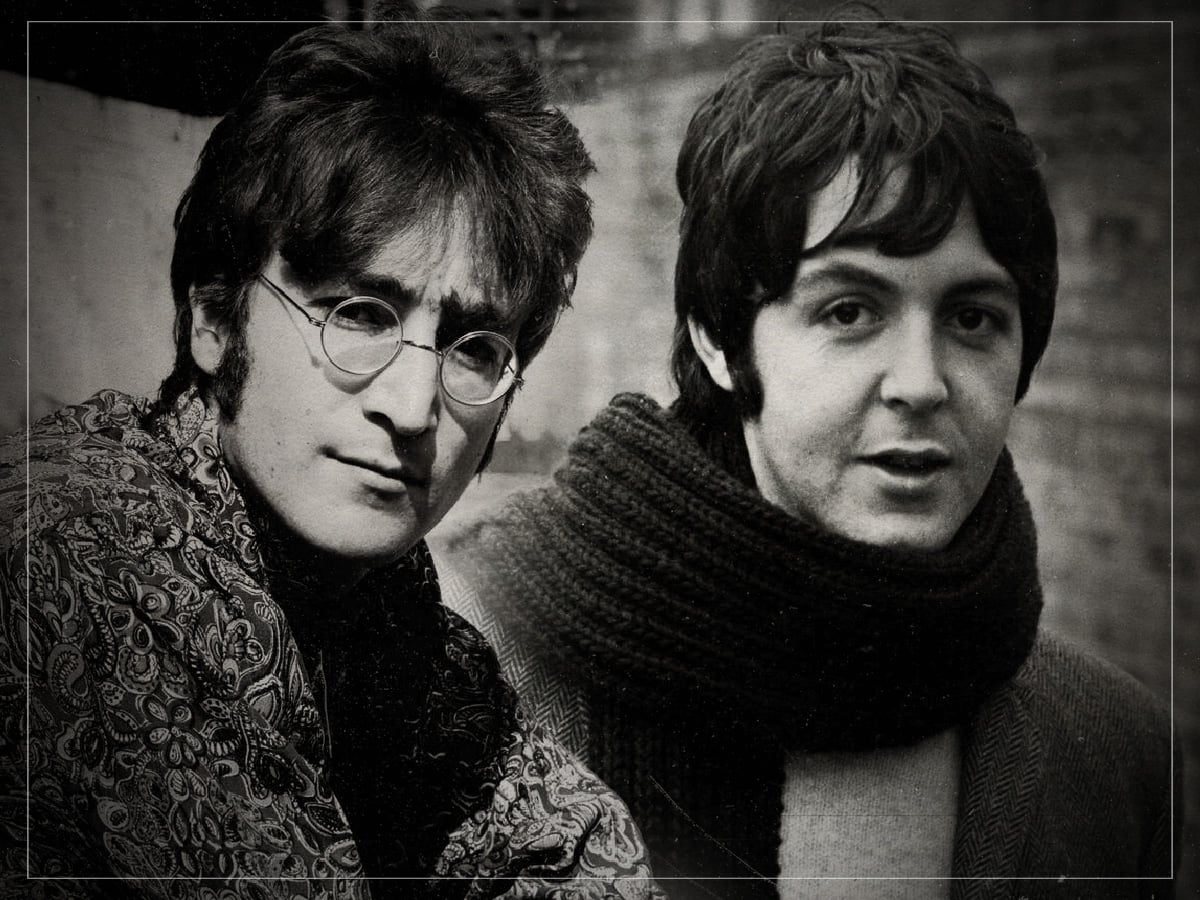
The sharp claws of the music critics would have been nothing for Paul McCartney come the end of the 1960s, and not because he was the golden boy of music, who could largely do no wrong, but because every single song that left The Beatles recording studio would have had to pass perhaps his toughest, most uncompromising critic of all: John Lennon.
The formidable duo of Lennon-McCartney rose to greatness on the back of an almost brotherly-like bond, one that constantly straddled the line between love and hatred, and that tension created some of the very best songs in the early years of the band, where their symbiotic approach to music made them a blues-rock writing machine.
But then, midway through the decade, when their individual voices began to form wildly different ideals under the stewardship of psychedelic expansion, the creative tension became more toxic. In fact, McCartney famously said his brotherly Beatle only ever complimented one of his songs to his face, highlighting just how far their respect had strayed from one another.
McCartney’s playful style began to grate on Lennon, who decided to unleash a public assault on a number of tunes which showcased that sensibility. ‘Lovely Rita’, ‘Maxwell’s Silver Hammer’ and ‘Ob-La-Di, Ob-La-Da’ were just a few to receive the Lennon treatment, with the latter being dubbed “granny music” by the bespectacled Beatle. Clearly, Lennon had a deeper respect for musical profundity than playfulness, which makes it somewhat surprising that McCartney’s epic ballad ‘Let It Be’ found its way into the crosshairs of Lennon.
Despite the role it played in bookending the band’s career and providing somewhat of a philanthropic finish for them, Lennon regarded it as something detached from the band altogether and more synonymous with McCartney’s more self-interested future. He explained, “What can you say? Nothing to do with The Beatles. It could’ve been Wings. I don’t know what he’s thinking when he writes ‘Let It Be’. I think it was inspired by ‘Bridge Over Troubled Water’. That’s my feeling, although I have nothing to go on. I know he wanted to write a ‘Bridge Over Troubled Waters’.”
While Simon & Garfunkel may have been somewhat of an inspiration for McCartney, he has publicly explained that the song came from a deeply personal experience, explaining that during a time of need, his mother appeared to him in a dream and reassured his woes, with the calm delivery of the song’s title line.
He explained, “So that got me writing the song ‘Let It Be’,” he continued, “I literally started off, ‘Mother Mary’, which was her name, ‘When I find myself in times of trouble’, which I certainly found myself in. The song was based on that dream.”
Adding, “Mother Mary makes it a quasi-religious thing, so you can take it that way. I don’t mind,” said McCartney, “I’m quite happy if people want to use it to shore up their faith. I have no problem with that. I think it’s a great thing to have faith of any sort, particularly in the world we live in.”
It saw Macca perfect the art of a song that straddles the personal and universal, with relative ease, all while showcasing the sort of melodic prowess he became famed for. Maybe it was just Lennon’s general tiredness with him as a person at that point, or the subtle spiritually put him off, but either way, it became the soundtrack to their crumbling relationship.
Related Topics
The Far Out Beatles Newsletter
All the latest stories about The Beatles from the independent voice of culture.
Straight to your inbox.