

A bench has been unveiled in ‘living tribute’ to her
Dr Ighofose sitting on her bench(Image: BHF)
A Leicester doctor suffered a heart attack while driving home from work. Dr Carol Ighofose is now sharing her story after a red bench was unveiled in “living tribute” to her.
Dr Ighofose has lived and worked in the city for more than 20 years. In January 2018, she was driving home from work when what she thought were uncomfortable indigestion symptoms escalated to crushing chest pain, which left her disorientated and struggling to breathe.
The mum-of-two was only 48 years old when the incident happened and was on the phone at the time to a friend and colleague, Dr Tracey Bempah, who called an ambulance while she pulled over.
Dr Ighofosewas taken to the hospital, but despite telling the ambulance and medical staff that she believed she was having a heart attack, it was several hours before she was treated.
Speaking about her experience, Dr Ighofose said: “I had chest pain for the entire duration of my time there. I was lying there thinking ‘my heart is being significantly damaged’. I couldn’t believe this was happening.”
Dr Ighofose, now 56, was eventually transferred to another Leicester Hospital in the early hours of the following morning, where it was confirmed she had indeed had a heart attack. She had a stent fitted, but an ultrasound scan of her heart revealed severe damage to the muscle.
The GP doctor went on to be diagnosed with heart failure and will need to take medication for the rest of her life. She said: “Initially in the weeks and months after the heart attack I really struggled with fatigue and breathlessness. I still get very tired, but I walk a lot, eat well and despite pushing myself I’m aware of my limitations.
“What this challenging experience has taught me is to give my all to things I’m passionate about because I want my life to be fulfilled. I’m the assistant pastor at my local church and my faith has been extremely important to my recovery too.”
In a “living tribute” to Dr Ighofose, the British Heart Foundation has placed a red bench in Walnut Street, central Leicester, near to the city’s Royal Infirmary Hospital, where she was taken on the day of her heart attack.
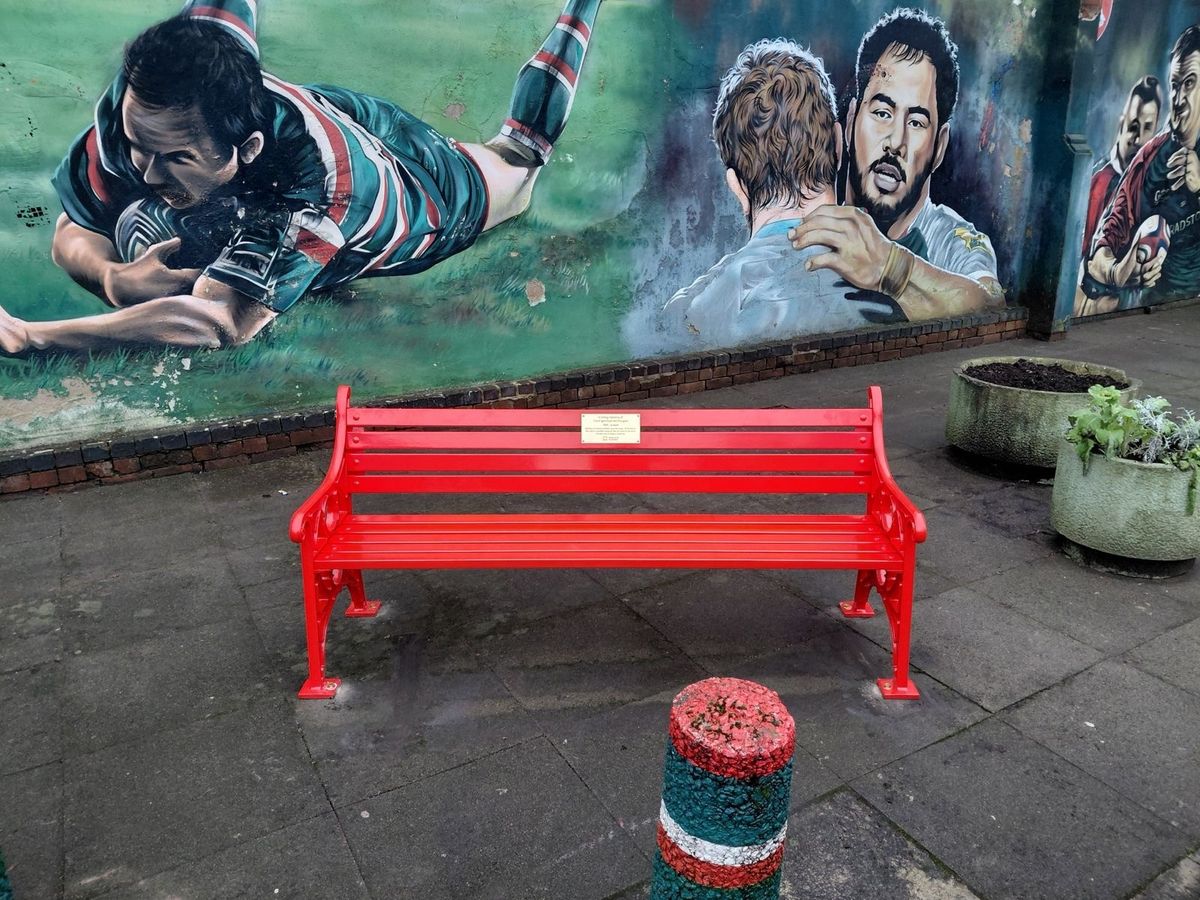
The bench is placed near Leicester Royal Infirmary (Image: BHF)
Dr Ighofose said: “My bench will be in the vicinity of where everything happened to me, where I pulled over, where the ambulance stopped, so it’s quite poignant.
“It’s a busy location that will hopefully get people sitting on the bench and encourage conversation. I first came to Leicester in 2004 to go to medical school and the city has long been home to me.”
According to the doctor, there is a “widespread misunderstanding about heart disease” across the UK. She said: “In the months immediately after my heart attack I used to have to take an afternoon nap, and I remember once being told I was ‘lucky’, almost like I was being self-indulgent.
“There was a point when I felt like people couldn’t separate me from having a heart attack and I was less inclined to talk about it. But now that’s changed. I’m not defined by it – there’s more to me than that.”
Dr Ighofose also talked about the effect her heart attack had on her own relationships, as she said: “My heart journey has definitely impacted my personal relationships, and I believe it was part of what ultimately led to my divorce.”
Speaking about the Leicester doctor’s story, Dr Charmaine Griffiths, chief executive at British Heart Foundation, said: “Carol’s story shows the true reality of living with cardiovascular disease, and we are so grateful that they are courageously sharing their experiences to help others.
“Despite being one of the UK’s biggest killers, our new findings show cardiovascular disease is still misunderstood or not taken seriously – and that those living with it face judgement and challenges.”
He added: “By sharing the stories of people who live with cardiovascular disease on our iconic red benches across the UK, we hope to start more conversations that change dangerous misconceptions.
“Research will help us save and improve more lives, but the only way we can fund the scientific breakthroughs of tomorrow is thanks to the public’s generous donations.”