
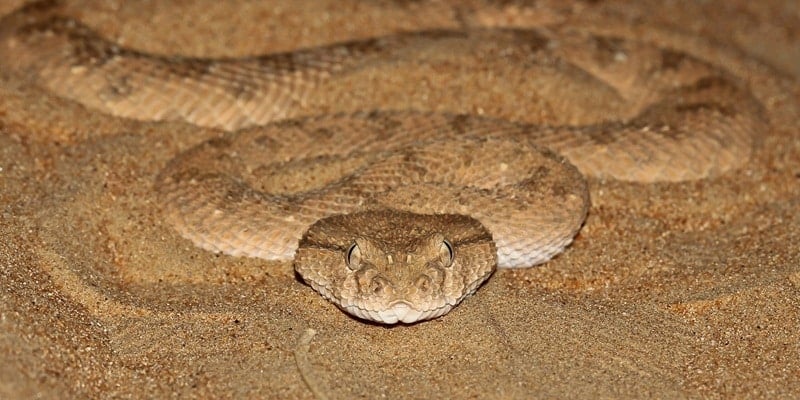
What fascinates scientists most is how Laophis grew so large in a cooling climate. File photo. Credit: Broobas, CC BY-SA 4.0/Wikipedia
Four million years ago, the landscape of Northern Greece was the territory of a huge snake, a true biological titan. It was home to Laophis crotaloides, a prehistoric viper that remains the heaviest venomous snake ever discovered.
When we think of giant snakes today, the King Cobra often comes to mind. While the King Cobra can grow longer (up to 18 feet), it is relatively slender. In contrast, the ancient Greek viper was built for power.
Estimated at roughly 10 to 13 feet (3 to 4 meters) in length, it weighed an astonishing 57 pounds (26 kilograms). To put that into perspective, this ancient predator was nearly three times the weight of a modern King Cobra. Its massive, robust body made it a formidable “heavyweight” that has no equal among venomous snakes today.
The mystery of the prehistoric snake in Greece
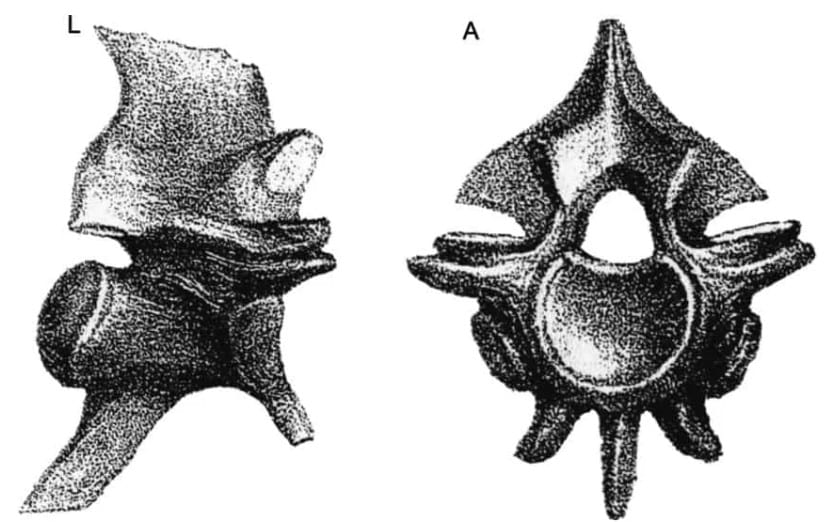
Fossil evidence revealed the largest venomous viper, Laophis crotaloides. Credit: Public Domain
The story of this snake is a 150-year-old scientific detective tale comprised of:
The first clue: In 1857, the famous paleontologist Sir Richard Owen described the species based on thirteen vertebrae found near Thessaloniki.
The disappearance: Shortly after, the fossils were lost, and for over a century, many scientists doubted the snake ever existed, dismissing it as a “paleontological ghost.”
The rediscovery: It wasn’t until recently that a single, massive vertebra was discovered at the same site in Northern Greece. This “missing link” finally confirmed that Owen’s giant viper was real, validating its place in record books.
Survival in a changing climate
What fascinates scientists most is how Laophis grew so large in a cooling climate. Usually, reptiles require intense tropical heat to reach massive sizes. However, four million years ago, prehistoric Greece was entering the Pliocene Epoch, a period of cooling temperatures and seasonal changes.
While most snakes would have shrunk to conserve energy, the Greek viper evolved to be a giant. Researchers believe it may have had a unique metabolism that allowed it to hunt large mammals across the Macedonian plains even during chilly winters—making it a true evolutionary outlier.
A lost world
The presence of Laophis reminds us that prehistoric Greece was a land of “megafauna.” This giant viper shared its habitat with:
Deinotherium: Massive elephant-like creatures with downward-curving tusks
Hipparion: Ancestral three-toed horses
Sabertooth cats: The apex mammalian predators of the era
Today, the only traces of this “Last Paradise” are the fossilized remains found beneath the soil of Northern Greece, proving that the region’s history is even deeper and more dramatic than the myths of old.
Related: Highly Venomous Snake Population Found in Northern Greece