

It was impossible to ignore Henry Pollock after he burst on to the scene last year. There was the try from the halfway line where he chipped ahead and outpaced the opposing full back. There were outside breaks that carved open midfield defences. There was the time he stooped to his bootlaces to pick up a loose ball at pace before sidestepping his way over the line. Here was a flanker doing things that flankers are not supposed to do.
For good measure, he demonstrated a world-class ability to wind up opponents, ripping off scrum caps, grabbing their socks, celebrating his tries outlandlishly in their faces. Take your eyes off him if you can. And just in case anyone wasn’t paying attention, this season he has dyed his hair peroxide blond.
The fascination of Pollock’s second season in the spotlight, and a first full Six Nations, lies much more in his ability to perform the tasks that do not attract quite so much attention: the split-second decision-making at the breakdown, the task of impeding the opposition without conceding penalties, the need to win physical confrontations time and again. The nitty-gritty, in short, that flankers are supposed to do. As Peter Winterbottom, the former England and Lions openside flanker, put it, has he got it in him to “really dog it out in a tough game”?

Pollock has shown a world-class ability to wind up opponents in his short career
SHAUN BOTTERILL/GETTY IMAGES
No coach worth their salt would attempt to rein in the 21-year-old’s instinctive flair, because he has the potential to turn any game, and has proved as much for Northampton Saints and England. But the next step in Pollock’s fledgling career is to prove to Steve Borthwick, the England head coach, that he is worthy of a starting place in the England back row.
For all his meteoric rise over the past year, he has yet to start a Test match. All five of his England caps have come from the bench and he was frustrated to miss out on the matchday squads with the British & Irish Lions against Australia last summer.
“Henry is still young, but he’s desperate to put his name down as a starter for England,” Phil Dowson, the Northampton director of rugby, says. “He’ll get the right feedback from Steve as to what he needs to do to achieve that.”
To date, Pollock has been given a clear role by Borthwick, sent into the fray with roughly half an hour remaining to wreak havoc. The minutes played in his five appearances for England are 32, 31, 27, 25 and 30. In the autumn internationals, he was part of an England bench that became a potent weapon during the second half of matches.
His value as a high-octane impact sub is clear to see, but he now wishes to show that he can be more than a bench man, as Sam Warburton wrote in The Times after the Lions tour. “I just hope he doesn’t fall victim too much to what Justin Tipuric suffered with Wales,” Warburton said, “where for the first part of his career he was considered a good bench player because of his impact.”
The path towards a starting spot for Pollock will depend, in part, on how Borthwick deploys his bench. For the Tests against Australia, New Zealand and Argentina in the autumn, he used the same starting back row — Guy Pepper at No6, Sam Underhill at No7 and Ben Earl at No8 — with Pollock and Tom Curry coming off the bench. But it will also depend on Pollock honing those less glamorous elements of the flanker’s craft to a point where Borthwick is persuaded to play him for more than just that final half an hour.
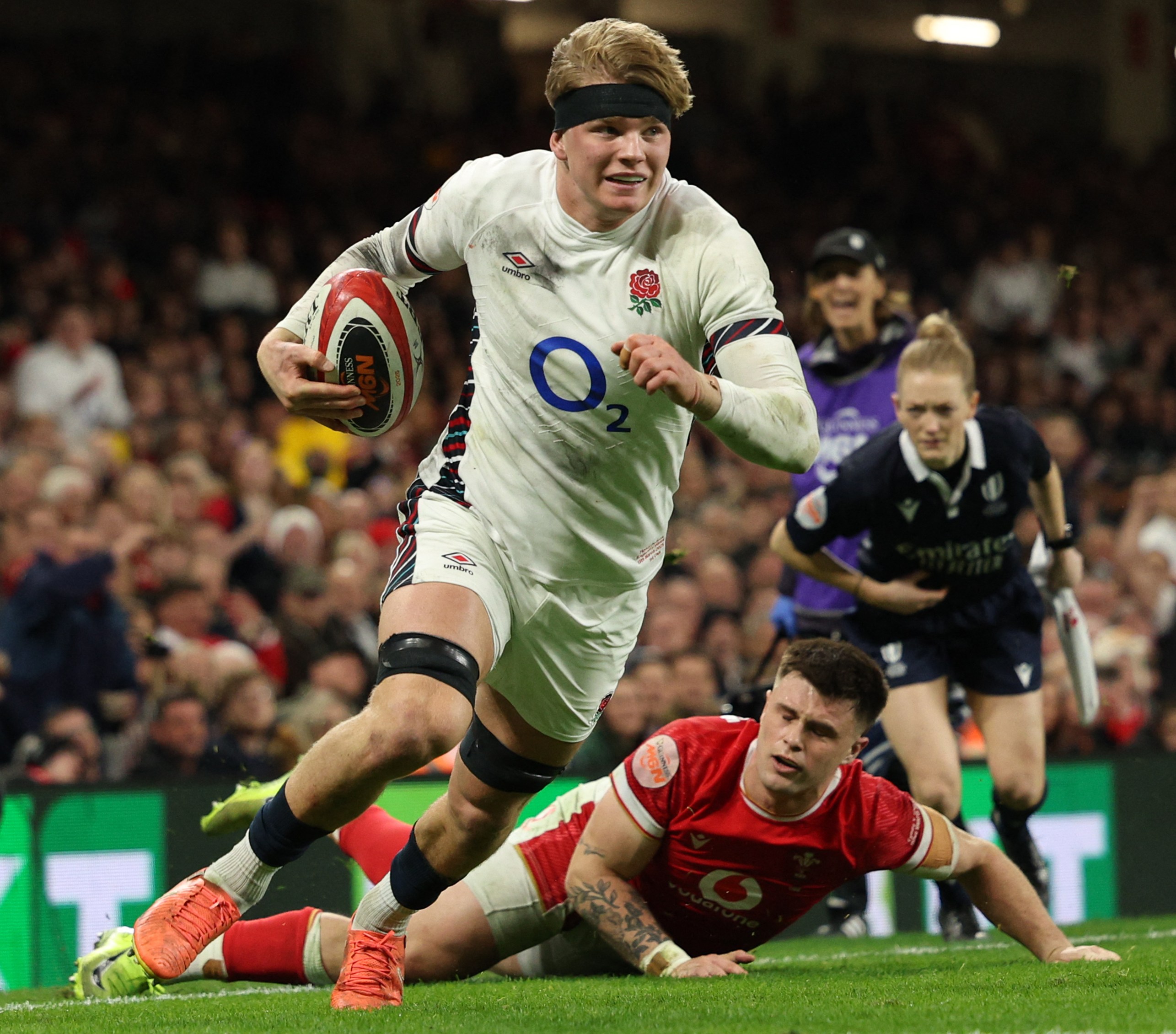
Pollock crosses to score a try against Wales in last year’s Six Nations but now it’s about honing the less glamorous elements of the flanker’s craft
ADRIAN DENNIS/GETTY IMAGES
“The nuts and bolts are all things that Henry can do. He’s more than capable at the set piece, at the breakdown he’s very good and his jackalling is a huge strength,” Dowson says. “Some of the feedback from Steve and Andy Farrell [the Lions head coach] is for him to really value those skills and to have consistency around them. I think any young player would be given that feedback, in terms of how he does the small things and those bits adding up to the big things. But there’s nothing really missing from his game.”
Developing consistency in the fundamentals of his craft is something that will, inevitably, come with time. Pollock only turned 21 last week and, although he has packed so much into the past year, he has still played an aggregate of only 145 minutes in an England shirt.
“As always when you go up a level, it’s about the minutiae of your decision-making,” Dowson says. “Because he’s so good over the ball, he doesn’t need to duck his head into every breakdown. He has to be choosy about which ones he attacks.
Please enable cookies and other technologies to view this content. You can update your cookies preferences any time using privacy manager.
Enable cookiesAllow cookies once
“Look at Tom Curry, how good he is at making those decisions. For Henry, it’s just fine-tuning his decision-making. Sometimes he waits for their player to be on the floor before getting into his jackal opportunity, whereas at times he needs to hit first. That’s one thing he’s working on, to make sure he’s not waiting to use his superpower, he’s using his tackle technique at the right time.”
The statistics suggest that, at Premiership level, Pollock is much more polished in the attacking elements of his game. While he is the leading back-row forward in the league for line breaks, metres gained and metres gained per carry, he ranks 39th out of 43 back-rowers for penalties conceded — half of them at the breakdown — and 40th for his effectiveness at entering attacking rucks. Just some of those small details that make the full picture of a back-row forward’s overall contribution.
But the fact Pollock has only been used as a replacement so far means that we are yet to witness whether he can dominate a Test match from the start. Setting the physical tone in the early exchanges, in attack and defence, is a crucial element of a back row’s role and has always been a sine qua non at international level.

Borthwick has quickly entrusted a starting role to Pepper but may take more convincing that he can rely on Pollock
SHUTTERSTOCK EDITORIAL
“He’s incredibly athletic, very fast and has a special ability to do things that other players can’t do,” Winterbottom, 65, says. “Whether he has the aptitude to really dog it out in a tough game, we can’t yet be sure. You’ve got to have that steeliness about you and if it’s a physical game, you’ve really got to front up. At the moment, he looks more like an archetypal bench man. Bring him on in any back-row position and he can light things up.”
It is perhaps becoming harder for back rows to prove these qualities at club level, because the Gallagher Prem has become a much more high-scoring spectacle, with fewer attritional contests than in the international game.
Primarily an open-side flanker, Pollock has started regularly for Northampton at No8 this season, but missed out on a head-to-head with Curry from the start in his side’s game against Sale Sharks, coming off the bench instead. His ability to cover all three positions in the back row adds to the appeal of Pollock as a replacement.
One player who has quickly been entrusted with a starting role by Borthwick, despite his minimal experience, is Guy Pepper. The Bath flanker, 22, made his England debut on the summer tour to Argentina and then enjoyed an outstanding autumn.
A different player to Pollock, with more of an emphasis on the nitty-gritty, Pepper started all four of the autumn internationals in the No6 shirt and won the admiration of many shrewd observers. “He’s not particularly flash, but he’s been fantastic,” Winterbottom says. “He’s been compared with Richard Hill and I get that. Hill was never the special one in that back row with Neil Back and Lawrence Dallaglio, but he was incredibly effective. Pepper defends really strongly, he gets over the ball and he’s always involved.”
As England go in search of a first Six Nations title in six years, it will be intriguing to see whether Borthwick sticks with the back-row formula that served him so well in the autumn, or if he gives Pollock the chance to make an impact from the start. Either way, the head coach is not short of options before the opening match at home to Wales on Saturday.
“The coach has some big calls to make,” Winterbottom said. “But the great thing now is that we’ve got a conveyor belt of flankers coming through. It’s not always been the case, but Steve’s lucky in that he’s got some headaches, but the depth is there, so he’s picking now from a real position of strength.”