
The first thing to know about sugar is that there are two types. There are foods that contain ‘natural sugars’, which occur in things like milk and fruit, and there are foods that contain ‘added sugars’, such as table sugar, chocolate and juice. The former are fine; foods with natural sugars also contain fibre and minerals, which counterbalance the negative aspects of sugar. But the latter really aren’t. In fact, says Dr Robert Lustig, speaking on Zoom from his home in San Francisco, they are essentially ‘poison’.
Lustig – a 69-year-old doctor and professor of paediatrics in the division of endocrinology at the University of California – is an original sugar refusenik. In 2009, a video of him talking about sugar was uploaded to YouTube under the name ‘Sugar: The Bitter Truth’. It’s a 90-minute long, densely scientific lecture about how fructose is bad for you; somewhat surprisingly, it got more than 25 million views.
By 2013, he had written a book about sugar (Fat Chance) and in 2016 Lustig was a key part in making the UK’s sugar tax happen (‘I’m proud of that!’). More recently, at home in America, he has been asked to serve in Robert F Kennedy Jr’s health department four times. (Lustig has declined each time, partly due to Kennedy’s vaccine scepticism.)
Anyway, according to him, ‘there are four things that make sugar poison’.

Science shows that reducing sugar intake improves your insulin sensitivity
First is fructose. Sugar is formed of two molecules – a glucose molecule and a fructose molecule, which bind together to make sucrose. And while glucose isn’t bad for you (‘it’s the energy of life’), fructose is. ‘The fructose molecule can inhibit mitochondrial function in cells, and particularly in the liver.’ In other, less science-y words, fructose and glucose ought to be metabolised in your cells into something called ‘ATP’ – a molecule that provides us with ‘chemical energy’. But, when you have too much fructose, your cells can’t turn sugar into ATP and, instead, they turn it into fat. And, because that fat is in the liver, it can lead to fatty liver disease, which can then lead to obesity, high blood pressure and cholesterol, and type two diabetes.
The second problem is glycation – a process when sugar molecules bond to protein or fat molecules – which causes bodily ageing. This sort of ‘ageing’ doesn’t just mean wrinkles and hair loss. Instead, says Lustig, ‘cardiovascular disease, kidney disease, diabetes, dementia, cancer, polycystic ovarian disease, hypertension – all of those diseases are driven by sugar and this glycation phenomenon.’ It’s inevitable (‘you can’t stop glycation’), but eating excess sugar ramps it up.
Thirdly, sugar interferes with your microbiome – Lustig explains that it breaks down the barriers that keep bacteria out of your bloodstream, therefore weakening your immune system.
And the fourth problem is that sugar is addictive. Lustig says that fructose – ‘not glucose’ – stimulates the reward system in your brain, making you want it more. (The science is unclear on why some people find sugar more addictive than others. Some data suggests the earlier you’re exposed to it, the more likely you are to ‘become sugar-addicted later’. And there could also be ‘genetic polymorphisms of the taste receptors that would make sugar more appealing to one person over another’. But ultimately, says Lustig, ‘no one has found one gene that explains addiction. It is very complex.’)
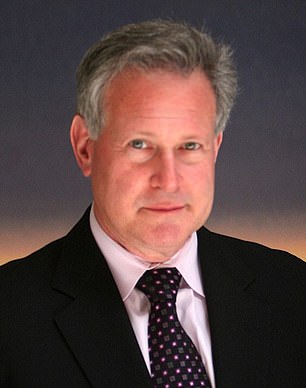
Dr Robert Lustig’s first piece of advice for sugar addicts is to bin all sugary drinks
He examines Nicole’s original sugar intake (see article here) and considers what it might do if someone continued to eat more than 150g of added sugar each day for, say, 20 more years. ‘Basically, what it means is that, whatever your life expectancy is supposed to be, that will have been cut by about 15 years.’
That sounds massively doomy, but the good news is this: if she started having the recommended 30g of sugar a day – and especially if those 30g come from unprocessed foods – ‘you would recoup probably a very high percentage of those 15 years’.
And while Lustig is not sure if there is a point or age where it becomes too late to regain as many lost years (‘no one’s ever done that study’), he does know this: ‘No matter when you cut back sugar, you will reap benefits. You may not reap as many benefits, the later you do it, but you’ll still reap some.’
Benefits indeed. Science shows that reducing sugar intake improves your insulin sensitivity, ‘which will absolutely increase lifespan and health’. And then, ‘we have the anecdotes’ since publishing his second book, Metabolical, in 2021, Lustig has been contacted by several people who cut out sugar and say their autoimmune disease disappeared.
So how can we stop eating so much of it? Lustig’s first piece of advice for sugar addicts is to bin all sugary drinks. ‘There’s no reason for sugar to be in any beverage, ever.’ Another is that, if you are craving something sweet, have ‘a piece of whole fruit’. He specifies ‘whole’ fruit because that way – unlike when fruit is juiced – it maintains its fibrous quantity.
His main mantra, though, is to ‘eat real food’. That means food that hasn’t been processed – juiced, sweetened, preserved, coloured and so on. ‘If you eat real food, the amount of sugar you’re getting is virtually nil. It’s only from ultra-processed food that you get the big dose of sugar.’ Ultra-processed food constitutes anything that has an ingredient you wouldn’t use in home-cooking; Lustig’s way of avoiding it is to stick to the fruit and vegetable section and the refrigerator aisle of the supermarket, because the bulk of ultra-processed food is to be found on the shelves.
And what about the odd slice of cake? ‘I’m for dessert – for dessert,’ says Lustig. ‘If you have it once a week and it’s fantastic, and you made it yourself with love – have it! Life’s too short. Reward yourself.’ But what’s not fine is to have sugar in your granola at breakfast, or in your processed, supermarket bread at lunch, or in the chocolate digestives you have with tea in the afternoon. ‘If you’re rewarding yourself at every meal, that’s the problem.’ Memo received.
Dr Robert Lustig is the author of Metabolical (Yellow Kite, £16.99)