
H Is for Hawk is out in cinemas and, forget Hamnet, for me this will be the 11-on-the-cryometer, two-packs-of-tissues howler.
The film is based on the autobiographical story of a woman in her early forties whose father dies suddenly and who, in her grief-stricken state, struggling to cope with his loss, adopts a goshawk and trains it. It is about the healing power of nature, it is about grief and it is about dads and daughters — great dads and the particular hole they leave behind in the life of a daughter when they have done an excellent job.
I’d say that less than half my female friends have experienced that combination of unconditional love, practical support and a closeness that comes not just from kindness but also from really enjoying each other’s company — the dad experience I took for granted. If you could have a dad who made you feel you could not disappoint him, who was there no matter what, who wished only the best for you and did not need to be there to witness it unless that suited you… wouldn’t that be a remarkable advantage in life? Isn’t that the bullseye for females? The howler is that the best dads create a double-edged problem. Not everyone gets the dad they deserve and if you’re lucky enough to get one of the good ones, you’ll miss them terribly when they’re gone.
• Helen Macdonald: I bawled my eyes out when I saw H is for Hawk
My dad died getting on for four years ago. He was 95 and there was plenty of warning so I can’t complain. I’m incredibly lucky that he lived to see me through to middle age, when I’d established my own family. Still, I miss him. Whenever the clocks went back or forwards (he always rang, assuming I’d forget). Whenever we went away (he’d always check the weather and if the Tube was running — many’s the time Dad saved us from getting stuck in a marathon or a state visit). I miss him whenever anything happens in the news, whenever the seasons change, when the fashion collections kick off (he fancied his insights on Alexander McQueen), at the start of Wimbledon, the cricket or a new season of something on TV (he was a huge fan of The Crown but only as far as Claire Foy). I particularly miss him when I need to check my moral compass, decide what’s the right thing versus the easy thing to do, and then when I need talking down or cheering up. I miss him when I’ve got something wrong, had a bad day and want to be in the presence of someone who thinks of me always as a “marvellous girl”.
For his 80th birthday my brothers and I bought him a whisky glass engraved with a message and his date of birth, the day accidentally transposed with the month, thanks to my mistake, a screw-up that made him hoot with laughter. The woman in the shop was horrified and clearly took me for a careless, unloving daughter. “You know, I’m pretty sure he’ll like it more,” I was able to say with the conviction of someone whose sense of humour has been passed through their genes.
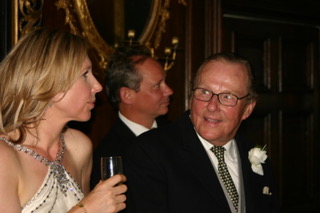
Shane Watson with her father on her wedding day
As he got older our relationship shifted, of course, and he was no longer the oracle, no longer the first person to ring in a crisis, but he was still someone whose opinion I trusted, with a beady eye (such beady mischievous eyes), whose common sense (“Oh, come off it!”) and reading of people was second to none.
• Read more parenting advice, interviews, real-life stories and opinions
And he continued to be interested in everything. The lives of my friends (“Should Emma be dyeing her hair? I think it looks a bit harsh”), his smartphone’s infinite wonders, why anyone liked the Beckhams. His greatest joy was being part of the conversation. He and my mother, when both in their nineties, thought nothing of getting onto their knees to crawl up the last few steps of our treacherous kitchen stairs to head to bed after a long, noisy Saturday night supper. My dad was sent to boarding school aged five and was a teenager in the war so he was always ecstatically grateful for the luxury of a cold beer on a Sunday lunchtime, or a Mini Magnum, or — special occasion — a Nocellara olive. Somehow his presence, the joy he took from all the small things in life, made everything more of a treat. Although you didn’t want to let him see the bill in a restaurant.
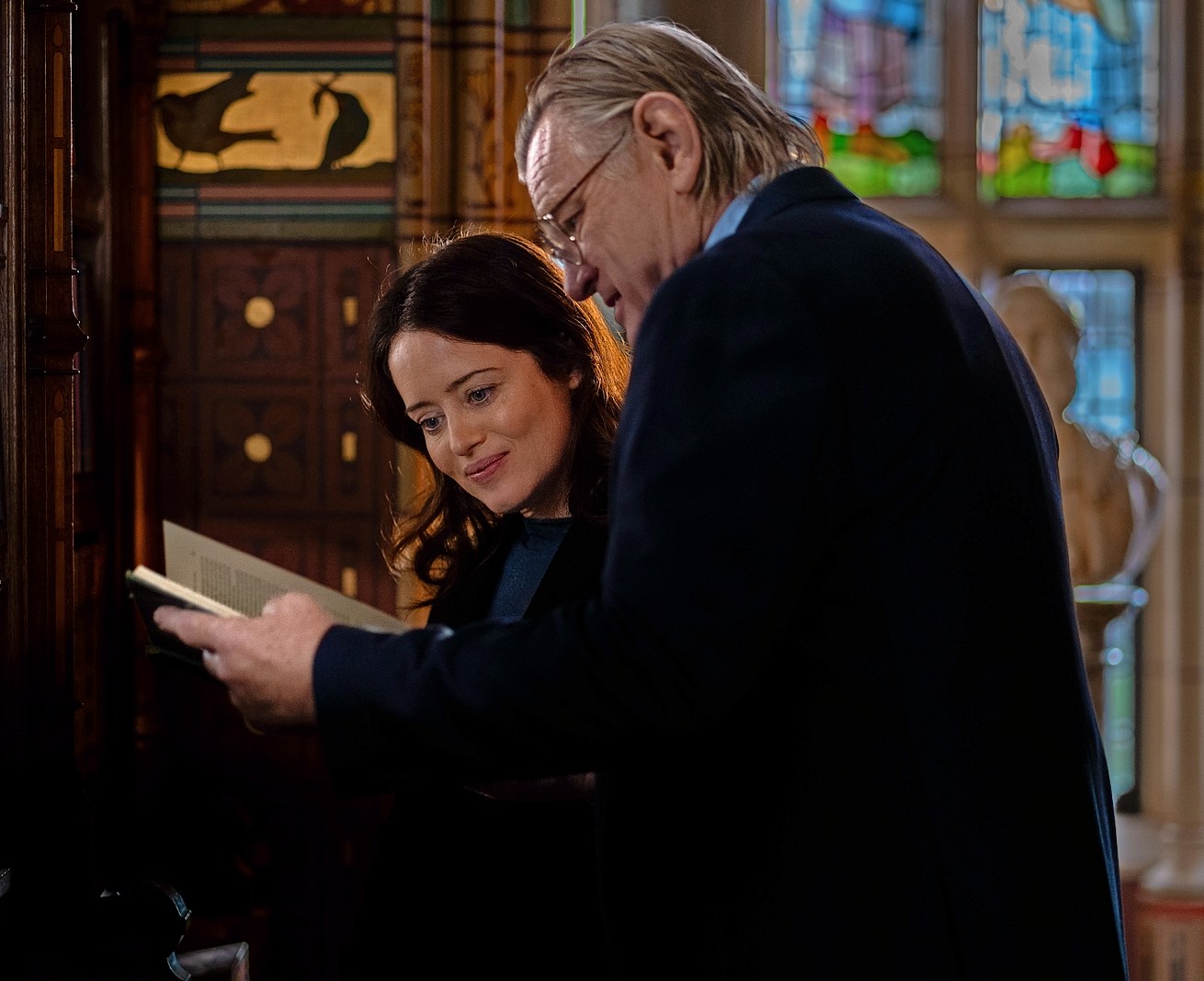
Claire Foy as Helen Macdonald with Brendan Gleeson as her father, Alisdair
Towards the end of his life we argued — there were issues with carers, crossed wires like never before — but when once I rang to apologise for snapping at him he said, in an almost hurt tone, “But you know there can never be any bad feeling between us.” And that was the point. Whether I deserved it or not, for better or for worse my dad was my biggest fan.
The day before he died I turned up at the hospital early, as I had done for several days. “You’re looking tired,” he said, after sizing me up with a smile, always a smile. “I’m sorry about all this.” And I said what all daughters want to be able to say before it’s too late: “I’d do anything for you. You’re my dad and my favourite person and I love you.” Like I say, I was one of the lucky ones.
My father came with me to choose my wedding dress
By Alice Thomson
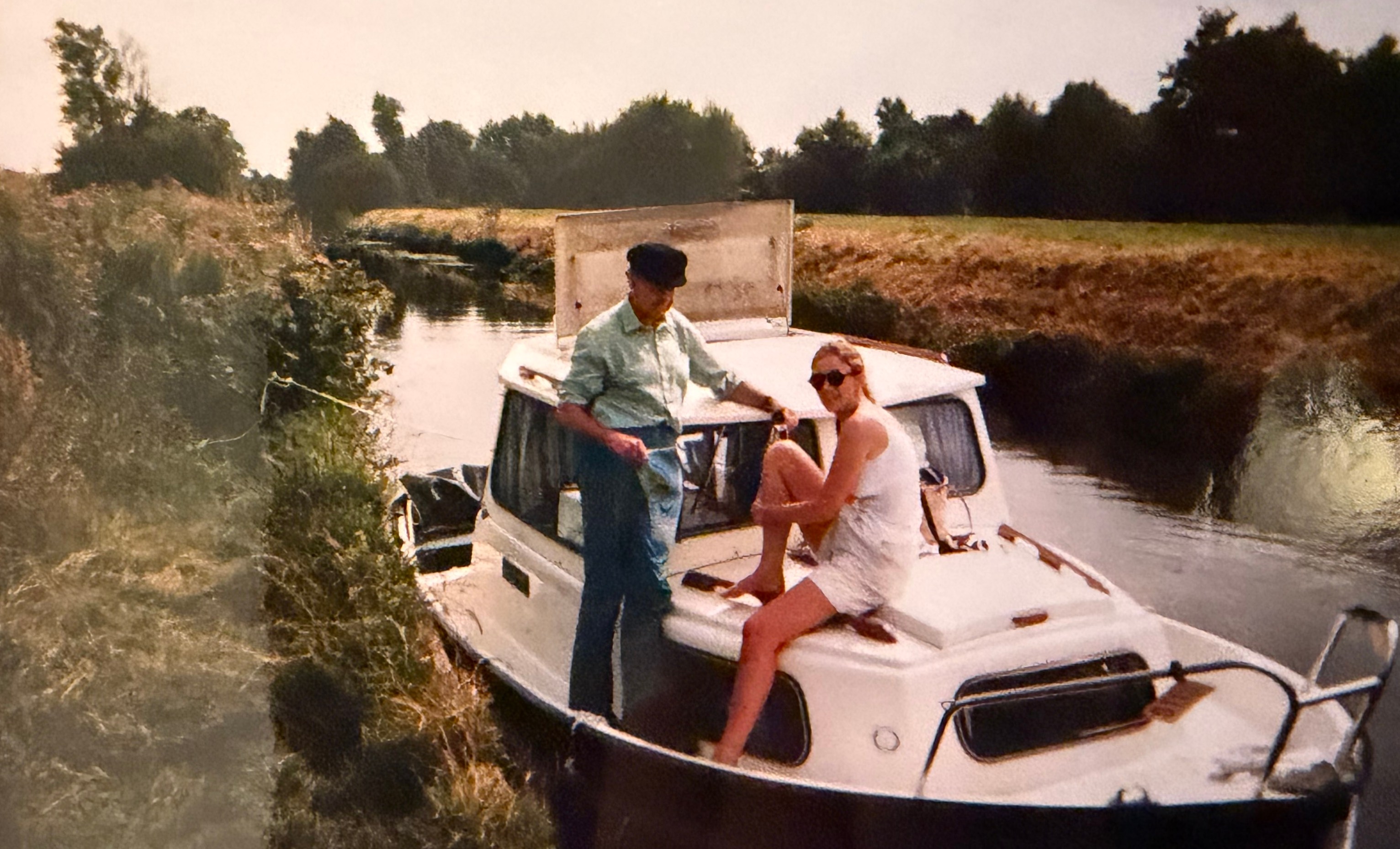
Alice Thomson with her father on holiday
For the last 17 years of his life my father had dementia, he was still smiley and charming, loved butterflies and bluebells, would speak fragments of French and German, tie sailor’s knots and sketch beautifully, but he couldn’t recall the names of his four children and 14 grandchildren and often put his wallet in the toaster. For a time after his death, I couldn’t remember what he had been like before his mind began to unravel; it felt too painful, too far away.
And yet recently it has all come back. I suddenly remembered him plaiting my hair before I went to school, going through our times tables, teaching us card games, knowing the names of my best friends. Yet he had no interest in tests or results. At six, when I fell off a climbing frame in the rain onto my head and threw up over the headmistress, it was my father who picked me up from school. But I don’t think he ever came to a parents’ evening or sports event.
He once wrote to my primary school when a teacher told us that God had created the world in seven days and dinosaurs never existed to suggest, politely, that she might be incorrect, and another time when I brought home a tuna fish crumble from my cooking class and it spilt over my satchel, to say, “Alice will be doing physics not domestic science O-level.” He never said anything when I was expelled, just raised an unruly eyebrow.
• Helen Macdonald: I bawled my eyes out when I saw H is for Hawk
He was a Cambridge scholar, economist, diplomat and banker, and we regularly moved home. He talked to all adults and children in the same courteous voice and the same way, always assuming everyone was as fascinated as he was by art and architecture, history, theatre, politics, poetry and sailing. His father and grandfather were scientists, and I remember him sketching the plum pudding model of an atom one lunch.
He and his siblings were sent to America during the war, but when his mother died he returned alone across the Atlantic to live in Cambridge, aged eight, with his grandmother, next door to my mother. They were in love for 85 years.
He was massively pro-European, loving French charcuterie, German culture, Greek myths, Norwegian saunas and the way the Swiss stacked wood, as well as Cadbury Fruit & Nut.
I can’t remember him ever talking about football, but when he was on National Service he had learnt to play tennis and ski, and he adored dancing. He relaxed by gardening, sweeping leaves and “squaring off” the house, teaching me how to stack the dishwasher and do hospital corners on a bed. I don’t think we ever went to a restaurant, except for a Happy Eater on the way to Cambridge. He spent his money on wine rather than food, and binoculars for birdwatching.
At weekends we would browse second-hand bookshops. He read to us endlessly, still starting postcards to me “Dear Plop”, after The Owl Who Was Afraid of the Dark, when I was in my thirties and reading us all the Narnia books.
But he also loved fashion, once giving in and buying me a puffball skirt from Topshop, to the horror of my mother, and was the one who came with me to choose my wedding dress. He also bought me a tiny pipe when I was little and sucked my fingers, so that he could smoke his and I could chew mine while we chatted. He wasn’t eccentric but he was unconventional.
• H Is for Hawk review — Claire Foy has never been better
Perhaps most surprisingly he had a large tattoo of a seahorse on his hip, which he would wiggle for us, so it looked as though it was swimming. When I became a trainee at The Times at 22, I was sent to a tattoo conference and he decided to accompany me. It was only then that I realised that he was an expert on the history of tattoos, as well as campaigning to restore the Tudor ship the Mary Rose (my middle names are Mary Rose after the wreck) and being chairman of the Athenaeum Club. He liked being busy.
I don’t ever remember my father raising his voice except once when my sister and I asked if we could go on a beach holiday abroad rather than spend our summer touring gothic French cathedrals in our camper van. We went to communist Croatia. Each day for breakfast everyone at the hotel was presented with one very hard-boiled egg. Eventually he strode into the kitchen and insisted on teaching them how to make scrambled and poached instead.
When Helen Macdonald wrote H Is for Hawk she wanted, she told me, amid her grief for her dad, to show that there have always been good fathers and good men who were strong but gentle and kind. I see flashes of my father in both my brothers, my husband, my sons and nephews. As Helen said, “He was just a really good bloke.”