
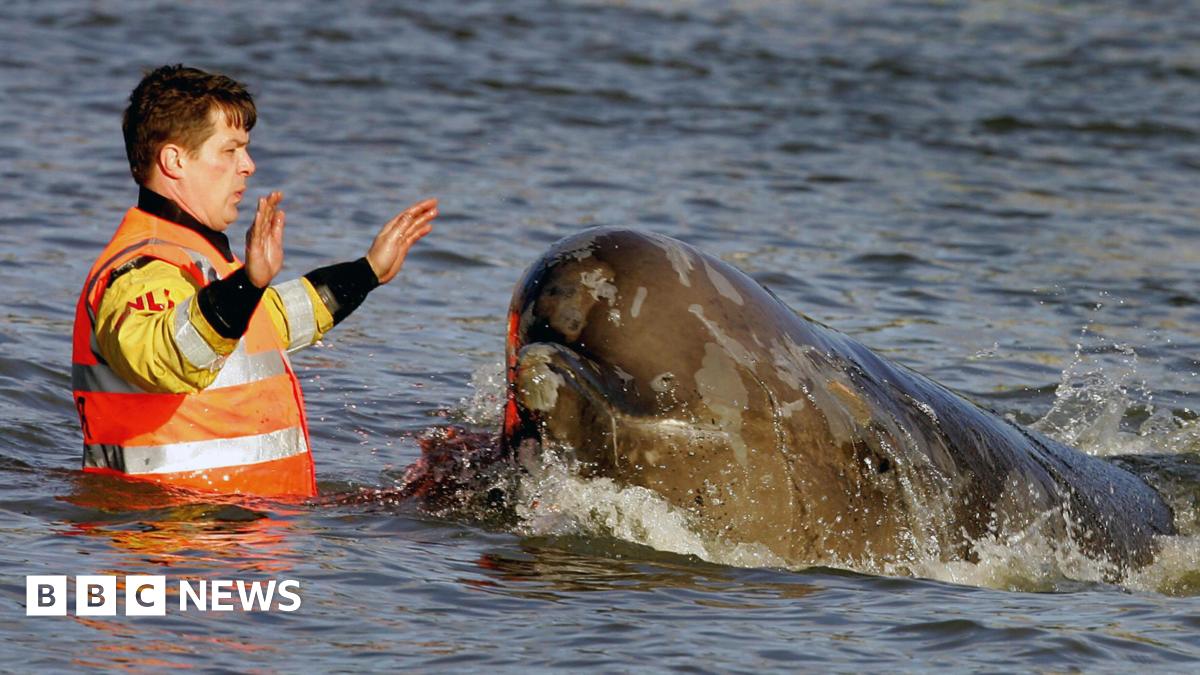
Later that morning he boarded a boat near Albert Bridge where the whale had been located, and a plan was devised.
Thousands of people were now cramming on to the surrounding riverbanks and bridges trying to get a glimpse of the 19ft (5.85m) long whale, while in the water the team were being pursued by a vessel filled with press and photographers
With the promise of getting “the best photographs you’re ever going to get”, Stevens persuaded the journalists to use their boat to help manoeuvre the mammal on to a sandbank to secure it so that a veterinary check could be carried out.
He says that while the team considered the chances of the whale surviving to only be “50-50 at best”, they still decided to attempt a rescue.
The weight of the whale meant a crane was required to winch it on to a barge so it could be taken out to sea, so inflatable pontoons were first positioned on either side of the mammal to carefully manoeuvre it in place.
However, this work then accelerated dramatically as they learned they were racing against the tide otherwise the crane would not fit under London’s bridges.
“As soon as the whale touched the lifting barge and was on the boat, we started moving – the anchor wasn’t even up at that time because there was such a rush but we just about made it,” says Stevens.