
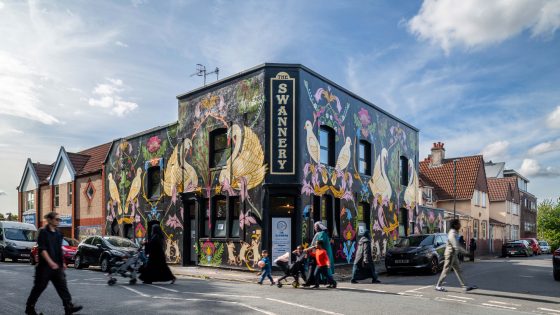
After the former Swan pub on the corner of Wellspring Settlement’s site in Barton Hill, Bristol, closed during the pandemic, the local community asked the community organisation to take it on in the hope that it could reinstate youth services as part of its offer.
Wellspring Settlement was created in 2020 after combining two charities already based in Barton Hill: Wellspring Healthy Living Centre and Barton Hill Settlement. The community-led organisation focuses on the cost-of-living crisis and meeting the needs of the local community. It provides family, youth and health services and activities.
It is based in a collection of buildings that occupy the area between Bright Street and Ducie Road, just east of Bristol city centre – with The Swan pub completing the estate.
Bristol-based Barefoot, the practice behind the community housing project Hazelmead, worked with Wellspring and a cohort of young people to deliver a space that could accommodate activities from sewing, table football and video games to making YouTube clips and having water fights.
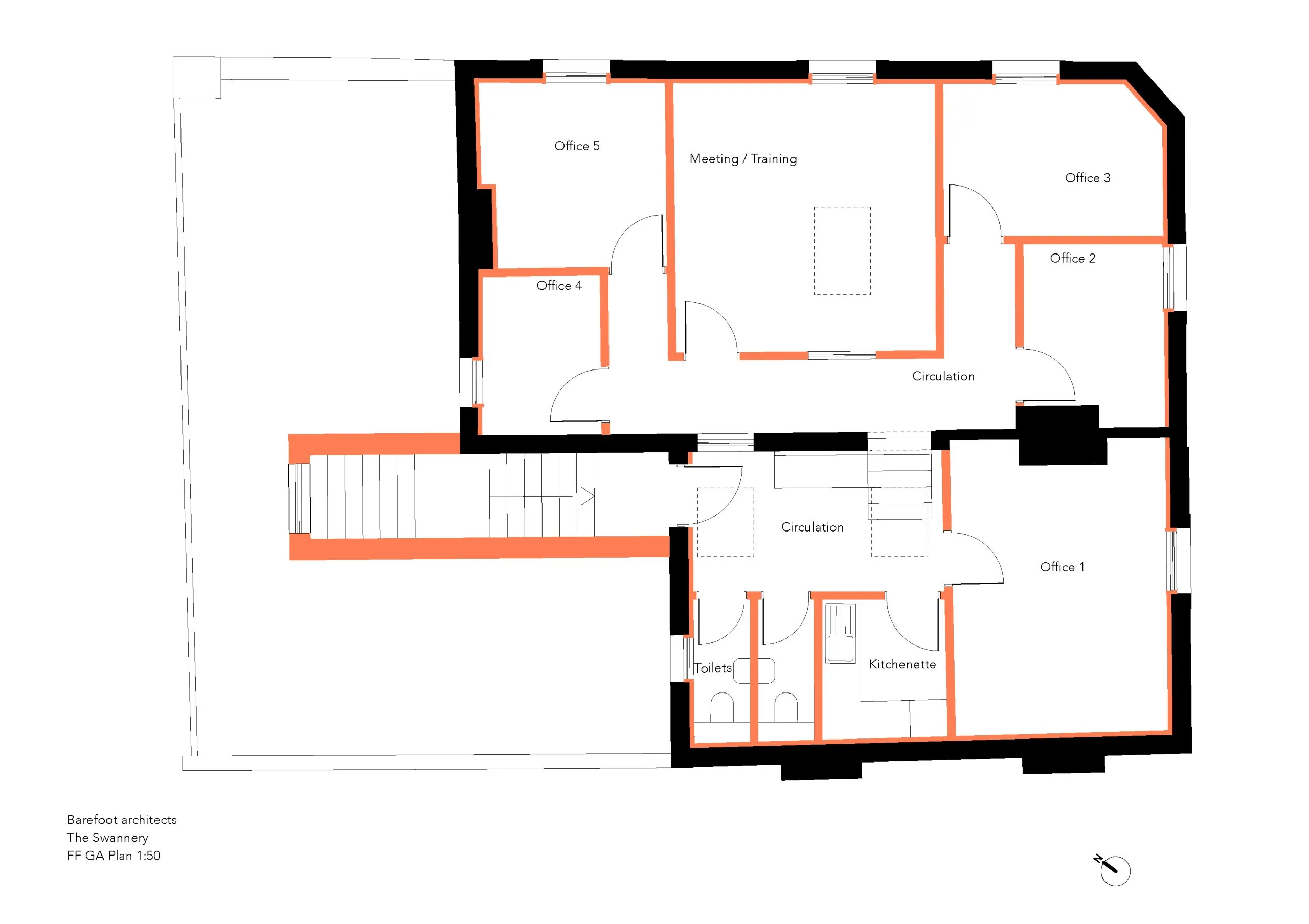
On the first floor are offices to allow the club to be self-sustaining through rental income.
The pub, now known as The Swannery, has been retrofitted for £675,000 with a highly insulated fabric, open plan spaces and robust finishes made from natural materials. The project was funded by Power to Change, City Funds, the Youth Investment Fund and the National Lottery.
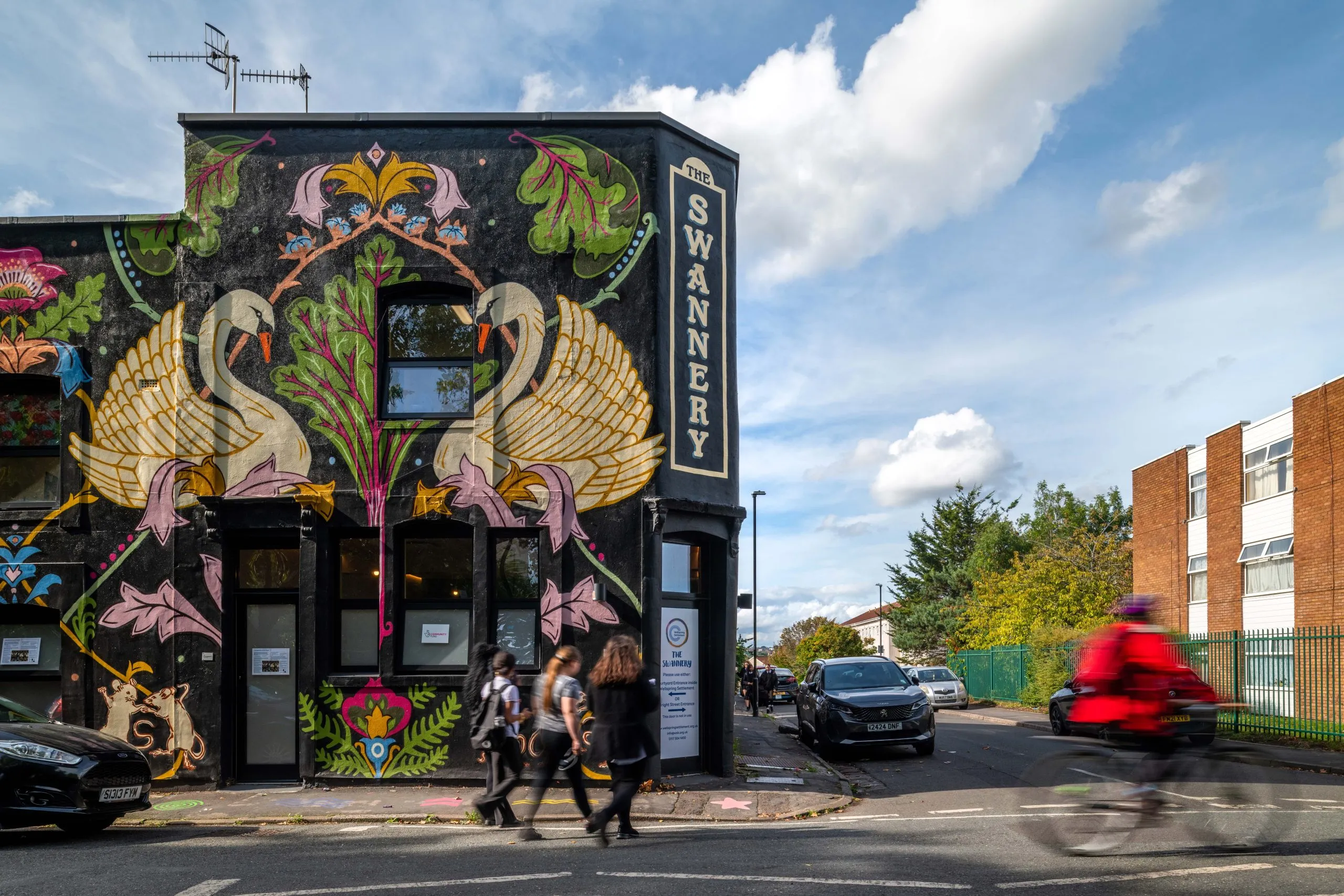
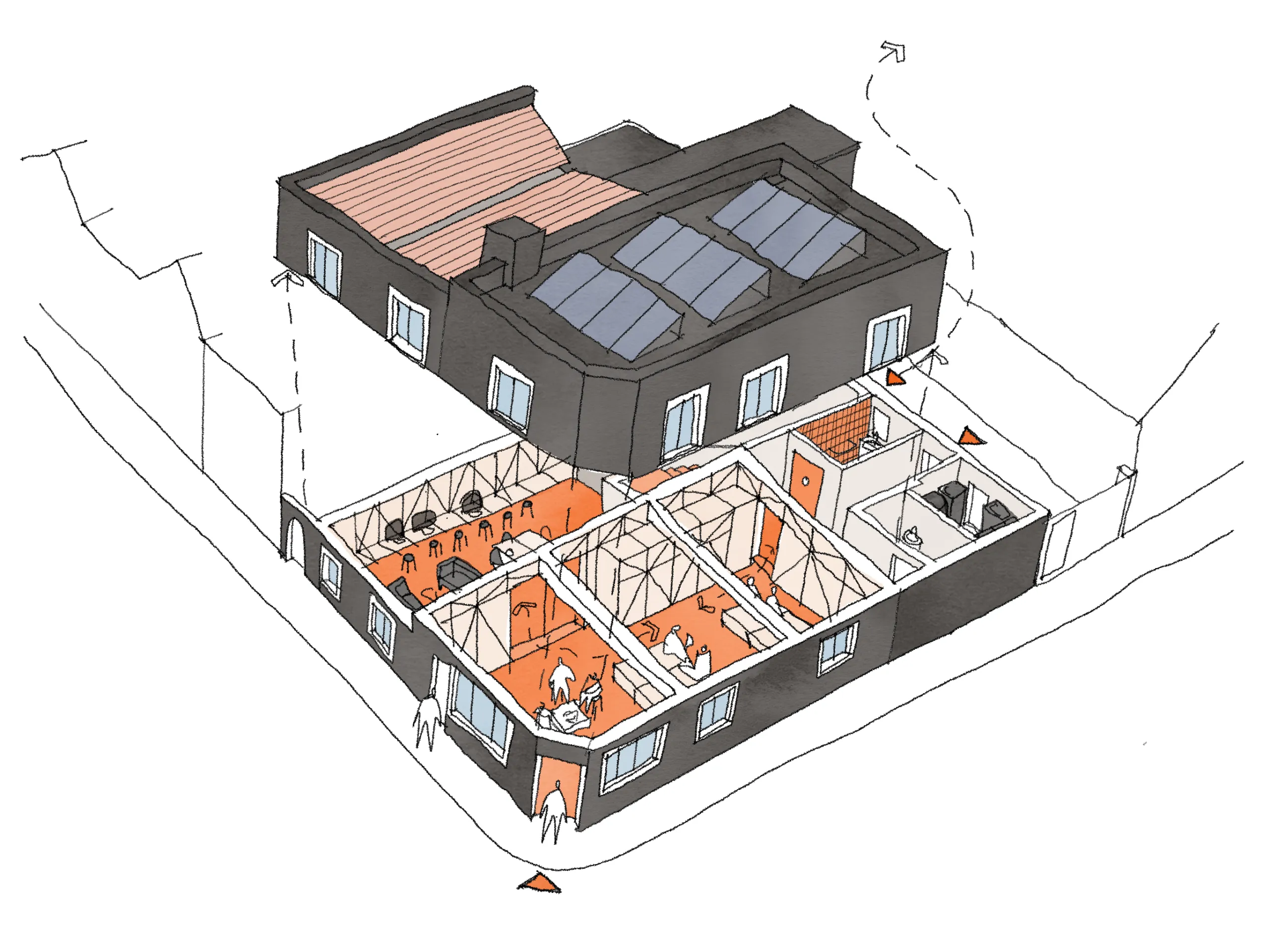
Externally, it has been finished in a bespoke mural by Bristol artist collectives Graft Community CIC and Botanical Vandals, which draws on the local history of Barton Hill and Redfield – including rats from local legend, strawberries inspired by the area’s agricultural history and doves for peace and harmony. The pattern was influenced by Lanthe by Liberty, an Art Nouveau design popular at the time The Barton Hill Settlement was founded.
Throughout the project, young people from nearby schools were involved in the design and procurement of the project, guided by a team of youth workers who now run the youth club.
The ‘Youth Influencer’ sessions were designed to ensure the building would be fit for purpose as well build skills and confidence of the young people by giving the opportunity to work with the architects and builders – sitting in contractor interviews, choosing finishes, informing the layout of the spaces and guiding activity and equipment selection.
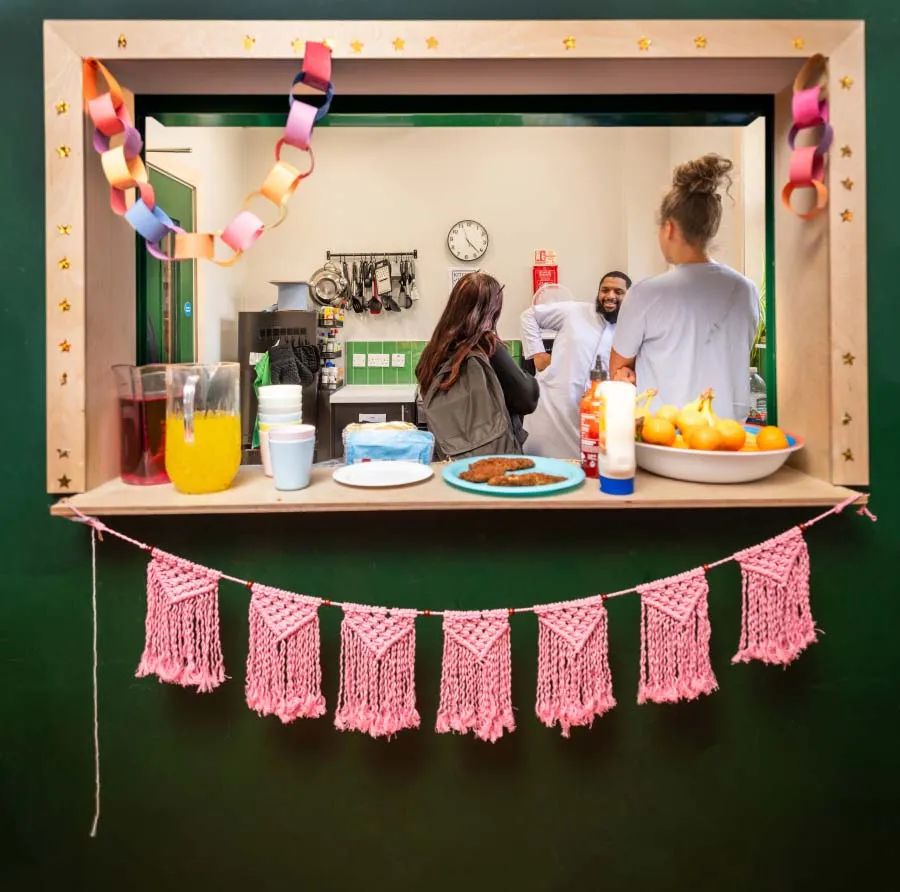
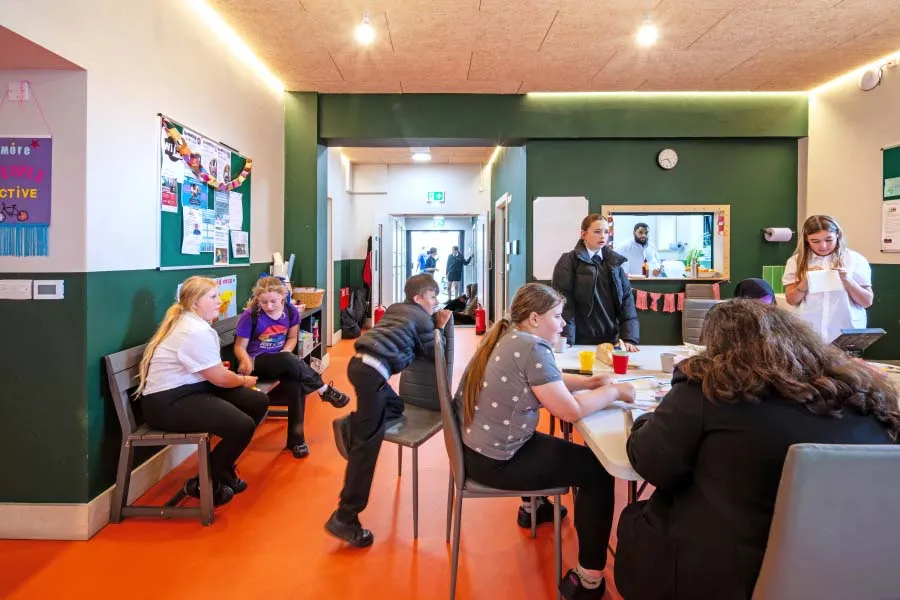
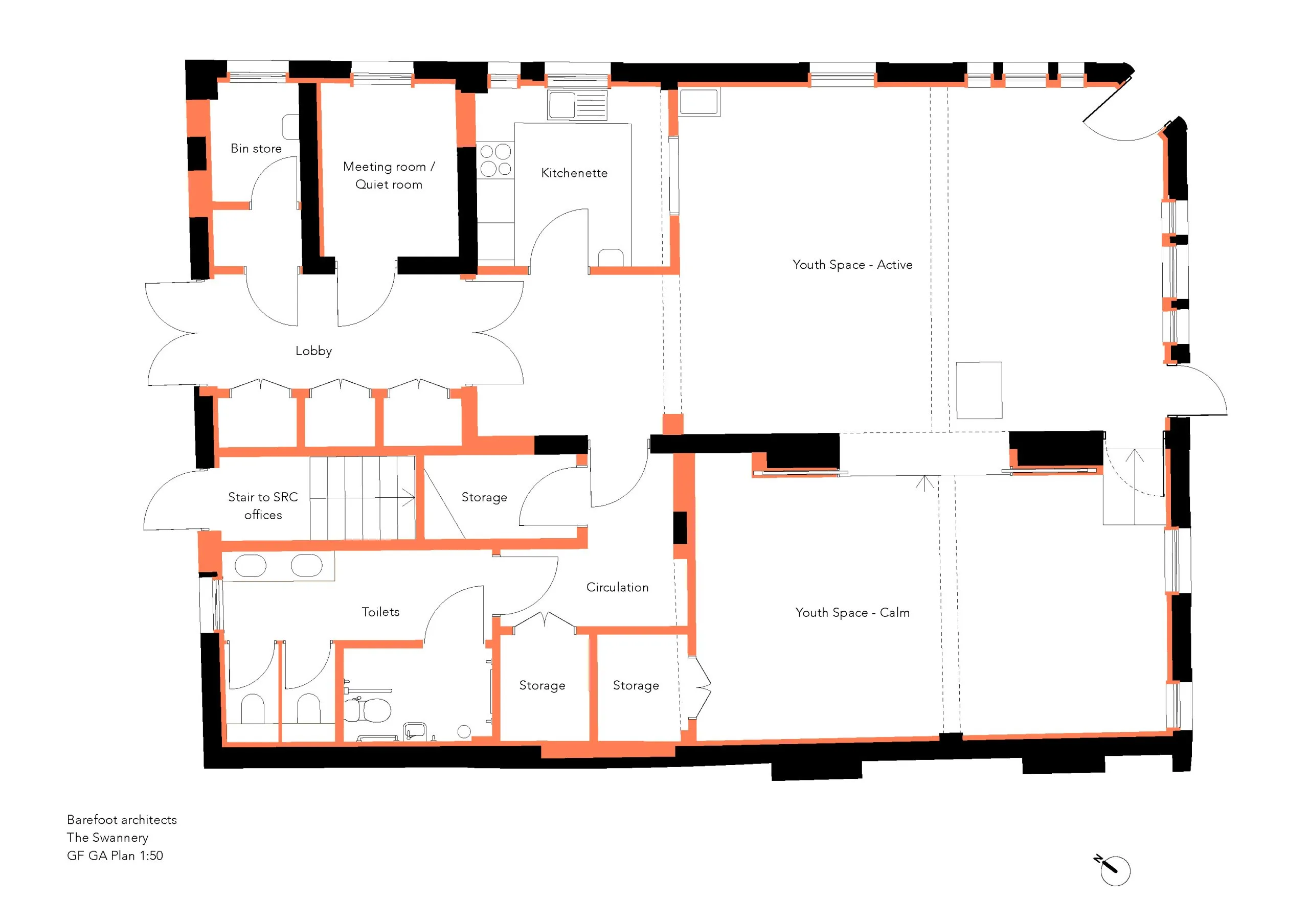
Internally, the project has an open-plan activity area, chill-out space with sofas and a big TV, and a large kitchen for teaching cooking skills. All finishes – orange flooring, dark green walls and wood wool acoustic ceiling panels – are hardwearing, practical and non-institutional.
The Swannery opened in October 2024 and welcomes around 100 young people between the ages of eight and 17 every week. It is operated by Wellspring Settlement in partnership with Learning Partnership West and the Bristol Somali Resource Centre – with the overarching aim that the diverse population of Barton Hill is represented.
About 38 per cent of the population of Barton Hill were born outside of the UK and the number of people claiming unemployment benefits is more than double of the Bristol average. The area has been a landing post for refugees since the 1930s.
The Somali Resource Centre has relocated from a small cottage on the site to bespoke offices on the first floor of The Swannery to allow them to meet local demand of providing free guidance. The new offices contain a mix of interview rooms, offices and meeting rooms that can be used for small group teaching.
Architects’ views
The Swannery needed to be a flexible space that would welcome a diverse group of young people and let them make it their own. When we first visited the site, it was in an appalling state; a smelly, rat-infested, mouldy space, with a history of drug abuse and fighting. It was our job to completely reimagine and transform it into something for the whole community, and particularly young people, to be proud of.
Sam Goss, founding director, Barefoot Architects
The young people we worked with were inspiring – once they had warmed up to the idea that they would really be listened to, they had great questions, made thoughtful decisions and offered useful critique. They wanted to know how everything worked – about the apprenticeships the contractor offered, if they had to go for the cheapest tender, or whether suppliers were local, for example.
Maria Krupa, project lead, Barefoot Architects
Client’s view
The Swannery is the most exciting thing that’s happened at Wellspring Settlement for a lot of years – getting back into youth services. I was around the first time we were doing youth service. There’s lots of young people we see around locally who’ve got their own children now. They’re not perfect; but they’re not in jail and they’re citizens and they give something back. And that was through intervention from us. The fact that we’re back and being able to deliver that at an age where we can have influence means we can make a change.
Paul Simpson, deputy CEO, Wellspring Settlement
Tenant’s view
On an average day we see around 40-50 people and we needed more space to see people confidentially. Since we moved into our new offices we now offer ESOL classes and digital or IT support. Our bigger space has allowed us to increase our staff members and provide more support to immigrant and refugee communities in the area. Last year we were able to help around 300 people into paid employment, improving the local economy as well as people’s incomes and lives.
Abdullahi Farah, director, Bristol Somali Resource Centre
Project data
Location Bristol
Start on site January 2024
Completion October 2024
Gross internal floor area 274m²
Gross (internal + external) floor area 350m²
Form of contract or procurement route JCT Minor Works Building Contract with Contractor’s Design 2016
Construction cost £675,000
Construction cost per m² £2,500
Capital funder Power to Change, City Funds
Development funder Youth Investment Fund, The National Lottery
Architect Barefoot Architects
Client Wellspring Settlement
Structural engineer Goss Structural
Main contractor CW Duke
CAD software used Vectorworks
Sustainability data
Percentage of floor area with daylight factor >2% Not calculated
Percentage of floor area with daylight factor >5% Not calculated
On-site energy generation 11.2 kWh/m2/yr (predicted)
Heating and hot water energy Not calculated
Energy use intensity/total operational energy 59 kWh/m2/yr (actual)
Carbon emissions Not calculated
Actual mains water consumption Not calculated
Airtightness at 50Pa 3 m3/hr/m2
Overall thermal bridging heat transfer coefficient (Y-value) Not calculated
Overall area-weighted U-value 0.39 W/m2K
Embodied carbon Not calculated
Upfront carbon Not calculated