
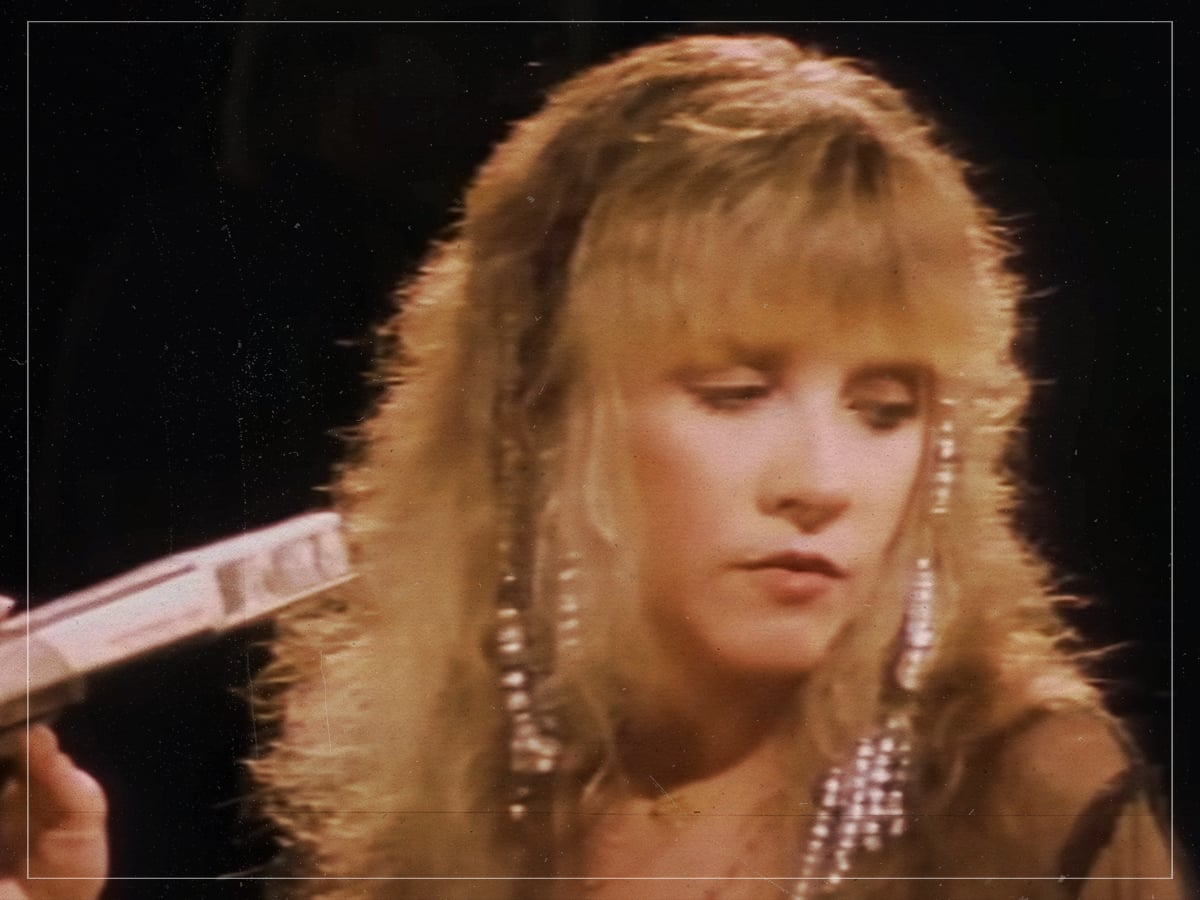
(Credits: Far Out / YouTube Still)
Tue 27 January 2026 16:58, UK
There are a lot of musicians who can happily lay their inspiration at the feet of their predecessors. There are more flowers laid on the altar of The Beatles by the musicians who directly followed them than by anyone else. Likewise, Fleetwood Mac vocalist Stevie Nicks owes a lot to the sounds of the counterculture.
While it wouldn’t be until the mid-1970s that she arrived as a star when the heyday of hippiedom was firmly in the past, she and the rest of her band would continue to push the era’s ethos and create music that managed to appeal to the masses, despite the distinctly countercultural edge. This was always one of their most outstanding achievements.
Fleetwood Mac was born out of the blues that had soundtrack the most swinging parts of the 1960s in London, and when they hopped across The Pond to pick up a couple more bandmates in Lindsey Buckingham and Stevie Nicks, they were sure to hire two musicians who seemed equally indebted to the era.
Nicks has never shied away from this inextricable link to the hippie era, and she often looks back on those heady days spent in San Francisco with deep nostalgia. Whilst her experiences at the height of the ’60s have also made their way into some of her best-loved compositions, the music of the time has made the most significant impact on her work. One band she is particularly indebted to is the supergroup Crosby, Stills and Nash.
Nicks revealed her deep love for the trio when speaking to The Guardian in 2011 as she listed the songs and albums that soundtracked her formative years. She chose their eponymous 1969 debut and said it is the “album that taught me how to sing harmony.” This confirmed that her distinction as an artist and vital component of Fleetwood Mac’s legend would not have been possible without the era-defining work of CSN.
 The stunning sight of Stevie Nicks. (Credits: Far Out / Atlantic Catalog Group)
She told the publication: “I spent a whole summer singing along to this record. I loved the harmonies, and learned to sing all three of the parts. I knew that I wanted to be in a band with the same kind of harmonies.”
Fleetwood Mac would go on to bring this kind of playful harmonising into a new era when Nicks would find herself crooning alongside her soon-to-be ex-boyfriend in Buckingham. Elsewhere, bands like the Eagles would help popularise the notion of bringing harmony into a shining spot of soft rock, much like The Beach Boys had done before, but now with a considerably dirtier and bluer edge.
The sound would help to push Nicks into a new realm of rock singing. The time for Robert Plant’s shrieking powerhouse vocal felt over, and Nicks was at the head of a new sound, bringing a perfectly manicured power to the rock realm.
Interestingly, this wasn’t the only Stephen Stills offering that Nicks chose. She also named ‘Rock and Roll Woman’ by his first iconic countercultural act, Buffalo Springfield, as one of her favourites. She said, “Hearing this for the first time was like seeing the future. [Sings] ‘And she’s coming, singing soft and low…’ When I heard the lyrics, I thought: that’s me! They probably wrote it about Janis Joplin or someone like that but I was convinced it was about me.”
Looking back on the peak of the counterculture, which she spent alongside romantic and songwriting partner Lindsey Buckingham, the Fleetwood Mac vocalist said: “By 1968, I was in a band with Lindsey. His family lived in the same gated community as us, and we would practise at his house. My mum and dad liked him”.
Hearing a certain band or album for the first time can usually pass you by without much thought. But, for some of us, pressing play on a record can create a seismic shift in our personalities. For most, it garners a new outfit or walk, perhaps even a preference for a new lexicon. For Nicks, it catapulted her into a pathway that would, eventually, lead to her own rock greatness.
Listen to Crosby, Stills and Nash below.
Related Topics