
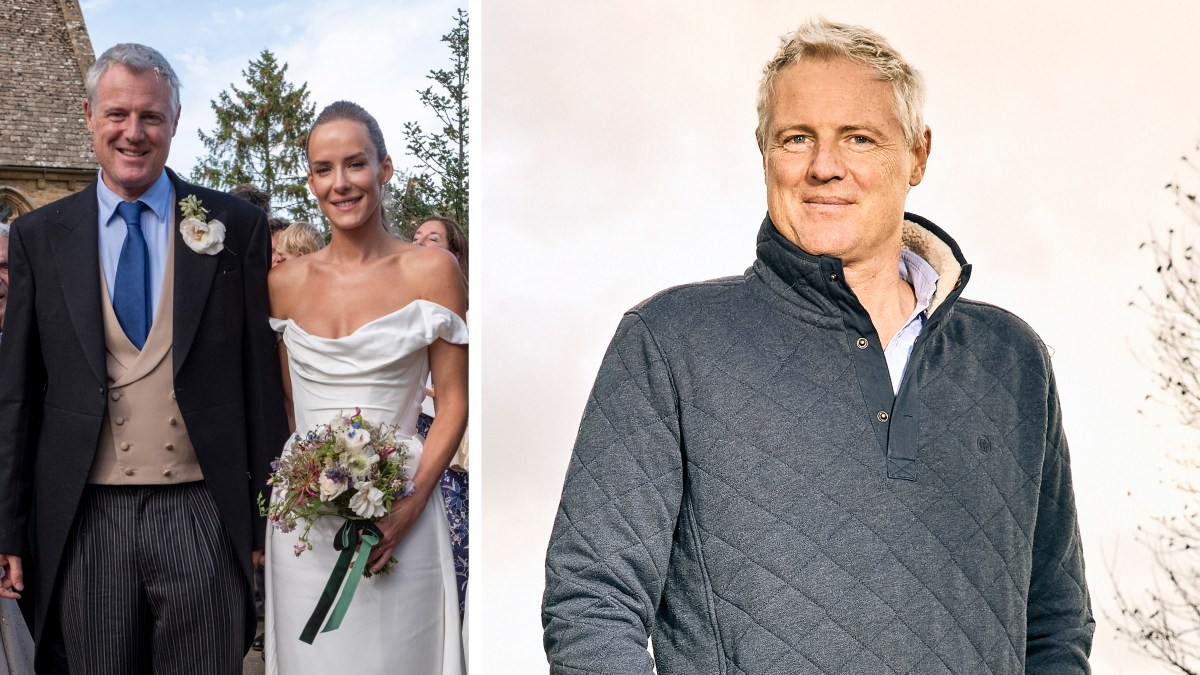
‘It all started with a jackdaw,” Zac Goldsmith says. “I was obsessed with this incredible bird that had fallen down a chimney. I began to feed it, as it would scream every hour for food, and we became very close.”
For six months the jackdaw would come and go, Lord Goldsmith of Richmond Park explains. “I fed it worms I kept in my pocket. If I went for a walk, I had a whistle it would recognise, and I would see this black shape coming towards me.”
It was the pandemic, Goldsmith was locked down in the New Forest and was becoming frustrated. Then the Tory minister for overseas territories, energy, climate and the environment, he was confined to his home. “The jackdaw and I were both trapped. So, I made the shape and moulded the bird from wax.
“Eventually, I was creating silverback gorillas and elephants. A tortoise took ages as I couldn’t get its weight. It was addictive. It occupied me on long Zoom meetings where I could do it simultaneously.”
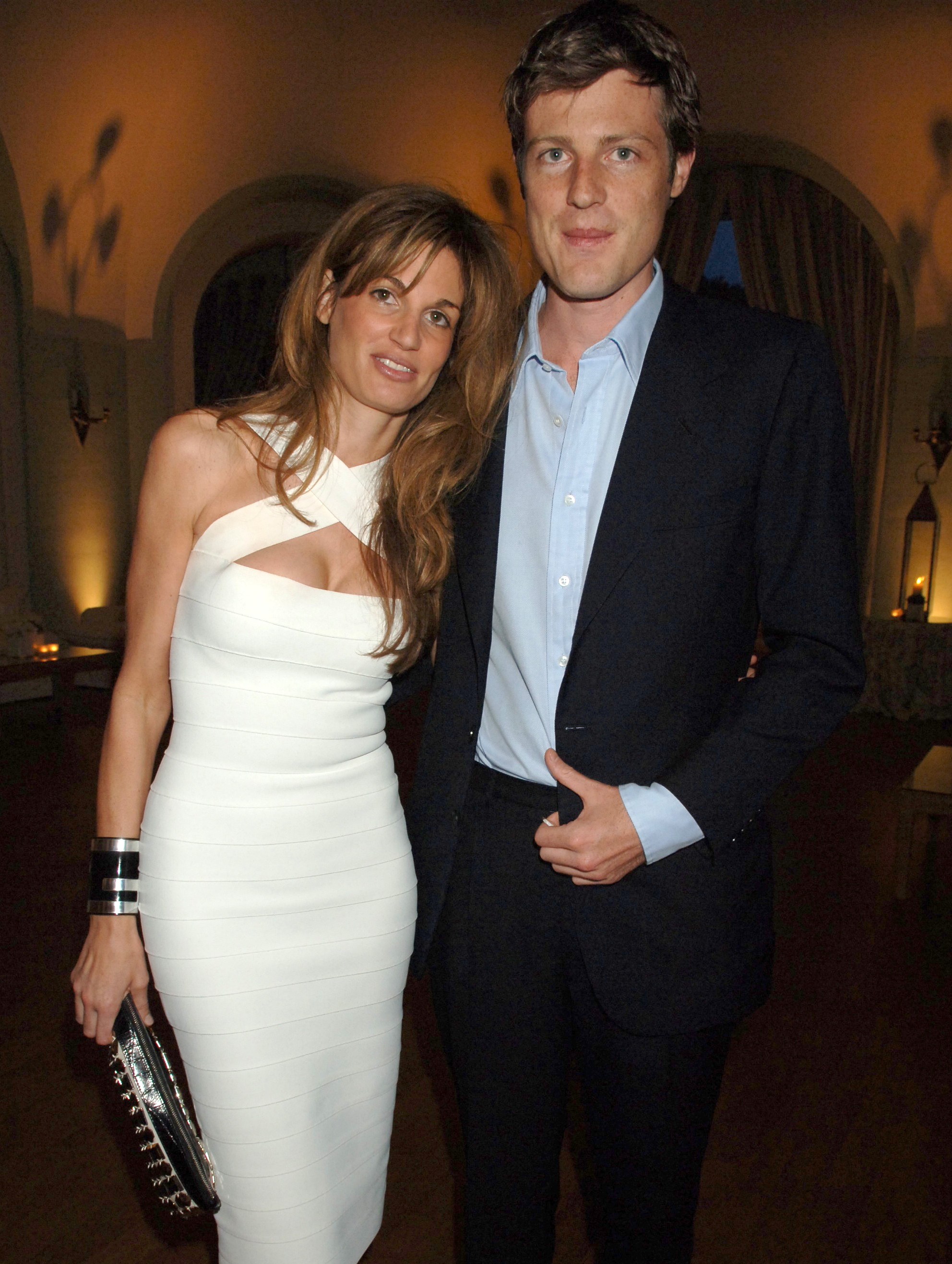
Goldsmith and his sister, Jemima Khan, in 2007
SHUTTERSTOCK
Astonishingly, Goldsmith had never done any sculpture before, not even a clay paperweight at school. “I went from wax to wood and used a beautiful 300-year-old oak that had fallen to sculpt an 8ft gorilla with a chisel, chainsaw and hammer. The wood slowly began to disintegrate, so I decided to use bronze.”
Soon, the sculptures were filling every space in his house. “I’m always being asked to give things to environmental charity auctions and I’d run out of stuff. So I put one of the animals in and someone bid £50,000. I thought, I’m really enjoying this and I can raise money for nature.”
Now his sculptures go for thousands of pounds and are in smart Cotswolds houses, including that of his old boss, Boris Johnson. Even Goldsmith appears stunned. “I have sold half a million pounds of sculpture. It’s extraordinary. I would never pretend to be an artist. I just love the animals. There was a gorilla I met in the Congo while a minister [that was] a rescued silverback from Britain. The gorilla [was returned to Africa] from Howletts wildlife sanctuary [founded by family friend John Aspinall] and I realised it was the same one that had chased my son across the lawn 20 years ago. I knew it well. So, I sculpted it.”
The money raised from his upcoming exhibition, Art for Nature, will go to Yaba Chic Wildlife Conservation in Costa Rica, which Goldsmith founded last year to rewild injured and orphaned animals, and restore the biodiversity of the Osa peninsula. Costa Rica is his favourite country. “It is one of the few places that has turned its fortunes round by increasing its forests, caring for its natural resources and rural communities.”
Goldsmith’s older half-sister, India Jane Birley, is a painter. “But it is not my side — her grandfather was Oswald Birley, a well-known portrait artist.” His family have always been money-makers, agitators and gamblers, he says. He was a journalist in his twenties before serving as the MP for Richmond Park for a decade.
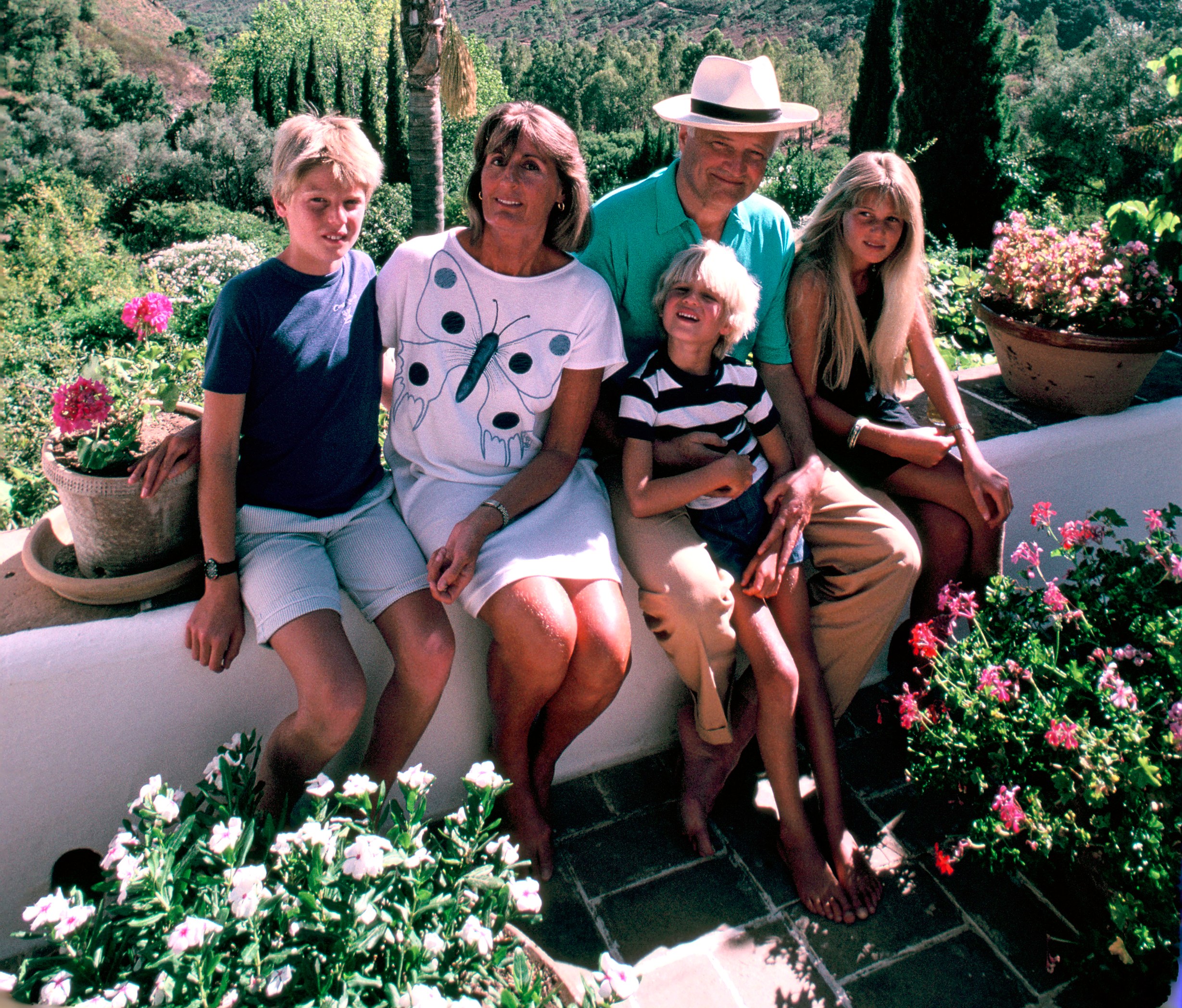
With his mother, Annabel, and father, James, and siblings Ben and Jemima in Spain in 1987
GETTY IMAGES
“It’s cathartic, sculpting. Politics is horrible. I do it because I care about the environment, but I don’t enjoy it. You have shit thrown at you nonstop.”
I first interviewed the Tory peer nearly 30 years ago when he became editor of The Ecologist. He was possibly sporting the same faded blue cords he is wearing now, with a frayed shirt, as we sat in a Fulham greasy spoon and he chain-smoked. In the evening, we moved on to Aspinall’s private members’ club, where he had a regular poker game.
‘I feel the need to go into battle for nature’
Back in the Nineties, he was best known as the staggeringly good-looking son of the billionaire Eurosceptic financier Jimmy Goldsmith, who dealt in everything from suntan oil to Alka-Seltzer and set up the Referendum Party. One writer then described the young Zac as having a face “carved out of caramel by angels”; now he looks more like a chiselled piece of weathered sandstone. Like his father, he left Eton before his time was up — expelled when marijuana was found in his room. But he seemed effortlessly to drift through life on his substantial inheritance. Both his grandfathers were MPs — his father’s father, Frank Goldsmith, his mother’s father, Viscount Castlereagh — but Goldsmith told me he would never join the Conservative Party. He wanted to be an eco-warrior.
The next time I met him, 15 years later, he was a Tory MP. I was chairing a debate about the future of the press with him and Hugh Grant. Looking more like a film star than Grant, he assured one woman, with a straight face, that The Sun was wrong to report that he wanted to ban vibrators because they used too much power.
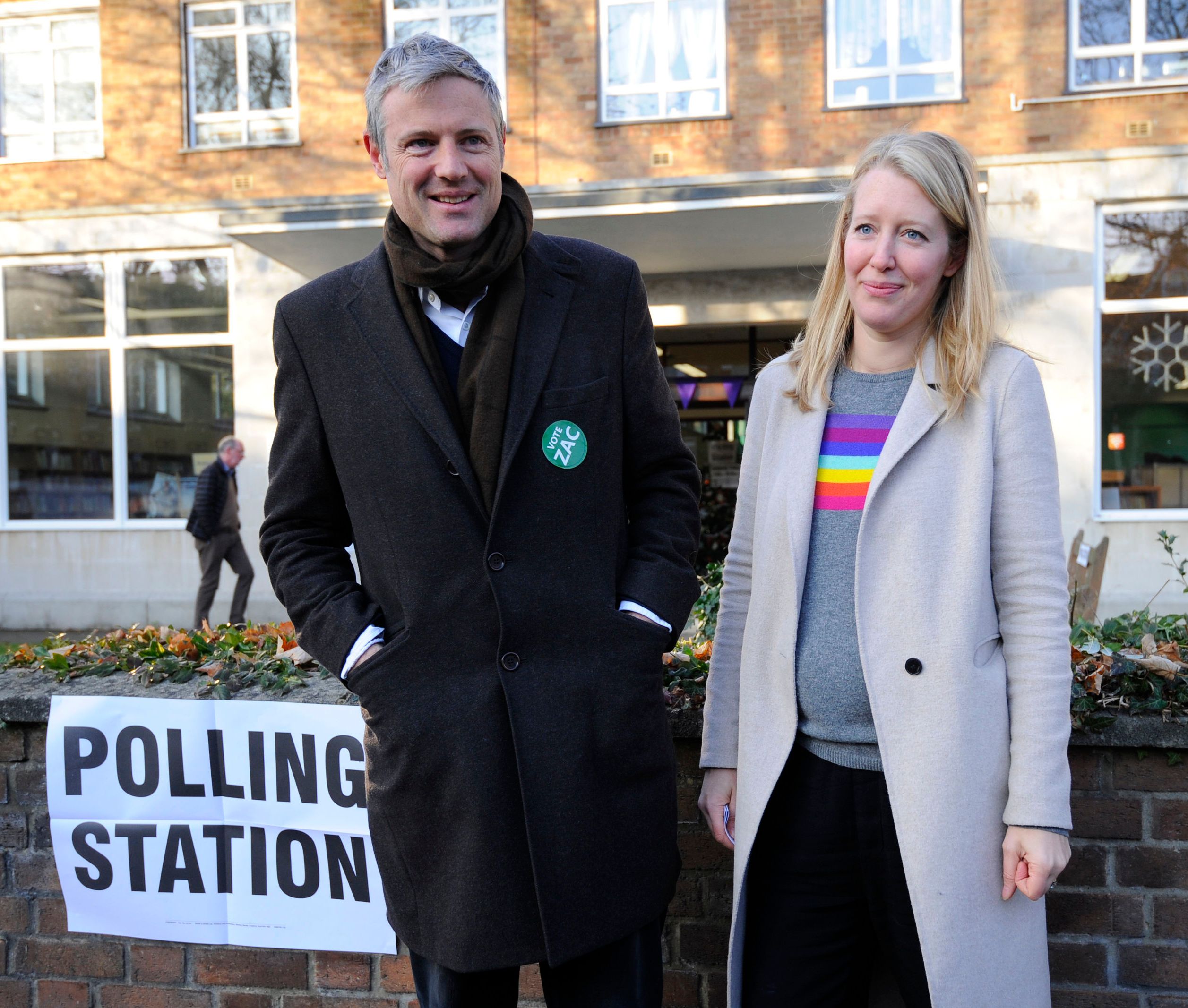
Goldsmith and his second wife, Alice Rothschild, 2016
PA
Now, aged 51, his blond hair turning silver, he is still disarmingly polite and earnest while intensely passionate about the environment. “I feel the need to go into battle for nature. But sculpting means I can switch off sometimes. I can never meditate or do yoga — I am too hyperactive,” he says, though I can’t imagine him doing any sport more strenuous than hitting a croquet ball.
Goldsmith has set up a studio in his office in the New Forest where he moved after his marriages, first to the jewellery designer Sheherazade Bentley, and then to Alice Rothschild from the banking family, ended. He has six children and got married for the third time last year, to Hum Fleming. “I am an expert at marriage now, I suppose, or very bad at it,” he says. “You don’t plan to marry three times.”
The New Forest is his retreat. “I’ve rewilded, planted trees, taken out the rhododendron and bamboo. The birdsong has come back. I saw a kingfisher a few weeks ago. I live there as much as I can and just come to London occasionally.”
Goldsmith can’t find a teabag in his borrowed Notting Hill flat. “It’s not home. But I love London. Unlike some politicians now, I don’t think it’s a frightening place. I have lived in Richmond and Barnes, and I go to my brother Robin Birley’s club, 5 Hertford Street, in Mayfair. I was mugged four times in my teens, but I was probably an easy target. Now I feel pretty safe.”
He enjoyed being MP for Richmond, until the Brexit referendum, when Remain-inclined Richmond residents felt betrayed by their Brexiteer MP. “After Brexit everything changed. I was the enemy.”
Goldsmith had desperately wanted to become Tory mayor in 2016, but blew the election and Sadiq Khan got in. “I was excited at the beginning by the idea of a greener London; by the end I wanted it to be over. It was excruciating. If I had been mayor, I wanted to create pocket parks, plant trees and clean up the waterways. At least Sadiq Khan is excited by having beavers in the capital.”
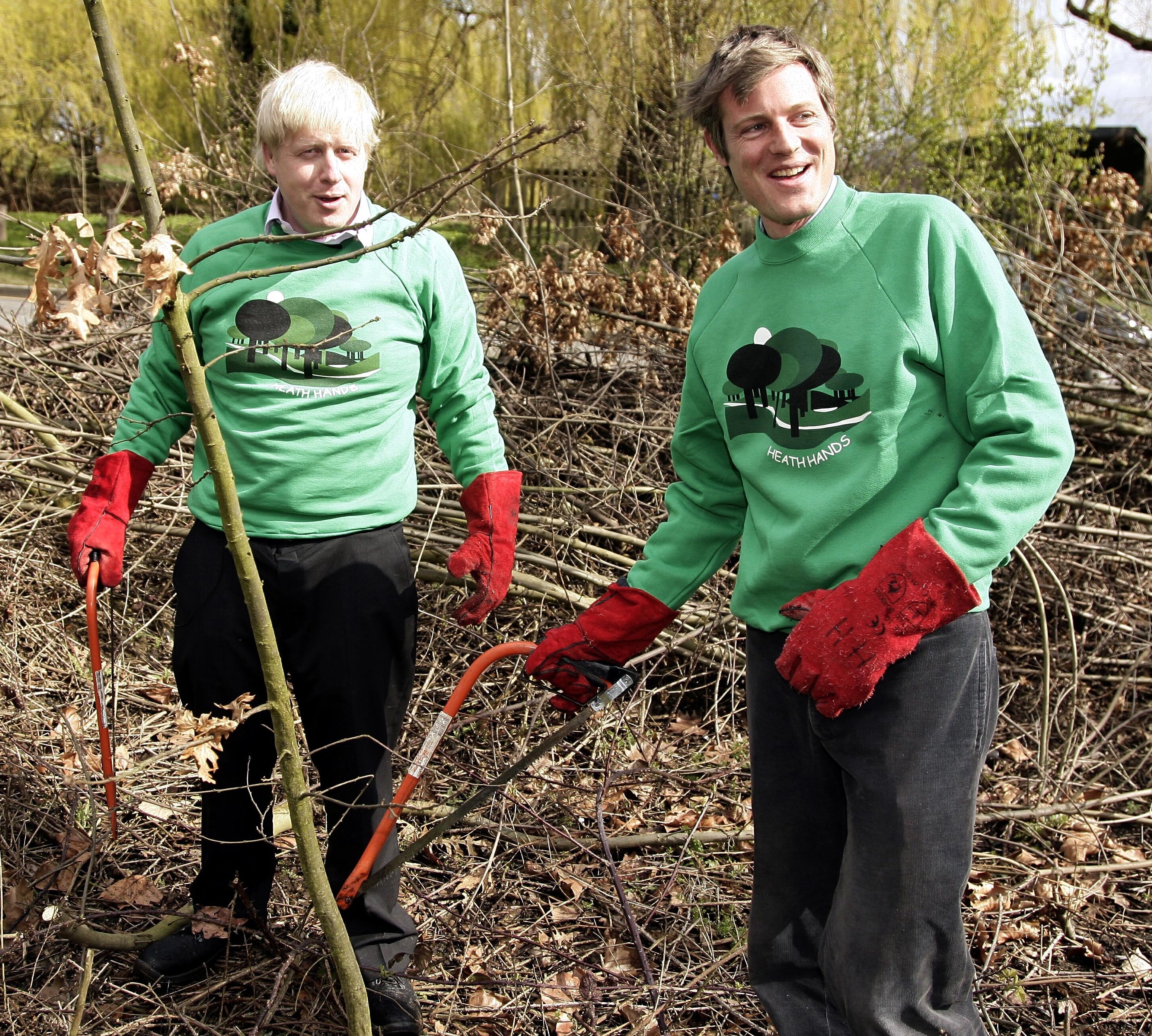
With Boris Johnson in 2008
SHUTTERSTOCK
Becoming an environment minister in the Lords under Johnson instead, however, probably gave him more power. “Boris is Marmite. But he was good at nature.” The green movement in this country, he now says, has made a catastrophic error in reducing everything down to carbon counting rather than nature. “The left likes putting all the emphasis on carbon because it raises taxes for them and allows them to boss business about with petty rules.”
Restoring nature is far more critical to saving the planet, he thinks. “In the Congo, the Amazon, Indonesia, their forests are producing rainfall for their regions and sustaining ecosystems that can’t be allowed to fail. Nature gets no attention. It’s pushed to the margins while our obsession with getting to net zero is crippling us.”
It is shocking how bad Labour has been, he says. Take the proposed sell-off of the Chagos archipelago to Mauritius. “In 2010 it became the world’s largest marine protected area — more than double the area of the British Isles filled with coral reef ecosystems. Yet we are about to hand it over to the Mauritians, who won’t look after the environment and will sell fishing licences immediately. The idiots.
“We were becoming known for bringing countries together to protect nature and suddenly, in the past few years, we’ve dropped everything. We wanted to get the Antarctic and the Southern Ocean protected. The number of humpback whales has grown after a moratorium on hunting them; they are struggling for food. But we’ve stopped pushing for it. So countries no longer respect us any more.”
Labour doesn’t care about the British countryside, he says. “They see nature as an elitist cause. Perversely, the Greens don’t care about it either. The Green leader, Zack Polanski, barely mentions nature — for him, it is all about bashing the rich.”
Goldsmith, who rings up politicians and philanthropists around the globe to cajole them to help his projects, is determined that Britain can still do deals. “I’m hoping to protect the remaining forest in Indonesia. In return, I’ve committed to building a coalition of financial support to help the Indonesians restore 12 million hectares of degraded land.”
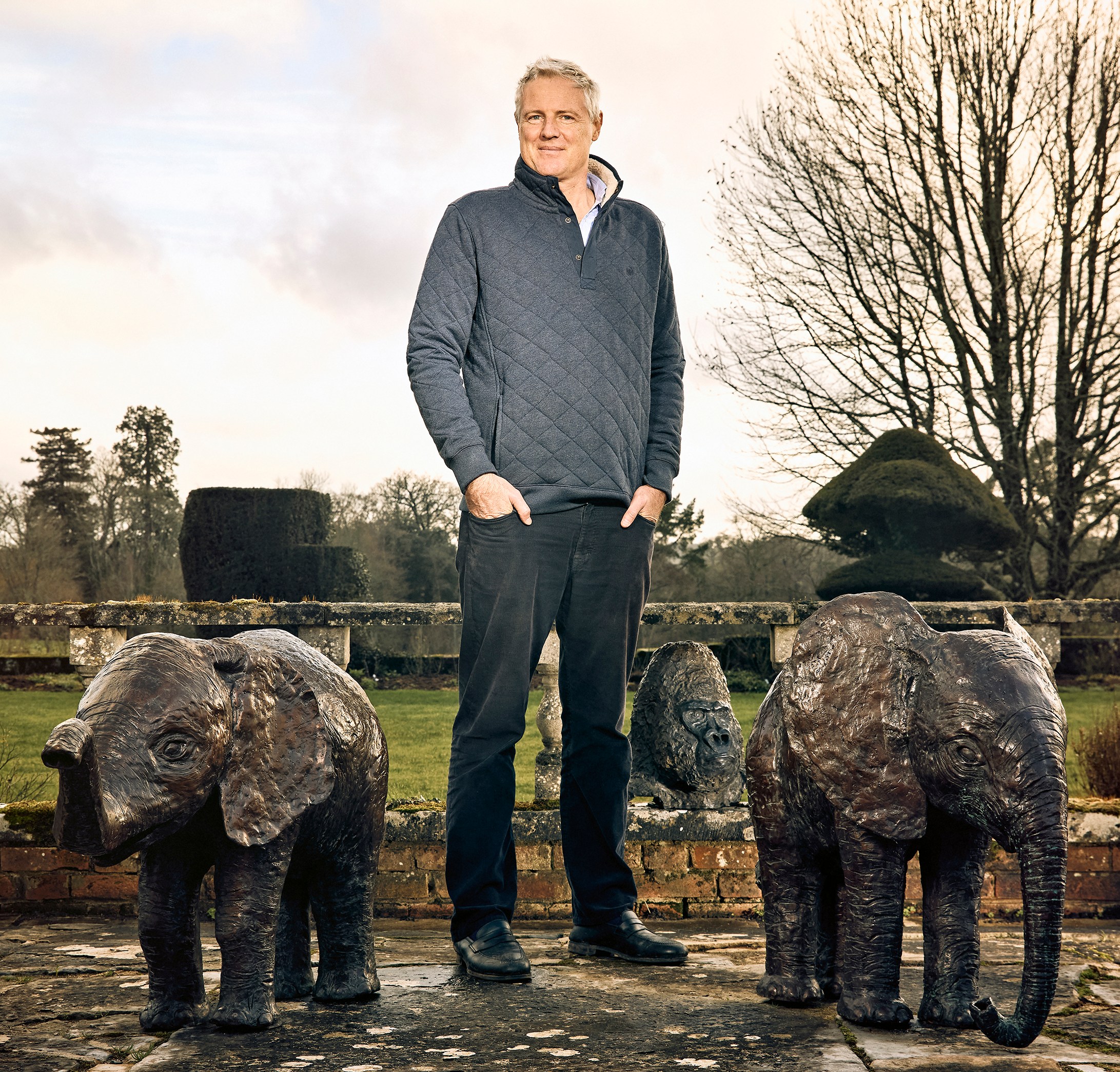
At home with some of his sculptures
MARK HARRISON FOR THE TIMES MAGAZINE
He tries to focus on ecology, but even he admits he has been distracted by world events recently. “The catastrophe of the October 7 attacks by Hamas in Israel was a huge wake-up for me. I was not brought up to be Jewish, but to feel Jewish. I went to synagogues with cousins — we would have all failed the Hitler test — but none of my family thought much about Israel or worried about antisemitism. There were conspiracy theories, of course, about big Jewish families like the Goldsmiths and Rothschilds, but I never took them seriously. Then October 7 happened. People I knew or recognised were using genocidal slogans like ‘River to the sea’ and ‘Globalise the intifada’. And it triggered something.”
Most families with any Jewish blood, he says, feel the same. “I had never commented about Israel; I didn’t think about being Jewish. But I do now. I remember once being called a tight Jew at school, but it wasn’t personal — it didn’t offend me. Now I can’t use my name for anything like Deliveroo or eBay. I feel nervous booking a cab as Zac Goldsmith or for my kids as Rothschilds — there is a risk of a nutter going for you.”
His older sister, Jemima, was married to Pakistan’s former prime minister, the cricketer Imran Khan, now in jail, and their sons have been brought up as Muslims. “My sister comes from a different place. We may disagree but we don’t argue. Her sons are going through a very hard time as they don’t know what is happening to their dad — they go for weeks not being able to talk to him. He is having an horrendous time imprisoned in solitary confinement. My worry is the current government will find a way of knocking him off to keep him out of power, so we are all racked with anxiety.”
The Goldsmith family is vast and until late last year it was presided over by his mother, Lady Annabel, who gave her name to Annabel’s nightclub and was very much the matriarch until her death at 91. “She was on very good form until the end, so tough and independent,” he says. “I took her to hospital the day before she died, and her mind was clear.”

Goldsmith in his studio
MARK HARRISON FOR THE TIMES MAGAZINE
Goldsmith didn’t think it would be the last time he would see his mother: she was teasing the nurse and flirting with the doctor. “I had to put her in a wheelchair, which she hated. But she was very alert. Then she didn’t wake up the next morning. I miss her very much, but there was no drama, fear or pain. She was never an invalid. So I feel she was lucky.”
Weeks before she died, his mother came to his wedding to Hum (Hermione) Fleming, 35, from yet another banking family. Hum campaigns for greater awareness of epilepsy, a condition she developed as a teenager. “I knew nothing about epilepsy before we started going out,” Goldsmith says. “I remember being quite scared and swotting up. She found four pages of sheets I’d printed out about epilepsy, which was embarrassing. But I wanted to get it right.”
Hum is very open about her condition, he says. “Sometimes she just blanks and she can’t hear what anyone is saying. In her mind it is terrifying: she is conscious and she is worrying whether she is breathing. Or she might have an episode with jerky movements. But the most dangerous ones she is not aware of. She only has them at night, and I find those terrifying. I have to make sure she doesn’t hit her head or stop breathing.”
A friend introduced them two years ago. “She is amazing. Epilepsy affects her memory, which is patchy, but she never complains. Every two months she will have a huge night-time seizure. She’ll wake up and there will be blood all over the pillow.”
Goldsmith seems more relaxed now he has passed 50. “I’ve just started to play poker again — I’m playing tonight with the old crowd and my children.”
When I interviewed him 30 years ago, he told me, “I got given a good hand in life and my job is to play it as well as I can.” How does he think he’s done? “I messed up things like the mayoral campaign and personal stuff, but I have always remained committed to nature.
“In the time it will take to read this article, we’ll have lost 450 football pitches of forest. That’s what keeps me working.”
Art for Nature, February 11-28, is at Noho Showrooms, 67 Great Titchfield Street, London W1 (zacgoldsmithart4nature.com)