
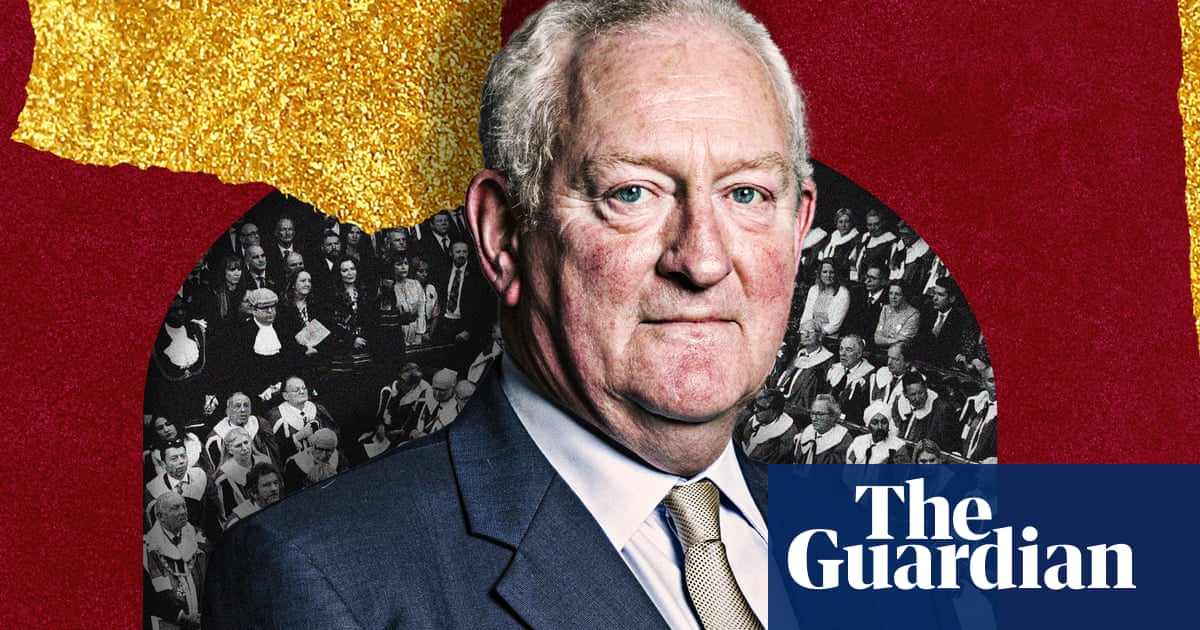
Campaigners have criticised as too lenient the punishment handed to a Conservative hereditary peer found to have broken the House of Lords rules for the second time.
In a report published on Wednesday, the House of Lords concluded that the Earl of Shrewsbury had fiddled his expenses and had done so in an “unacceptably casual” way. The lords’ authorities are intending to suspend him from the upper chamber for two weeks.
His misconduct occurred just three months after returning to the Lords from a nine-month suspension for lobbying for a commercial company that he was working for. It was one of the biggest punishments ever imposed on a peer.
Campaigners at Spotlight on Corruption said his conduct showed “a deeply worrying disregard for the rules” and that there needed to be real consequences for those who repeatedly offend.
The House of Lords investigated the peer, whose full name is Charles Henry John Benedict Crofton Chetwynd Chetwynd-Talbot, after the Guardian revealed he had claimed, from public funds, travel expenses that he had not incurred.
Shrewsbury, 73, used a publicly funded first-class rail ticket to attend a board meeting of a company of which he was a non-executive director. In a leaked email he wrote to fellow directors that the “government pays” for his travel to the meeting.
He is the fifth peer who the House of Lords has concluded have broken its rules following the Guardian’s months-long investigation examining the commercial interests of peers.
In his report, Martin Jelley, the House of Lords standards commissioner, decided that the peer, who has been in the Lords since 1981, had wrongly used a first-class rail pass that should only have funded his parliamentary work.
The peer had used the ticket to travel part of his journey from London to Liverpool to attend a board meeting of a property development firm, Cheshire Land, in January 2024. He gave differing accounts to the standards commissioner.
The peer had also claimed for four car journeys that he could not have made. Jelley said: “His approach to his mileage claims was unacceptably casual.”
The House of Lords committee in charge of policing peers’ conduct accepted: “The sums involved in this case were small (just under £200), and Lord Shrewsbury was quick to acknowledge his wrongdoing, offer a full apology, and reimburse the house. There was no evidence of deliberate dishonesty.”
The conduct committee said a “short period of suspension” was merited, adding: “Although the previous breach had nothing to do with allowances, a common feature of both cases was Lord Shrewsbury’s failure to maintain a clear distinction between his parliamentary and business activities.”
Shrewsbury had been banned from the Lords for nine months in 2023 after he was paid £57,000 to lobby ministers and officials by a healthcare company in what was judged by the Lords’ watchdog to be a “lucrative relationship”.
The House of Lords’ conduct committee had judged on that occasion that his misconduct was “extremely serious” and had damaged the reputation of the upper chamber.
Kamila Kingstone, senior campaigner at Spotlight on Corruption, said: “This case shows a deeply worrying disregard for the rules that protect public money.
“Intentionally using parliamentary resources for private business, then being ‘unacceptably casual’ about false mileage claims, damages trust in the House of Lords and reinforces the perception that some peers believe the rules do not apply to them.
“Coming so soon after a previous suspension, this breach underlines the need for tougher enforcement and real consequences when standards are repeatedly ignored.”