

The announcement on Tuesday that Fin Baxter would miss the Six Nations to have foot surgery did little to mitigate headlines around England’s “prop problems”. Baxter had featured in 18 successive Tests from debut, no mean feat for anyone, let alone a front-rower.
Baxter followed Will Stuart and Asher Opoku-Fordjour into absence from Steve Borthwick’s squad. The back-up to Ellis Genge and Joe Heyes is Bevan Rodd and Trevor Davison (13 caps between them), and two uncapped options in Emmanuel Iyogun and Billy Sela.
It is a similar story in Ireland, where injuries have kept Jack Boyle, Paddy McCarthy and Andrew Porter — all loose-heads — out of Andy Farrell’s squad. Tadhg Furlong and Finlay Bealham are in the mix at tight-head, supported by Tom O’Toole (17 caps), Tom Clarkson (ten), Jeremy Loughman (five), Michael Milne (two) and the uncapped Billy Bohan. For Wales, injuries have led to a call-up for Sam Wainwright, arguably his country’s sixth or seventh-choice tight-head.
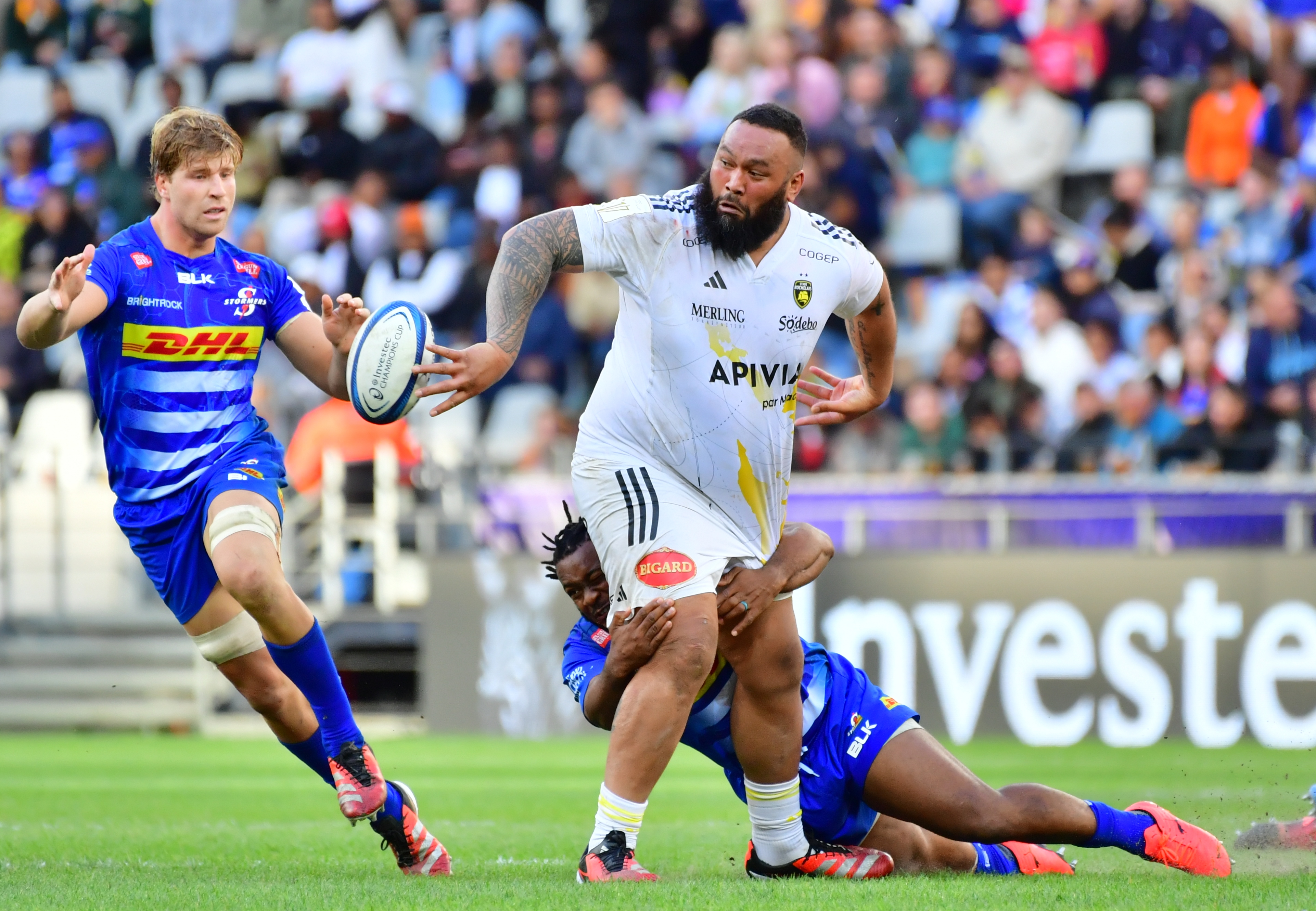
The 23st Atonio was said to be in a stable condition in hospital after suffering a heart attack
GRANT PITCHER/GALLO IMAGES/GETTY IMAGES
The narrative around unavailable props took an unexpected and awful turn when La Rochelle announced on Wednesday morning that Uini Atonio — 6ft 5in and just under 23st — had been taken to hospital because of a heart attack, ending his professional career, an incident that went far beyond rugby. The club said the 35-year-old was in a stable condition in intensive care, and the thoughts of the sporting world went out to him.
But in a gruelling sport where injuries are a main character, the demands on a prop are among the toughest. These are the heaviest players on the field, often above 20st, with the need to be powerful in scrums and then mobile around the park.
For a member of the public, such a strain on the body would be inadvisable. NFL linemen can weigh significantly more — Desmond Watson, at more than 30st, signed for Tampa Bay Buccaneers last year — but act mostly as short-burst obstacles. Rugby league has done away with the scrum as a contest and in Australia’s NRL, athletes above 20st are not routine.
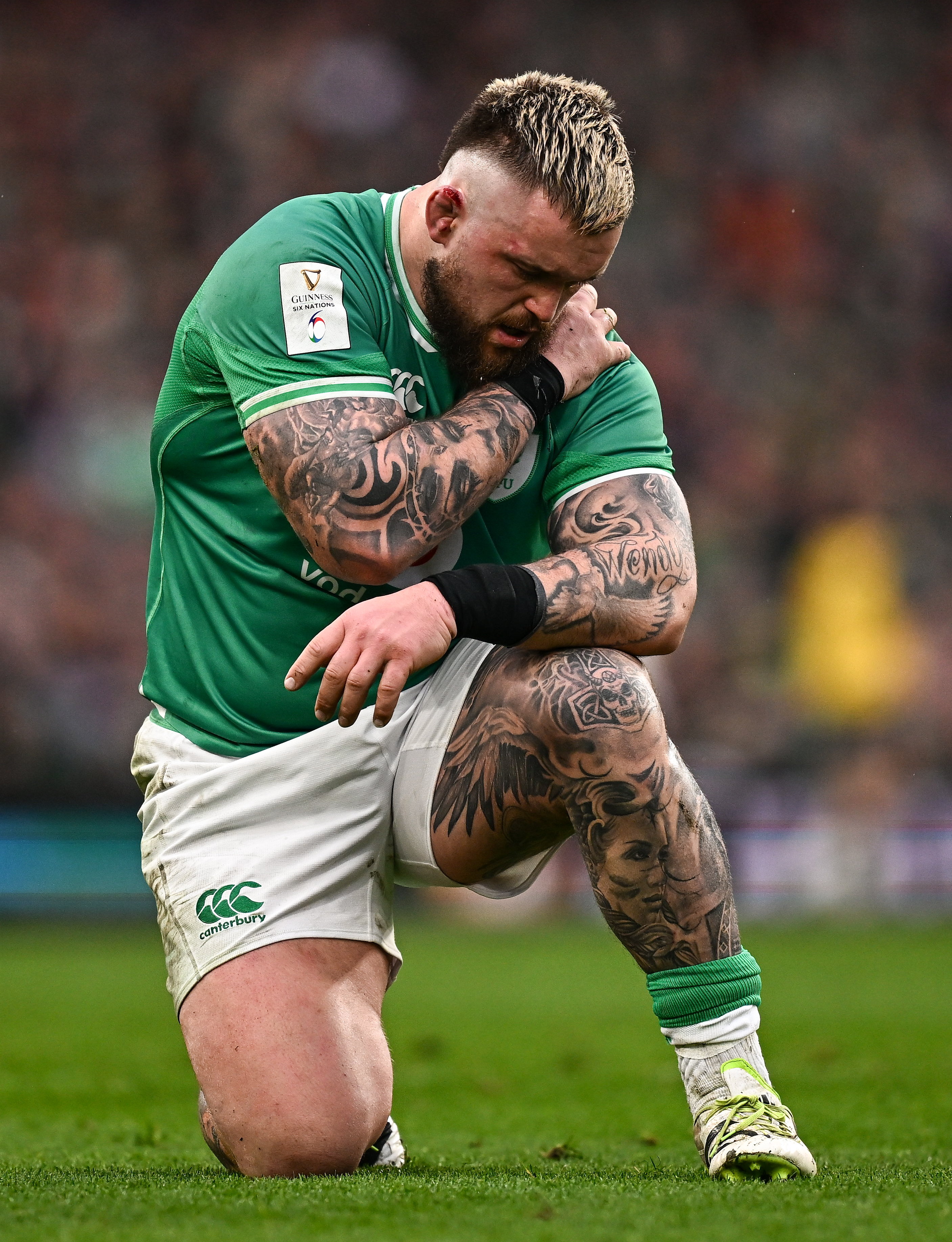
Porter feels the effects of a heavy collision during a match at home to Scotland in 2024
HARRY MURPHY/SPORTSFILE VIA GETTY IMAGES
Sarah Bern, the Red Roses prop, likened her job, from scrummaging to open play, to holding her maximum-weight squat above the floor followed immediately by a sprint, several times a game. Dr Stewart Bruce-Low from the school of health, sports and biosciences at the University of East London, says an athlete of that size can train to accommodate heavy impacts through the amount of muscle they carry, but that “over time it will take its toll”. “The body is not designed to do that over a long period of time,” he says.
Phil Morrow, the England head of team performance, acknowledges that the prop’s job is not easy, but insists that it is too soon to diagnose a problem with propping fitness in the game. “You have to be careful that you don’t start changing too much because you could end up with the wrong conclusion,” he said. “We look at it, we keep analysing it, we’ll keep seeing whether the trend continues, but we don’t want to jump to conclusions.
“When you look at rugby, if you look at the best athletes I worked with in 2010, they’re probably not that much better than the best athletes of 2026, but everyone’s coming up. You don’t have the bad athletes. The general standard, the average, is a lot higher than what it used to be. The demand on props is high.”
At 5ft 8in and about 17st — and there were those who thought both figures had been rounded up — Thomas Domingo was a standout prop for Lilliputian reasons when he won 36 caps in France’s front row between 2009 and 2014, a throwback to amateur days, though smaller men still exist in France: Quentin Walcker, listed by Castres Olympique as just under 6ft and just over 17st, and the Montpellier duo of Baptiste Erdocio and Enzo Forletta, both listed at 5ft 9in and just over 18st. Yet even they have punishing workloads.
“It’s like the NFL asking the defensive linemen to go and do all the tackles and the carrying and everything else, in a way,” Will Collier, the Castres tight-head prop, says. “It’s hard. It’s something I slightly struggled with in my career. I’d say scrummaging is my strength, and I tried to park that for a bit when I was a bit younger, maybe six years ago, lost a lot of weight and developed this all-court game a bit more.
“I was making a lot of tackles in the game and carries etc, my aerobic fitness was great, but I lost a bit of the essence of what it was to be a prop. My scrum was fine, I wasn’t going backwards much or getting dominated, but I didn’t have the strength and the capacity. I was playing about at 117, 116kg [just over 18st], I’m now 125kg (just under 20st).
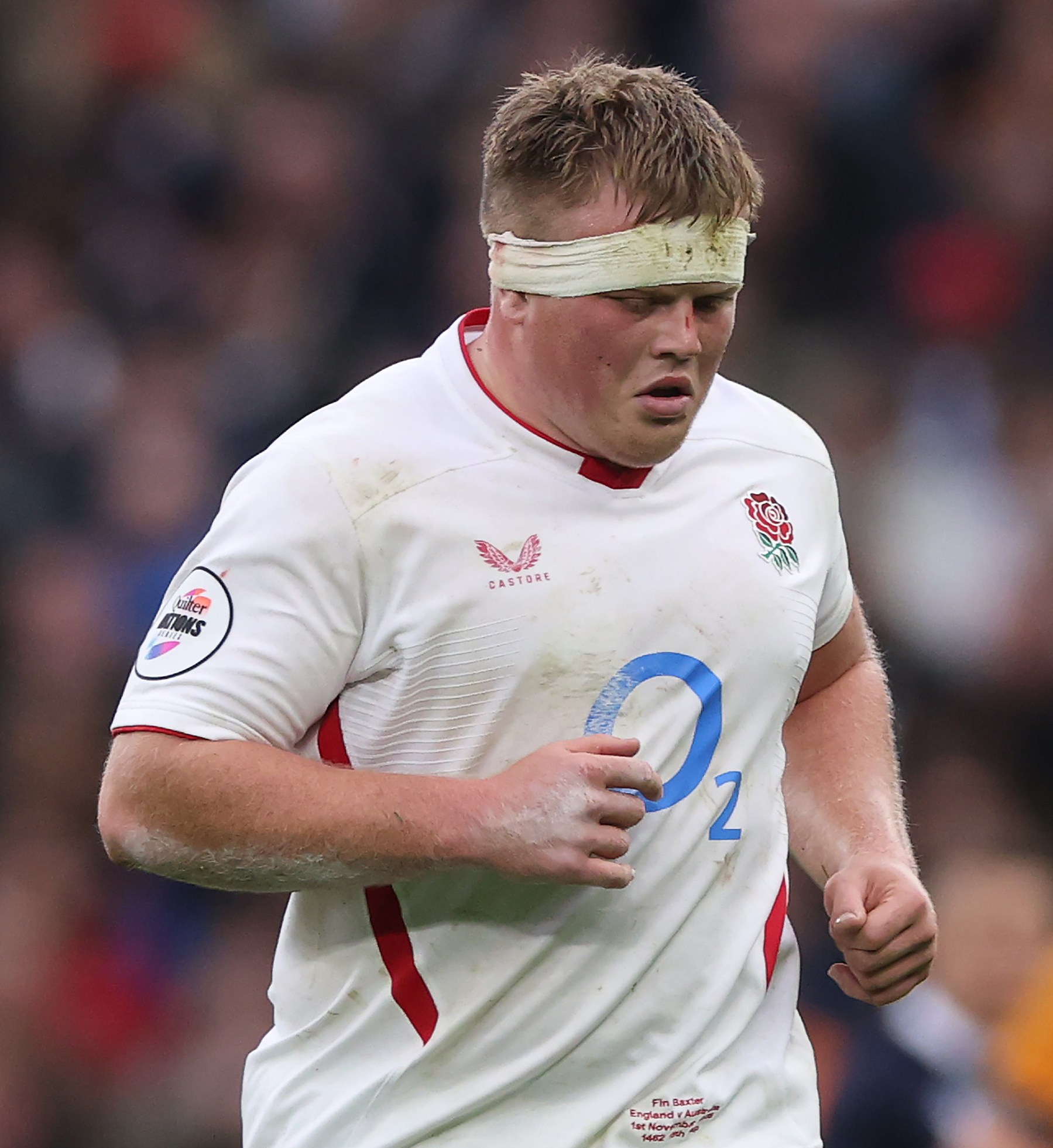
Test props, such as Baxter, are facing increasing levels of expected performance in a jam-packed schedule in which extended rest is all but impossible
DAVID ROGERS/GETTY IMAGES
“The roles are developing across the front five, massively, what’s expected also of hookers and of second-rowers now. You need to have an all-court game and be able to do everything. For a prop to be able to do that is incredibly hard. To get up from a scrum, the amount of weight that’s just been put through your body, what you just put your body through, and expect to be able to sprint to the next job, do the next thing, go and carry a ball, go and make these tackles. It’s incredibly demanding.”
Collier explains how the grind of a season can affect a prop: the “short, sharp duress” of a match coupled with the “long, bludgeoning” nature of a season. “You start the season great, most people do, not many niggles, and you get a routine,” he says. “For me personally, the things that help are the off-field stuff like the Wattbike and the prowler [sled], which for me simulate that sapping in the legs.
“The trouble is the minute you get a niggle or an injury and you start being modified. I had a sore knee at the start of the season, I can’t do the prowler, I can’t squat properly, and it happens a lot, then you have to modify yourself. And then you get into this cycle where you’re clinging on, just getting to match day and match day, and the fitness starts to go down, and it’s really hard to break out of that in these long, monotonous seasons.
“You’re just clinging on, waiting for the next little break where you can get your body right.”