
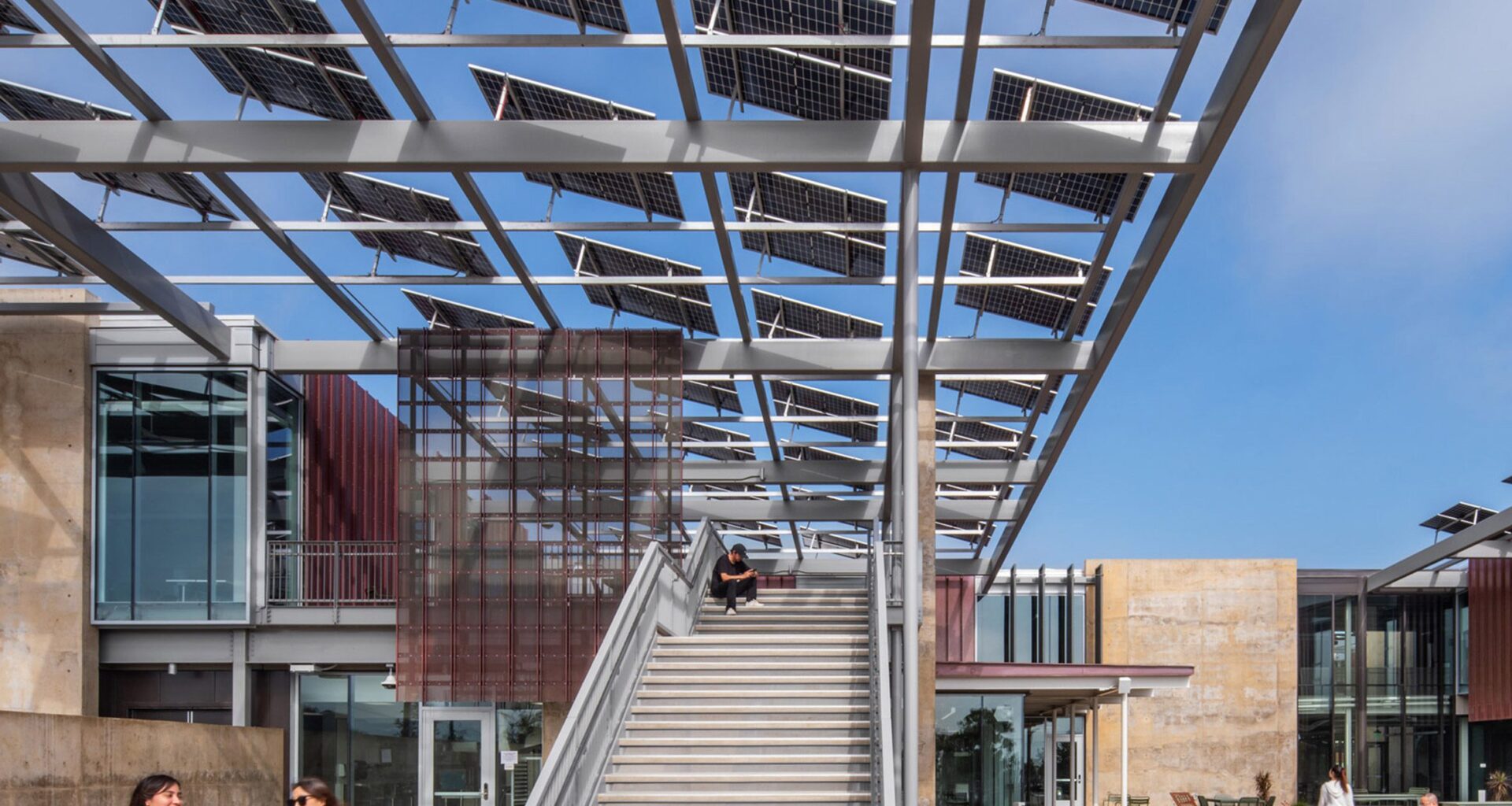
US studios KoningEizenberg Architecture and NAC Architecture have used concrete and metal to construct a public high school in California, responding to environmental concerns and the school’s nontraditional learning style.
Located in Malibu, the school sits on a 5.7-acre (2.3-hectare) site between the Pacific Coast and Santa Monica Mountains. A middle school and a nature preserve are nearby, replacing a nondescript school building from the 1950
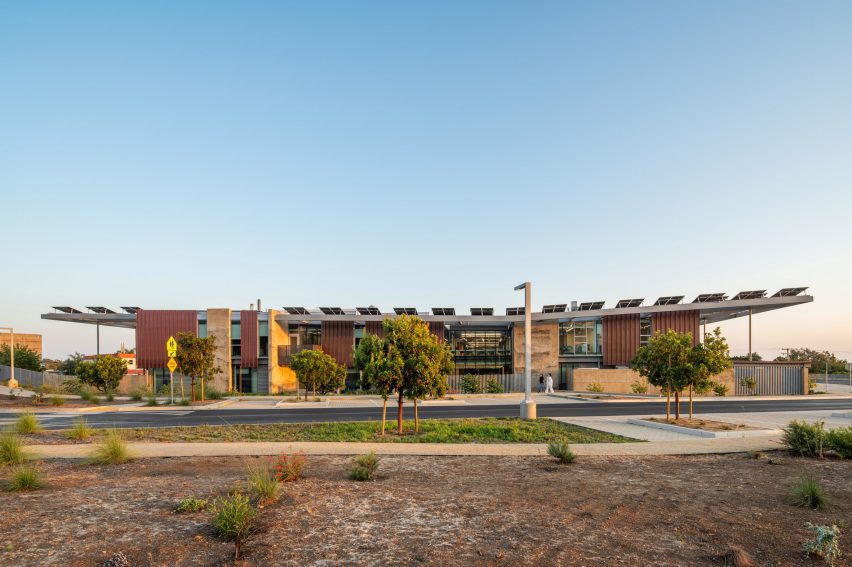 KoningEizenberg Architecture and NAC Architecture have completed Malibu High School
The public school serves approximately 525 students, along with teachers and support staff.
Wildfire safety was a top concern, as Malibu was hit hard by the 2018 Woolsey Fire in 2108, which killed three people, destroyed over 1,600 structures and prompted the evacuation of nearly 300,000 people. The entire city is now designated a “very high fire hazard severity zone“.
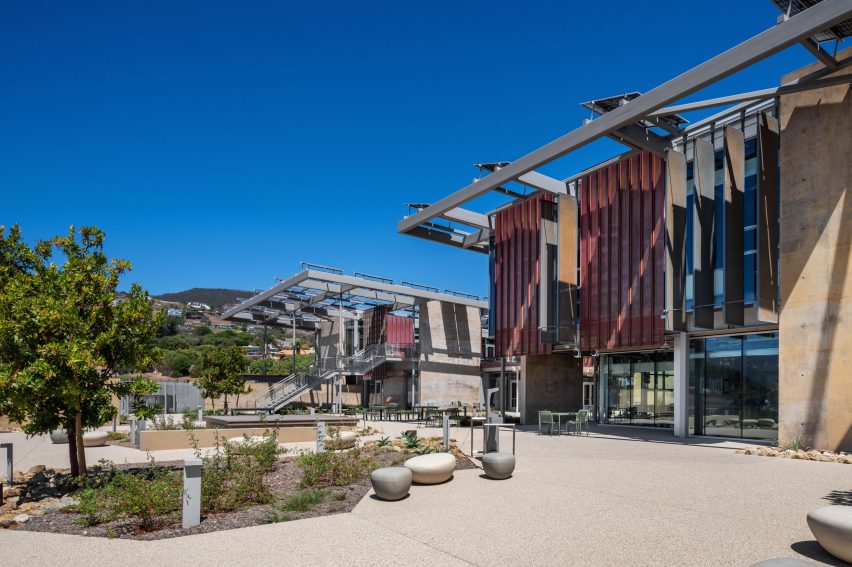 It serves approximately 525 students
And while the school was not directly affected by the deadly 2025 Los Angeles Wildfires, which tore through coastal Malibu, the project showcases the ongoing concern over wildfires in the region.
With this in mind, KoningEizenberg Architecture and NAC Architecture prioritised resistant materials such as concrete and metal, clearly visible on the facade and structure.
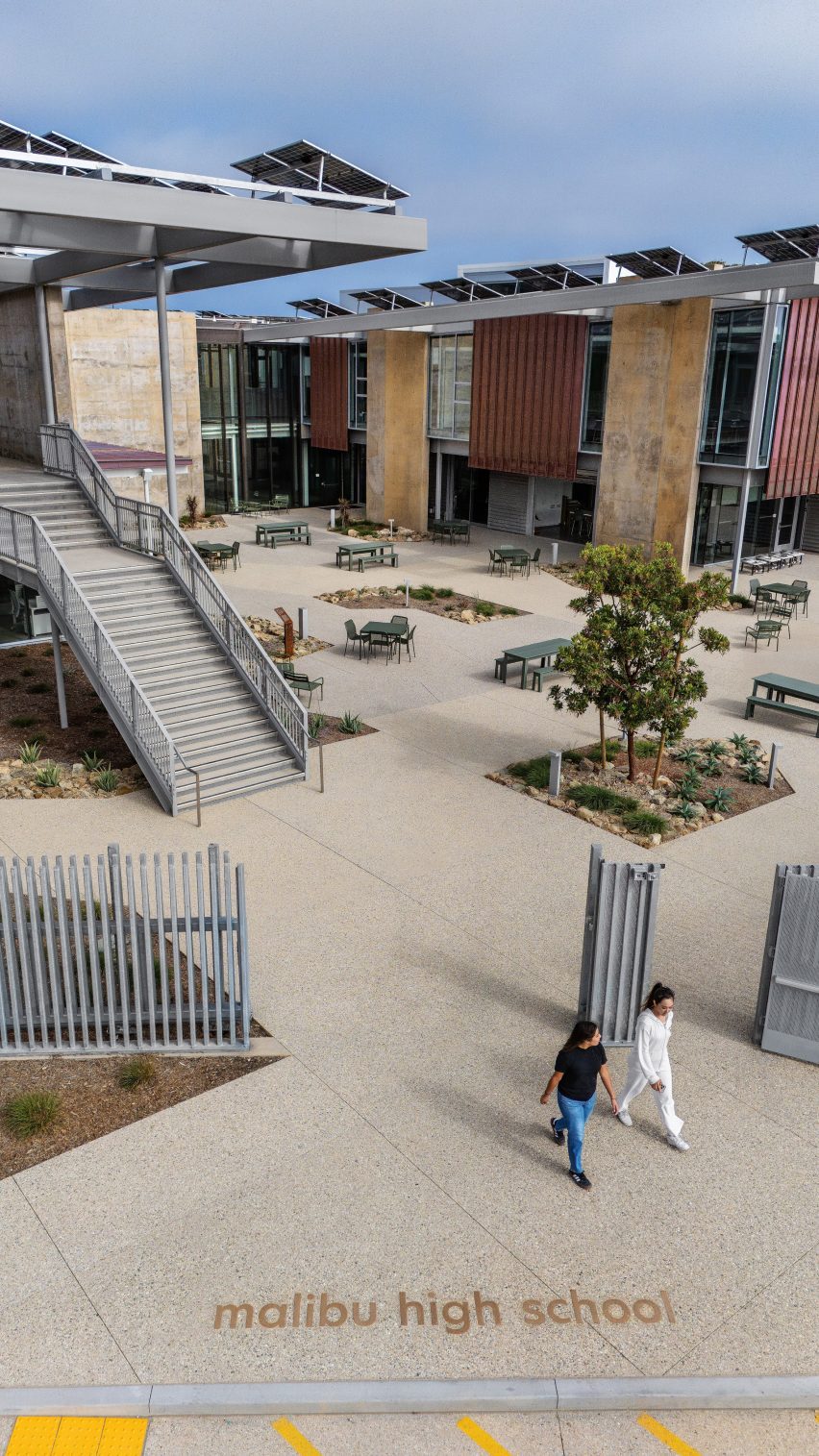 The school replaces a 1950s structure that was previously there
“The design team worked closely with the local fire department to create a building constructed entirely of non-combustible materials: concrete shear walls and floors, steel columns and beams, and metal and cement panel cladding,” the team said.
The project also entailed the creation of a new access route for fire trucks, which encircles the building, and the integration of fuel modification zones.
“The school can even serve as a community wildfire shelter.”
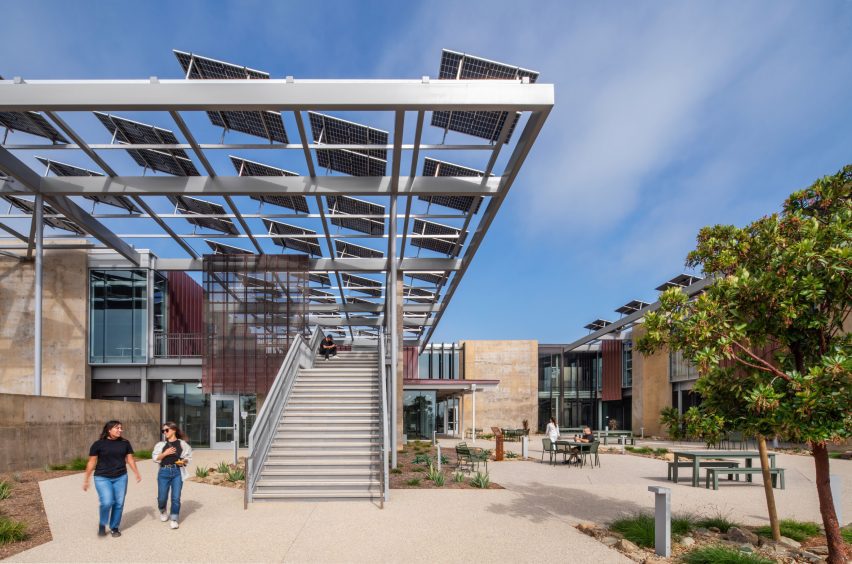 The brief called for a sustainable and fire-resistant structure
The architects were also tasked with accommodating a progressive educational approach, called project-based learning, which emphasises interdisciplinary learning and real-world projects that are personally meaningful to students.
This approach was adopted by the school district following more than two dozen meetings with teachers, students, parents and other stakeholders.
In response, the studios conceived a “hillside laboratory, where learning extends far beyond the classroom walls”.
The building emerges from the landscape and blurs the boundaries between “indoor and outdoor, academic and social, traditional and innovative”, the team said.
Roughly H-shaped in plan, the school consists of two-storey structures wrapped in metal, including weathered copper that echoes the colours found in the surrounding terrain.
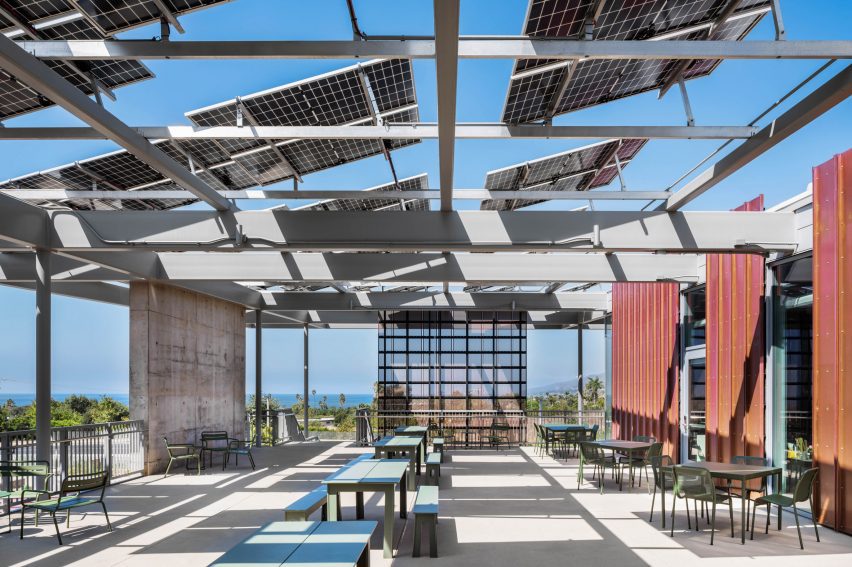 The design blurs the boundaries between indoor and outdoor
Windows bring in natural light and create a sense of openness and visibility.
“Large windows offer glimpses into active learning spaces, making education visible and celebrated,” the studio said.
The buildings are topped with overhanging canopies that provide shade and hold photovoltaic panels. The panels help generate power for the school, which claims net-zero-energy usage.
To further reduce energy consumption, the team incorporated a radiant heating-and-cooling system and a high-performance heat-recovery chiller. The school features passive strategies, too, including operable windows, ample daylighting and exterior sun louvres.
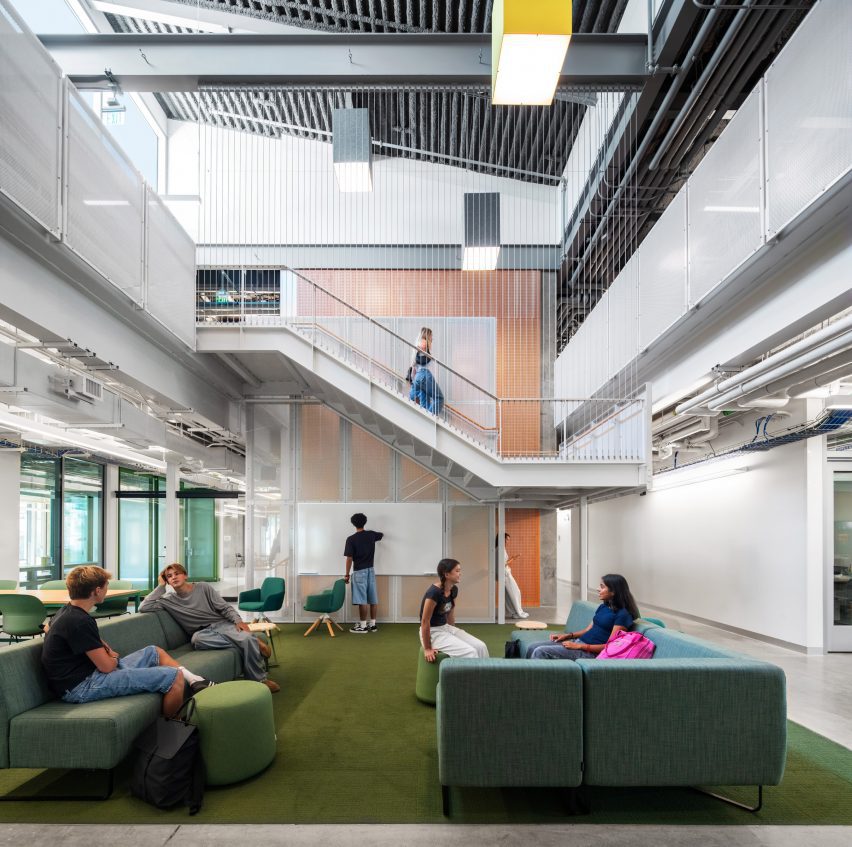
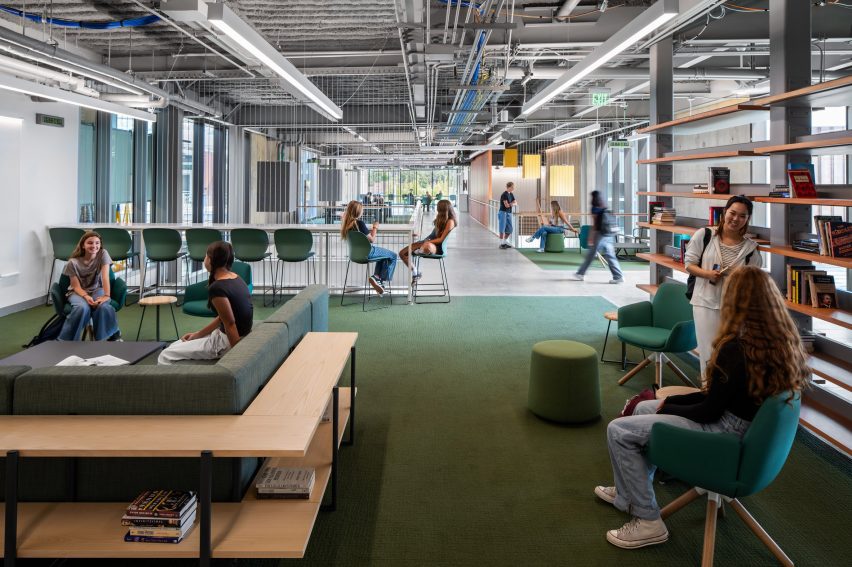 The layout departs from traditional schools
In terms of water conservation, the school has a reclaimed water system, permeable paving and drought-resistant vegetation. The project also entailed the restoration of two acres of sensitive habitat, which serves as an outdoor classroom.
“Environmental responsibility permeates every aspect of the project,” the team said.
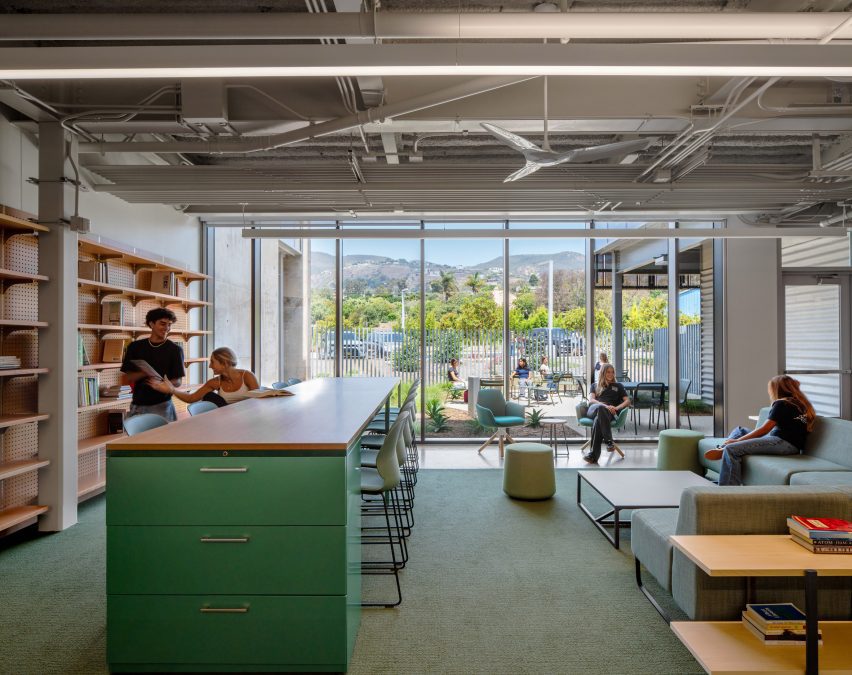 Large windows let in natural light
The interior layout departs from the traditional approach of organising spaces by academic departments. Instead, learning areas are organised into “collaborative sets” with a mix of classrooms, studios and labs.
Moreover, faculty workrooms and administrative offices are distributed throughout the school rather than being cordoned off.
Architects concerned by disjointed LA wildfires rebuild
“This decompartmentalisation encourages the kind of cross-disciplinary thinking that real-world projects demand,” the team said.
“The school’s design actively challenges conventional power dynamics and social hierarchies that can make traditional schools feel isolating.”
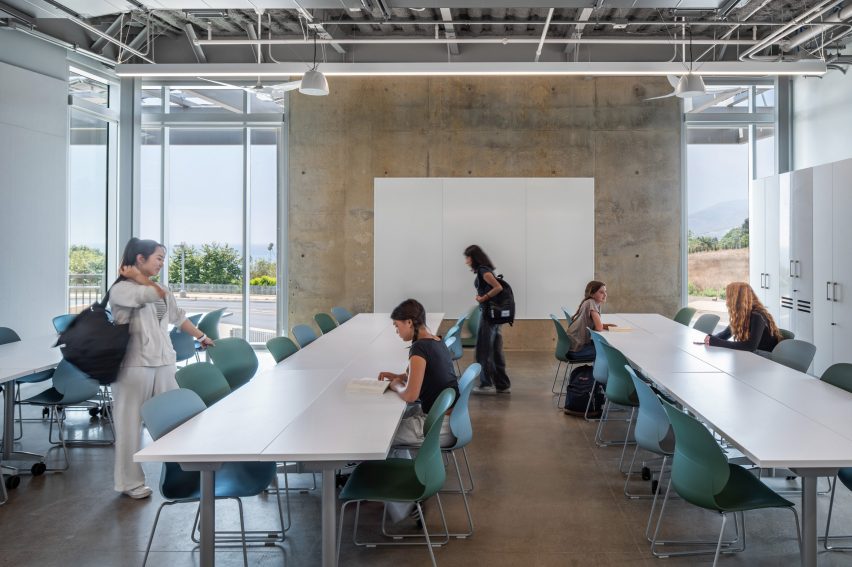 The school was designed for project-based learning
At the heart of the school is a double-height commons area, where students can “dine, collaborate, study privately or display their work”.
Overall, the school’s design responds to and respects it context, while presenting a model for how “student-centered design can shape the future of public education”.
“Malibu High School reimagines what a public high school can be,” the team said.
Other projects in Malibu include a fire-resistant concrete home that architect Lorcan O’Herlihy designed to replace a 1980s house that had been destroyed by the Woolsey Fire, and a bohemian-style beachfront cottage that serves as a retreat for interior designer Kelly Wearstler and her family.
The photography is by Paul Vu of Here and Now Agency.