
Chinese loans have helped narrow crucial development gaps across the continent, including highways, trains, power plants, and ports.
However, as global economic conditions tighten and debt sustainability becomes a greater worry, African countries with little exposure to Chinese loans are finding themselves in a better and more resilient position.
Currently, China’s financial engagement with Africa is undergoing a significant shift.
According to the Chinese Loans to Africa (CLA) Database, which is kept by Boston University’s Global Development Policy Center, Chinese loan commitments to African states plummeted to just under $2.1 billion in 2024, scattered among only six projects across the continent.
This reflects a significant drop from the highs in the early 2010s, when Chinese credit routinely exceeded $10 billion per year.
This has inadvertently led to fewer Chinese loans among African countries that typically utilize external financing for public works.
From 2000 to 2024, 42 Chinese lenders signed 1,319 loan agreements worth $180.87 billion with 49 African states and seven regional entities.
These loans financed more than 900 projects totaling $316 billion in sectors such as transportation, electricity, water and sanitation, and digital infrastructure, thereby contributing considerably to economic growth, public assets, and poverty alleviation.
Chinese financial institutions have adopted a more selective, risk-averse approach, focusing funding on countries with established links, deeper markets, and obvious profit prospects.
In 2024, Angola led the way with $1.45 billion for energy transmission and transportation projects, while Kenya, Egypt, the Democratic Republic of the Congo, and Senegal received lower contributions.
Sectoral priorities are also altering. Lending remained focused on transportation, energy transmission, water, sanitation, and financial services.
Regardless of the setback, China remains committed to Africa.
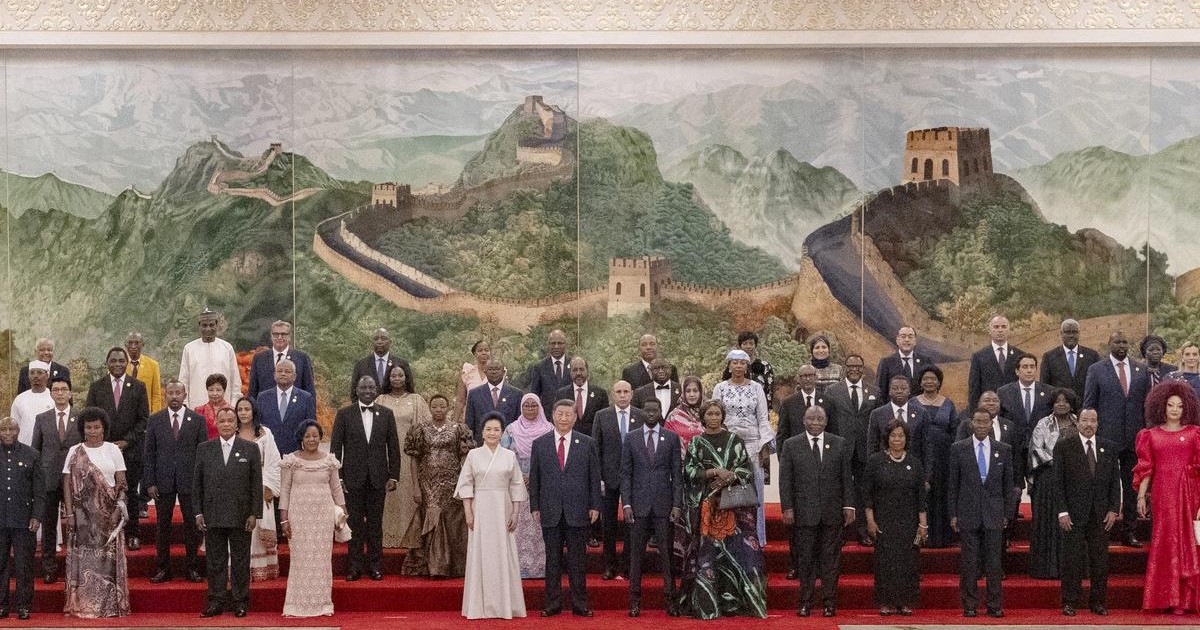
At the 2024 Forum on China-Africa Cooperation Summit, President Xi Jinping promised approximately $51 billion in fresh finance, expanded infrastructure projects, and the creation of one million jobs.
![China's President Xi Jinping (c) and his wife Peng Liyuan stand with leaders from African nations pose for a group photo ahead of the dinner reception of the 2024 Summit of the Forum on China-Africa Cooperation (FOCAC) at The Great Hall of People on September 4, 2024 in Beijing, China. [Getty Images]](data:image/svg+xml;charset=utf8,%3Csvg%20xmlns%3D'http%3A%2F%2Fwww.w3.org%2F2000%2Fsvg'%20width%3D'790'%20height%3D'527'%20data-ring-placeholder%3D'1'%3E%3C%2Fsvg%3E "China's President Xi Jinping (c) and his wife Peng Liyuan stand with leaders from African nations pose for a group photo ahead of the dinner reception of the 2024 Summit of the Forum on China-Africa Cooperation (FOCAC) at The Great Hall of People on September 4, 2024 in Beijing, China. [Getty Images]")
Analysts point out, however, that this pledge is likely to focus on smaller, strategically targeted projects rather than mega-billion-dollar loans in the past.
While China remains an important partner, the period of broad, high-value financing may be giving way to a more selective, strategically calculated approach, one that values returns, risk management, and targeted influence over volume.