
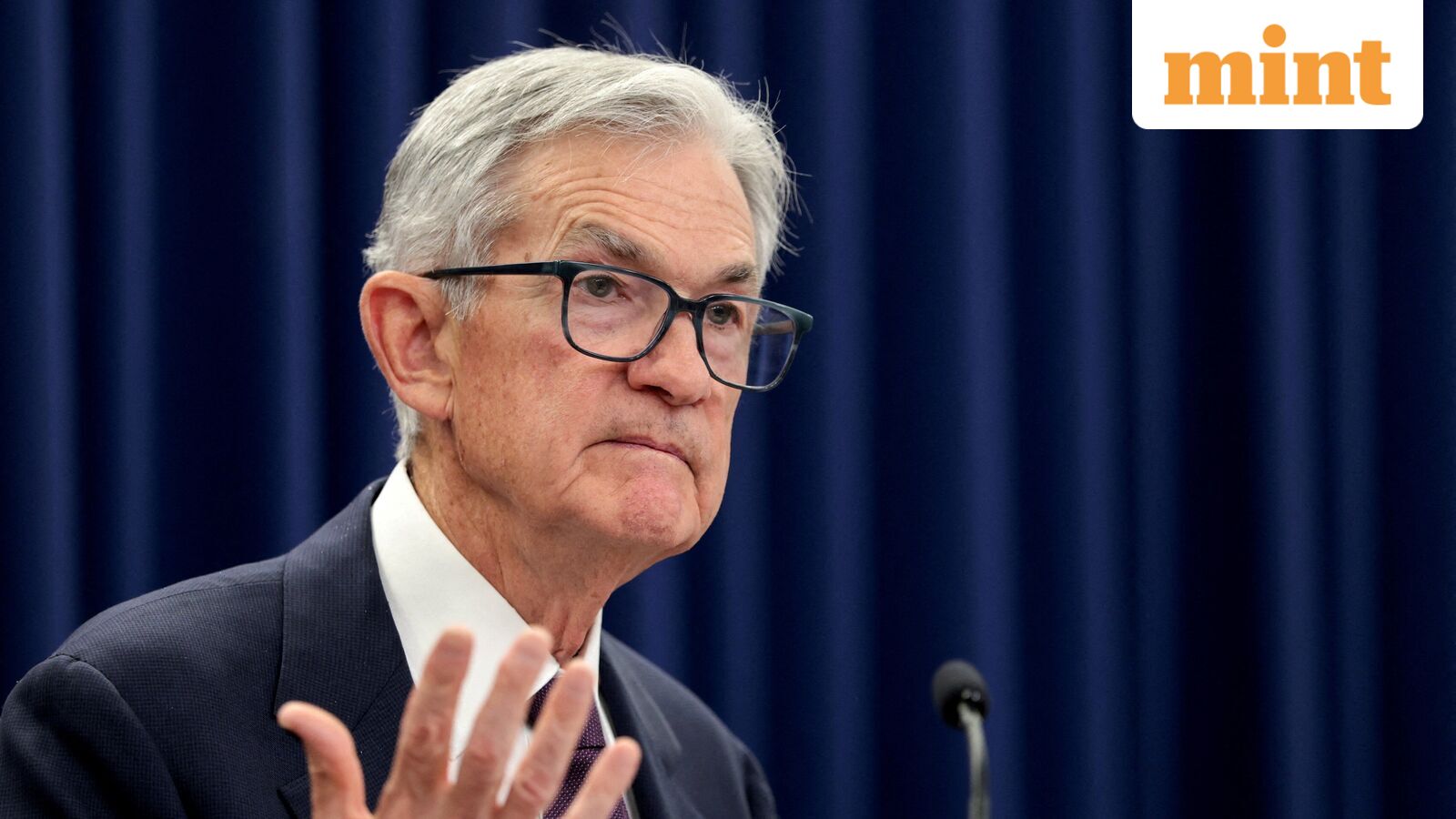
Jerome Powell, Chair of the United States Federal Reserve (US Fed), on Wednesday told reporters that he expects a one-time increase in consumer prices due to the government’s tariffs sometime in the middle of 2026.
“There’s an expectation that sometime in the middle quarters of the year we’ll see tariff inflation topping out,” Powell said while answering questions during the media briefing after announcing the Fed’s rate policy.
He added that this would be due to higher prices for goods resulting from higher tariffs imposed by the Donald Trump administration. He said that tariffs are not expected to keep inflation elevated over the long run.
In an earlier press conference, Powell had said that inflation risks are diminished and policy is in a “good place”.
Notably, the US Personal Consumption Expenditures Index showed core inflation rising 2.8% year over year in October and November. Further, while inflation in the US economy has fallen through 2025, it remains above the Fed’s long-run target of 2%.
Rate hike unlikely from US Fed, says Jerome Powell
Speaking to reporters, he also said the US central bank is unlikely to increase rates anytime soon. Notably, the Fed kept interest rates steady on 28 January, despite pressure from the Trump administration to hike rates.
“It isn’t anybody’s base case right now that the next move will be a rate hike,” Powell said.
He added that the Fed is monitoring risks to both sides of its dual mandate — employment and inflation, but his statements indicate that a rate hike is less likely than a rate cut. There was no indication that either was coming soon.
‘Broad support’ for keeping interest rates steady: Powell
Fed Chair Powell also said the Federal Open Market Committee (FOMC) reached consensus at the January meeting to hold rates steady. There were two dissenting votes by Fed governors Stephen Miran and Chris Waller.
“There was broad support on the committee for holding today,” Powell said. In December, too, he said that the Fed is “well positioned” to view incoming data based on the latest data at each meeting.
“Many of my colleagues think it’s hard to look at the incoming data and say that policy is significantly restrictive at this time. It may be sort of loosely neutral, or it may be somewhat restrictive. You know, it’s in the eye of the beholder, and of course, no one knows with any precision,” Powell added.
(With inputs from Agencies)