
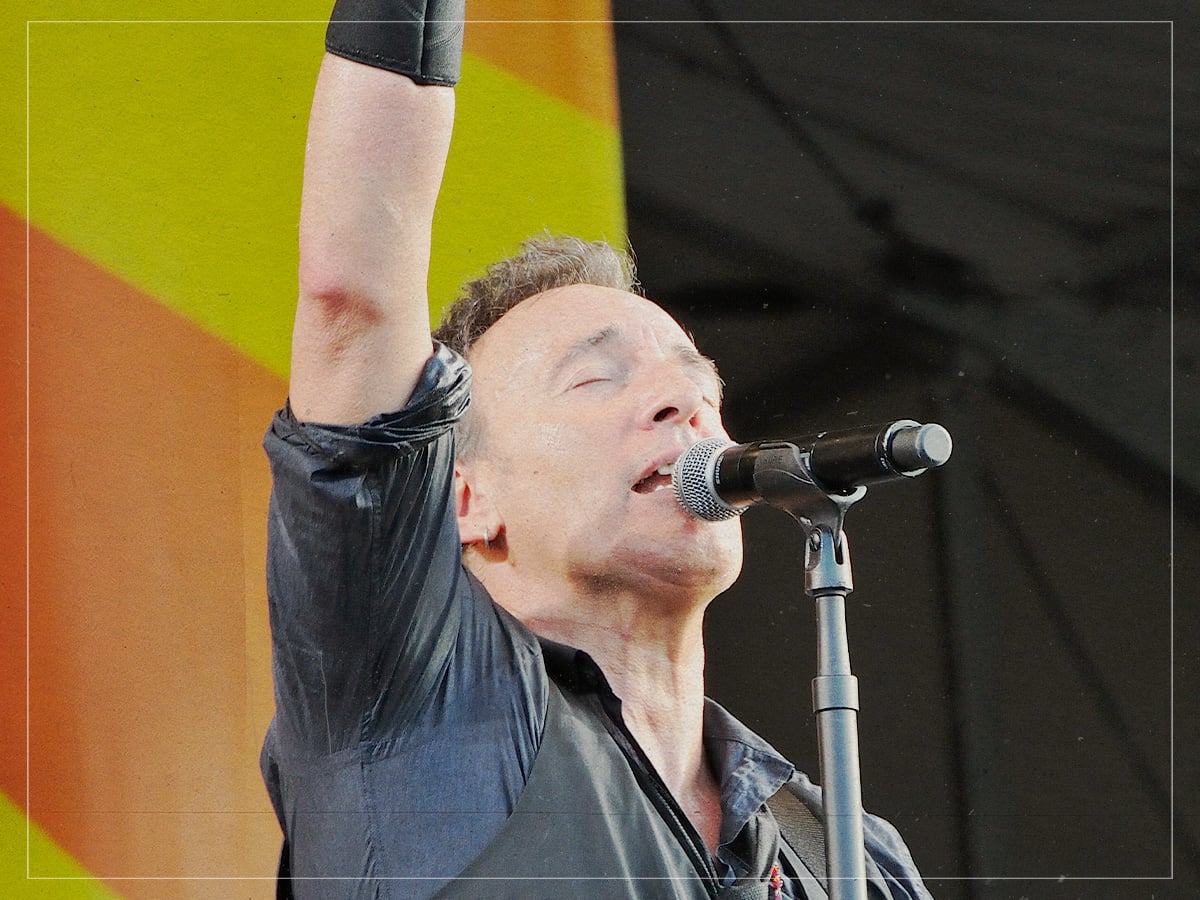
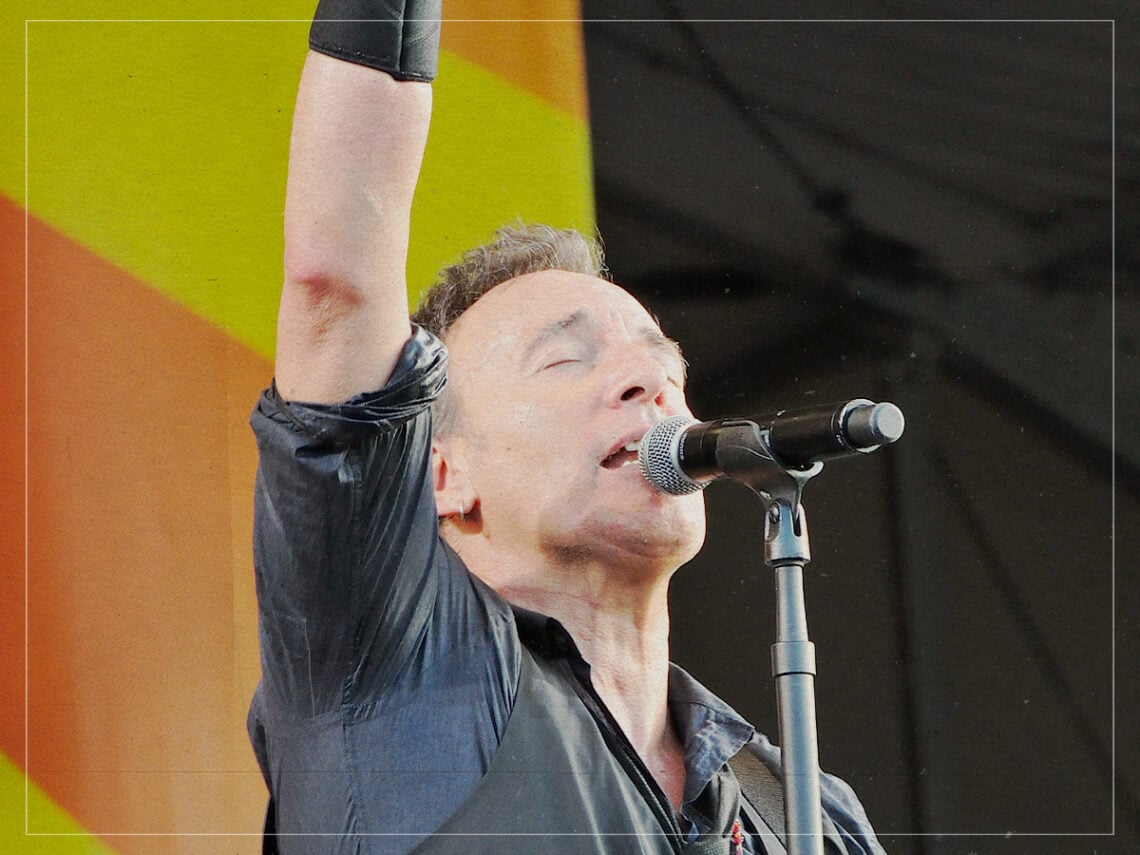
(Credits: Far Out / Takahiro Kyono)
Sat 31 January 2026 2:00, UK
I’ve been in the same room as Bruce Springsteen before.
The Boss was sitting next to The Bear actor, Jeremy Allen-White, who recently played his likeness in the tender biopic, Deliver Me From Nowhere, and for the most part, he delivered astute quips about the filmmaking process, the vulnerability of excavating his childhood memories, and the new bond he had forged with the young actor.
When I left the swanky central London venue, I felt like something of Springsteen’s stature had been missing, because, sure, he was well-spoken, personable and funny, and the crowd remained in an expectant silence, hanging on his every word, and when he deemed his live shows “a combination of a circus, a dance party, a political rally, a Sunday morning spiritual revival,” they wooped in response. I quickly realised that this was the ineffable hole in my experience of the star. His arena isn’t sitting and chatting. It’s performing.
Springsteen has previously described his job as a performer as “magic”. Through the art of the impossible, the spectacle, he reminds every person in the audience of the art of the possible, what they already knew deep down in their gut but had, due to the monotony of every moment lived in the same body, forgotten, he is a genius for bringing this energy to the stage, but that type of approach has an impressive history; one that, for Springsteen, started with none other than Elvis Presley.
In 2012, Springsteen delivered a keynote address at SXSW, and standing at the podium with ease, Springsteen began exploring “whatever initially inspires you to action”. Turning the notion upon himself, he shared with the audience that this very moment for him happened “in 1956, when Elvis was on the Ed Sullivan show. It was the evening I realised that a white man could make magic.”
For Springsteen, Presley was pertinent evidence “that you did not have to be constrained by your upbringing, by the way you looked, or by the social context that oppressed you, you could call upon your own powers of imagination, and you could create a transformative self… that perhaps that any other moment in American history might have seemed difficult, if not impossible.”
The ‘Born in the USA’ singer went on, “It wasn’t just the way Elvis looked, it was the way he moved that made people crazy, pissed off, driven to screaming ecstasy… That was television, when they made an attempt to censor television from the waist down, it was because of what you could see happening in his pants.”
When I watched this speech, I realised that this sentiment, though shared over a decade ago, remains true for the musician today – Springsteen needs to move, because still, at shows across the UK and Europe in 2025, Springsteen gesticulates with fury, marches up and down the expansive stage, in front of his band, as if ushering in his own revolution. It’s no coincidence that Donald Trump’s online retaliation against the political star included a fake video literally knocking Springsteen over with a golf club. Knocking him off his feet. As if in recognition that Springsteen’s power lies both in his vocals and in his body.
In his speech, Springsteen nodded towards politics, continuing on ‘The King’: “Elvis was the first modern 21st-century man: A precursor of the Sexual Revolution, the Civil Rights Revolution, drawn from the same Memphis as Martin Luther King, creating fundamental outsider art that would be embraced by a mainstream popular culture.”
Today, Springsteen is still an incredible musician and still unites music fans across the globe with his impressive, expansive discography, but that’s not all he is, because, as Elvis Presley did for him, Springsteen has become one of the key figures to “inspire folk to action”. Presley might have first taught Springsteen how to be an icon, but, before our very eyes, the student has become the master.
Related Topics