
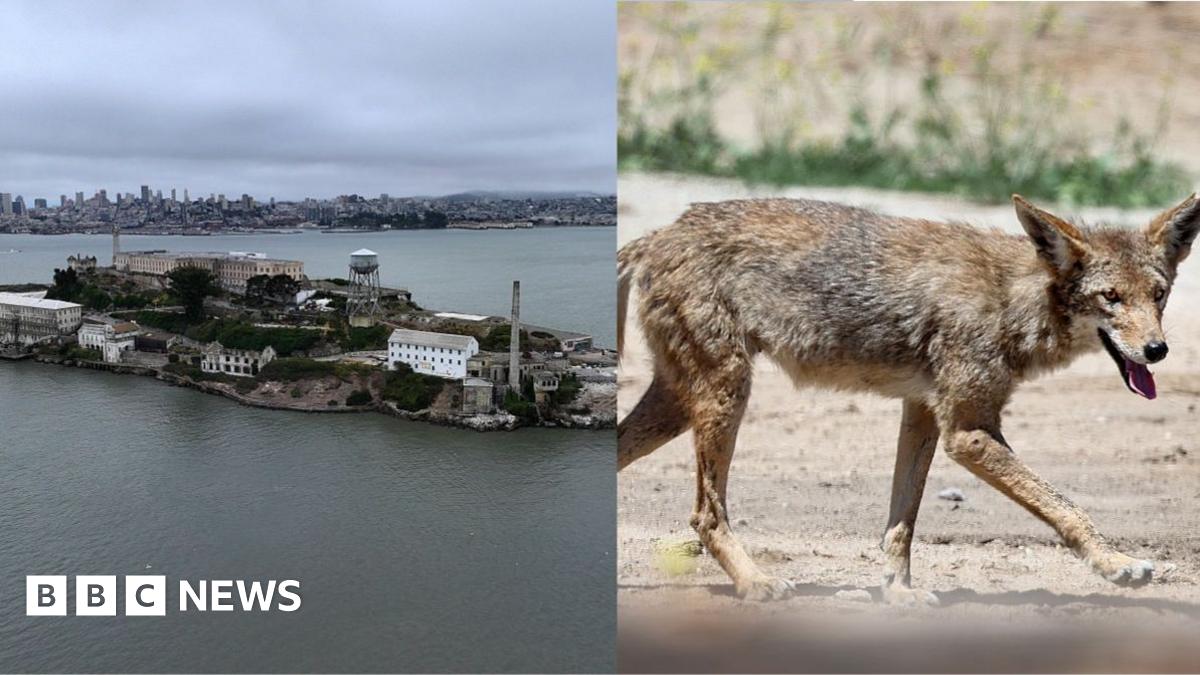
Floyd might also be staying hydrated with rain puddles and by water from the gardens on the island, said Janet Kessler, a self-taught naturalist who has been documenting coyote behaviour in San Francisco for about 20 years.
Kessler told the BBC that she suspects Floyd made the journey because he might have felt interspecies territorial pressure in the city and needed to find a new area to call home.
“He can’t go anywhere. When he gets to a territory, they’re going to drive him out of that territory, because that’s what coyotes do,” Kessler said. “That’s actually what limits our population. That’s their natural population control is their territoriality.”
Coyotes could be leaving the mainland because the Bay Area is becoming too crowded, Brett Furnas, a wildlife ecologist with the California Department of Fish and Wildlife, told the Los Angeles Times., external
The species was driven out of the city but re-emerged about 25 years ago, he said, since which sightings have increased.
While coyotes are adaptable and natural survivalists, tour guide Moore is worried about Floyd’s future and is pushing for human intervention. But finding him might be a challenge as coyotes are “masters of disguise”, he says.
And the coyote seems to be hiding in areas that are not accessible to the public.
Moore and his colleagues have been trying to spot him on their walks, but instead have only found evidence he is leaving behind, like half-eaten birds. Some of his droppings have been collected and are undergoing DNA testing to get a better sense of Floyd’s origins, he says.
Whether he will stay or go appears to be dependent on his behaviour too, and the tourists visiting the island.
Project Coyote, a North American organization focusing on science-based education around the animals and coexistence, is concerned that the barrage of visitors to Alcatraz could pose safety risks for both the animal and tourists.
Most conflicts with coyotes stem from humans either intentionally or unintentionally feeding them, says Project Coyote founder Camilla Fox.
“Coyotes are incredibly resourceful and able to coexist with coyotes even in the most densely populated urban environments,” Fox told the BBC. “So if not harassed, we believe this coyote could survive on the island- though it could be a lonely existence without a mate.
“We hope whatever decision is made by the National Park Service, this coyote will have an opportunity to thrive and flourish.”
Kessler, the naturalist, believes this coyote might leave the island at some point because it’s too small of a territory.
“This is new to everybody. We’re all going to be watching and seeing what this coyote does,” Kessler said. “I would assume, at some point, if he wants to go back, he’ll swim.”