
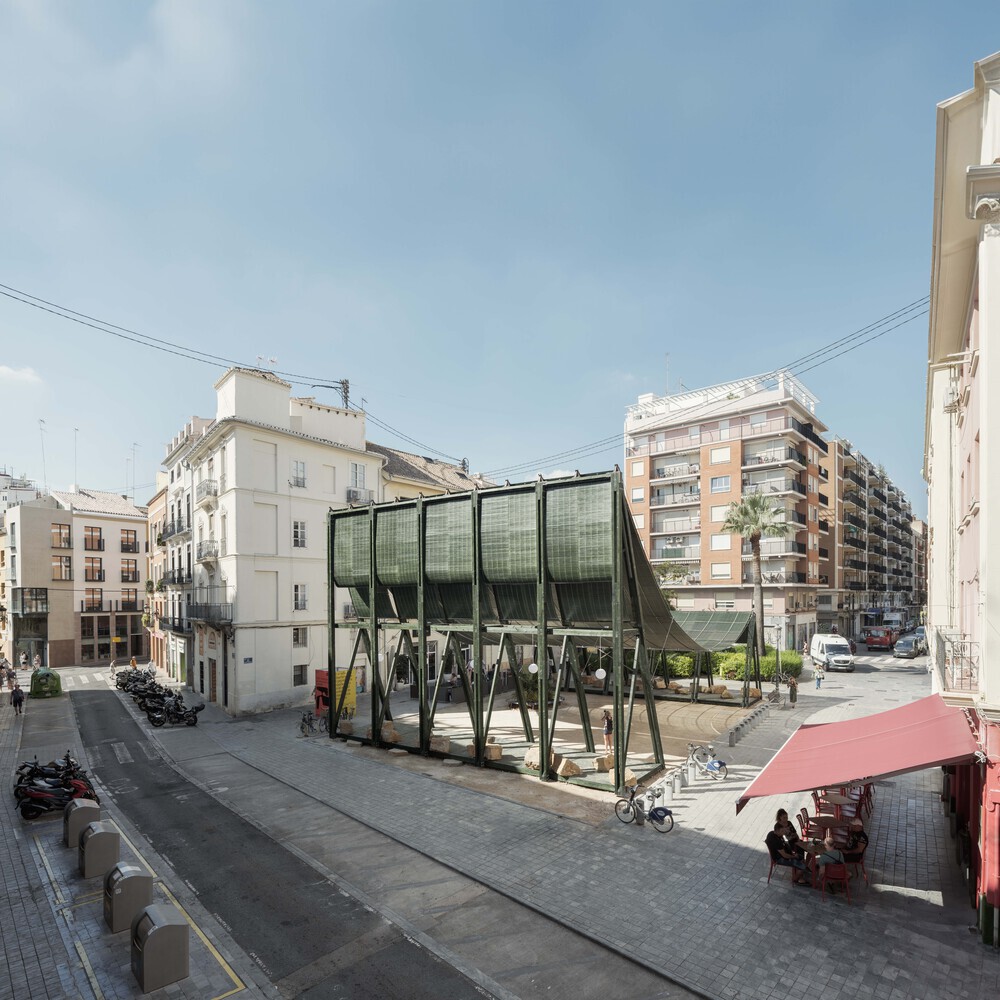
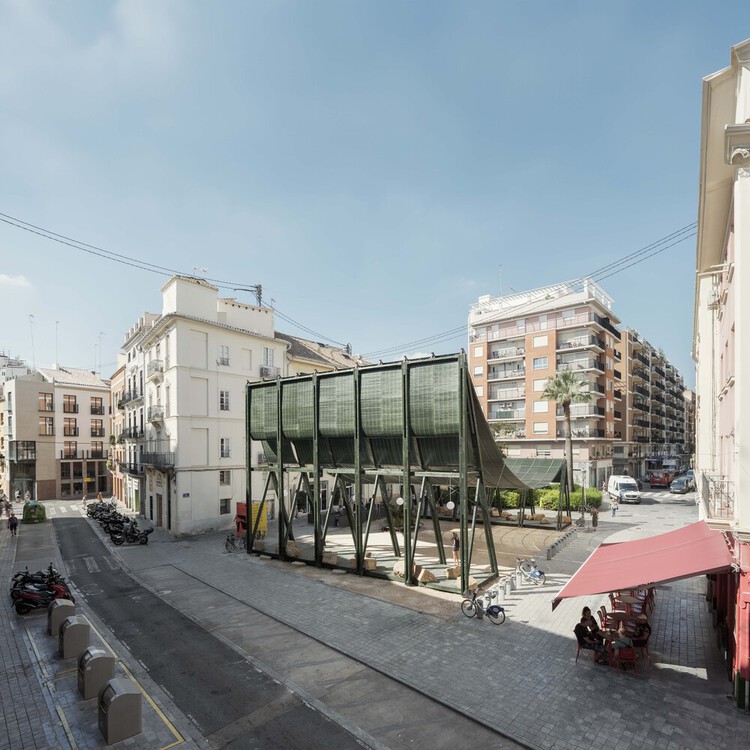
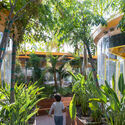
 Mediterranean Pavilion / Manuel Bouzas. Image © Luis Diaz
Share
Or
https://www.archdaily.com/1038054/how-cities-design-public-life-in-the-shade
Cities are warming at roughly twice the global rate, a trend accelerated by rapid urbanization. While rising temperatures are reshaping daily life worldwide, some towns and neighborhoods, often the most vulnerable and least resourced, are warming more than others. The reason comes down to the urban environment. Built infrastructure, such as roads, buildings, sidewalks, and public spaces, determines how heat moves through a city, where it accumulates, and how long it remains trapped. No matter the climate zone or geographical location, shade remains the most effective and immediate way to cool pedestrians and relieve the built environment.
Urban designers increasingly argue for a connected network of shaded surfaces distributed across the public realm. Shade can be cast by any vertical surface, from buildings to trees, canopies, and overhangs. In cities like Los Angeles, where building granularity remains low and large parcels dominate the urban fabric, shade strategies often prioritize trees and freestanding canopy structures. In cities like Singapore, where building density is high and buildings are tall, the public realm can rely more heavily on covered sidewalks, building overhangs, and orientation to extend shade across daily routes.
If you have found yourself sidewalk-hopping and choosing your walking route based on shade, you are already participating in this growing design challenge. A person standing in direct sunlight can experience significantly higher heat than someone standing across the street in the shade. Every city benefits from supporting and maintaining shade infrastructure, regardless of climate zone or baseline environmental conditions. Increasingly, municipalities are investing in shade to enhance public comfort, public health, and urban resilience.
Related Article Heat Resilient Design: How City Leaders Use Building Materials to Fight Urban Heat 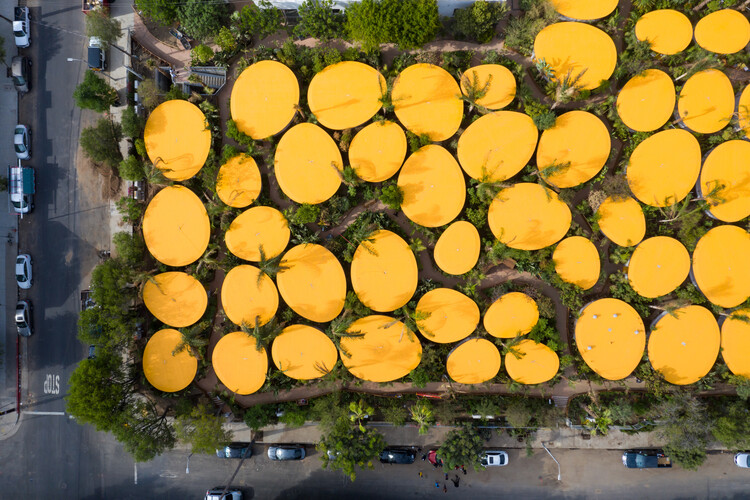 Second Home Hollywood / SelgasCano . Image © Iwan BaanBuilding Vocabulary for Heat
It is easy to feel uncertain amid a wave of scientific terminology and undefined acronyms that now dominate conversations about urban heat. Yet the language matters, because each metric describes a different relationship between the city, the climate, and the human body.
Land surface temperature describes the heat held by the city’s surfaces, the asphalt, concrete, roofs, and pavements that absorb solar radiation and store it throughout the day. It is an infrastructural reading of heat, revealing where the city behaves like a thermal battery and where the urban ground becomes hostile to pedestrians. Urban heat island, by contrast, describes the broader phenomenon that emerges when many heated surfaces, limited vegetation, and dense building fabrics combine to make cities warmer than their surrounding regions. It is not a single location or hotspot, but a collective atmospheric condition produced by the urban environment over time.
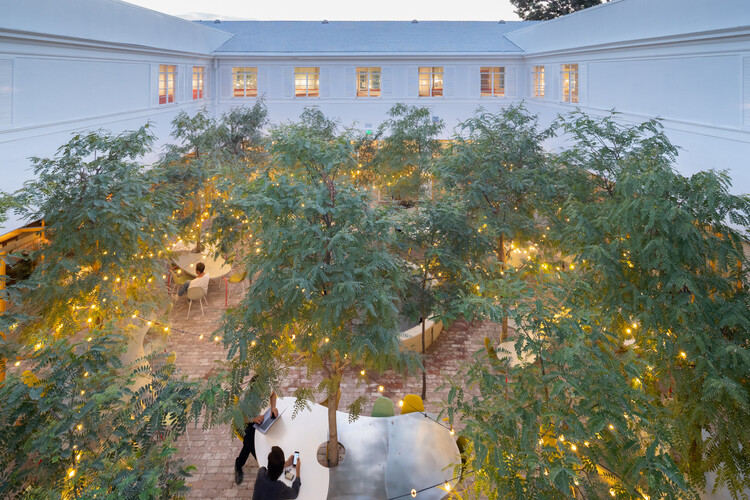 Second Home Hollywood / SelgasCano . Image © Iwan Baan
Mean radiant temperature moves closer to lived experience. Rather than focusing solely on air temperature, it describes how heat is felt through radiation from surrounding surfaces. This is why two streets with the same air temperature can feel radically different. One may be shaded, with cooler surfaces and less heat radiating onto the body, while the other may feel unbearable due to sun exposure and thermal reflection. Finally, “feels like” temperature is a public-facing shortcut that compresses multiple variables into one sensation, including heat, humidity, wind, and radiation. It is useful precisely because it translates technical conditions into human terms. For designers, the real value lies in understanding what it cannot reveal: where heat is coming from, what surfaces are causing it, and what spatial interventions can change it.
Los Angeles: Designing Shade Where Buildings Cannot
Los Angeles offers a unique opportunity for shade strategies due to its low building granularity and wide street canyons. The city’s dense core represents only a small fraction of its overall urban fabric, while much of Los Angeles consists of independent blocks with one- and two-story buildings. In this context, designers cannot rely on adjacent structures to cast shade across the street or public realm. Shade must be introduced deliberately, often through trees and freestanding canopy structures that shape entry sequences, gathering areas, and outdoor circulation.
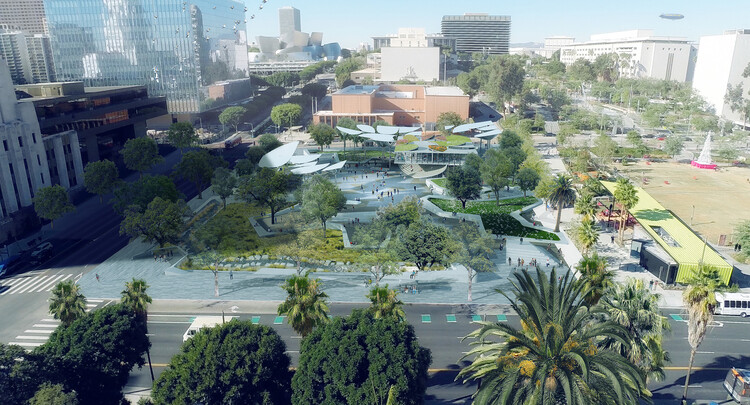 OMA, MLA, and IDEO Selected to Design New Park for Downtown Los Angeles. Image Courtesy of OMA
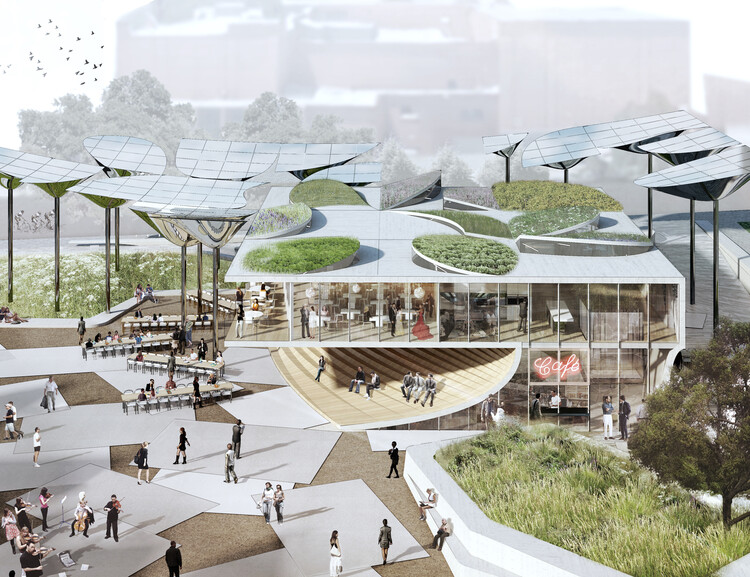 OMA, MLA, and IDEO Selected to Design New Park for Downtown Los Angeles. Image Courtesy of OMA
In downtown Los Angeles, the city has selected Mia Lehrer + Associates (MLA), in partnership with OMA and IDEO, to design a new public park at First and Broadway. The proposal integrates native oak and sycamore trees alongside sculptural shade canopies designed by OMA. Beneath these canopies, shaded outdoor rooms host small-group gatherings, food fairs, art installations, and other community events. In a city defined by large parcels and expansive streets, freestanding shade structures can become the architectural element that activates third spaces and creates comfort where the surrounding fabric cannot.
Singapore: Building Shade Into Everyday Mobility
Singapore may already have one of the most continuous shade networks of any city in the world. Covered sidewalks structure the city’s everyday public life, creating corridors of relief from the heat and rain. The result is a public realm where shade is treated as a predictable condition embedded in movement itself.
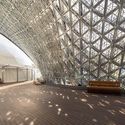
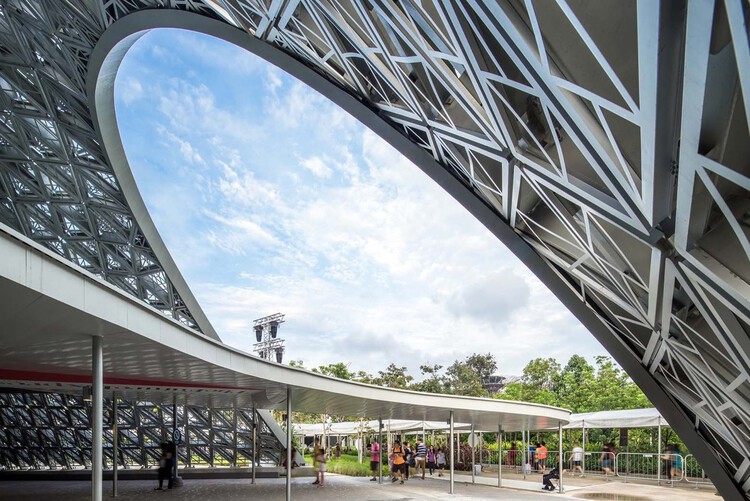 ‘Future of Us’ Structural Building Envelope / SUTD Advanced Architecture Laboratory. Image © Oddinary Studios
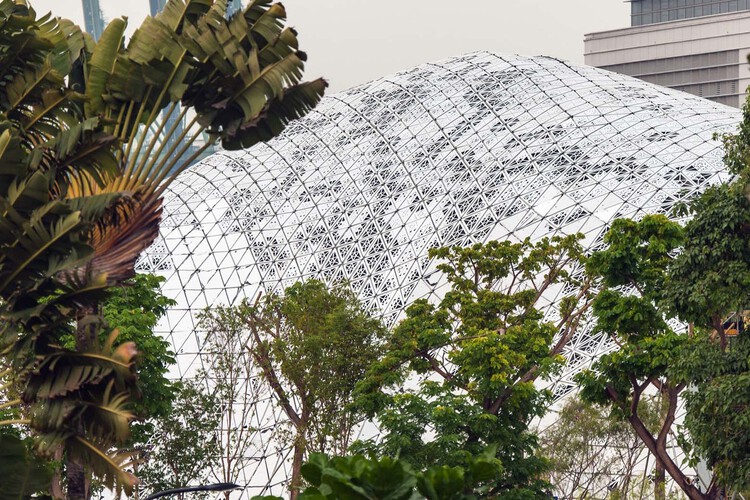 ‘Future of Us’ Structural Building Envelope / SUTD Advanced Architecture Laboratory. Image © Oddinary Studios
Across decades of housing and infrastructure development, Singapore has integrated shaded communal spaces into the ground plane. Open ground floors in housing estates allow air movement and create shared “void decks” where residents gather. Later, agencies expanded shaded connectivity with freestanding metal canopies and covered walkways that support daily mobility between transit stops and neighborhoods. Although Singapore is internationally recognized for integrating greenery into its planning strategies, a significant portion of its shade infrastructure is produced by building fabric. Overhangs, arcades, continuous edges, and street-level coverage extend comfort through the city as a spatial system rather than an isolated gesture.
Spain’s Streets and Plazas: Seasonal Shade as Civic Architecture
Outside of a few vertical clusters, many Spanish cities have shorter building stock and a public realm shaped by a mix of narrow streets and open plazas. In this context, shade strategies often shift between two spatial conditions: the corridor and the square. Along pedestrian streets and tighter urban passages, seasonal canopies can be strung between buildings to create continuous shaded routes. In larger plazas, freestanding structures often provide relief from direct sun while preserving the openness of civic space. Sometimes these elements attach to surrounding facades, and other times they remain independent, operating as temporary urban rooms that reorganize how public life occupies the square.
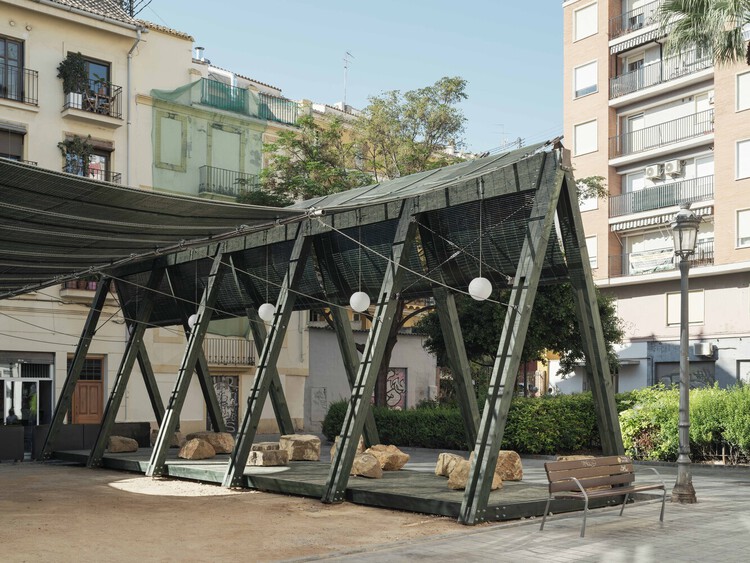 Mediterranean Pavilion / Manuel Bouzas. Image © Luis DiazShade as Public Architecture
Knowing where shade exists is the first step, but it is not the design problem. The design problem is distribution. Shade must be placed where people walk, wait, gather, and linger, and it must be continuous enough to shape real behavior rather than offering isolated pockets of comfort. This requires cities to think architecturally about shade infrastructure, not as decorative elements scattered across a plan, but as a spatial system with hierarchy, rhythm, and purpose.
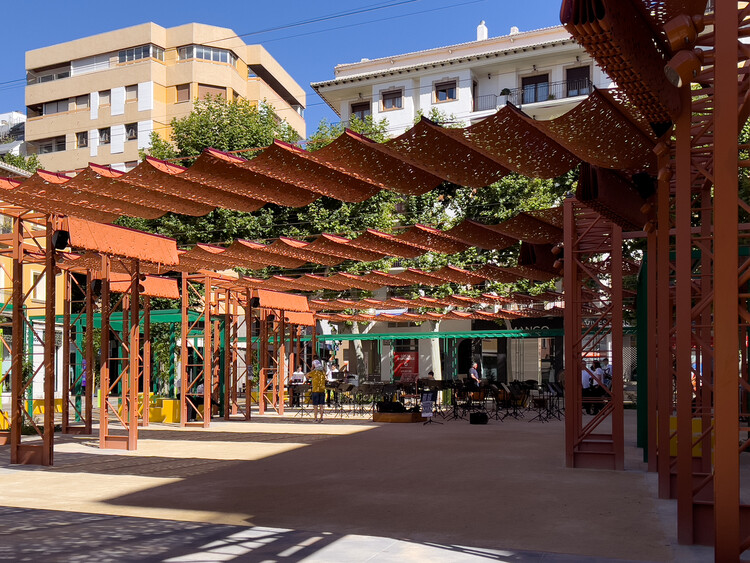 María Hervás Plaza in the Historic Center of Dénia, Valencian Community / DVCH DeVillarCHacon. Image Courtesy of DVCH DeVillarCHacon
For designers, this means treating shade as structure, enclosure, and threshold. It means understanding how tree canopies, arcades, overhangs, and freestanding canopies form gradients of exposure and shelter across streets, plazas, parks, and transit connections. It also means designing for time, since shade shifts by hour, season, and latitude, and a successful intervention must perform not only at noon, but across the long duration of everyday use.
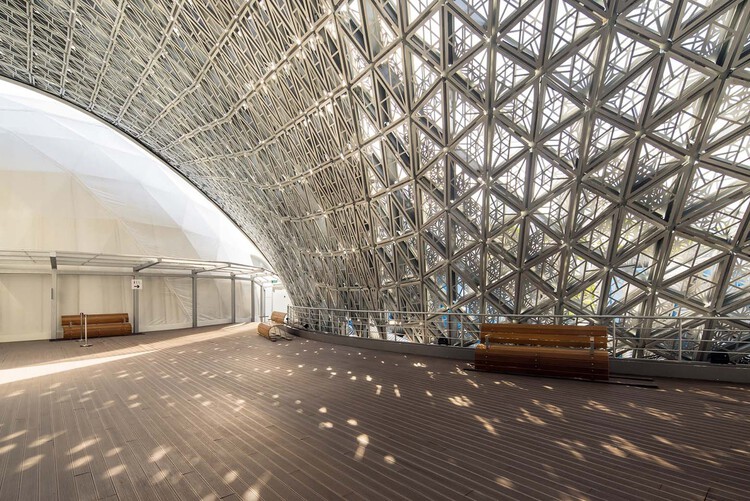 ‘Future of Us’ Structural Building Envelope / SUTD Advanced Architecture Laboratory. Image © Oddinary Studios
The adequacy of shade infrastructure depends on governance, maintenance cycles, irrigation access, permitting constraints, liability, and street design standards, which determine what can be built, how long it lasts, and whether it remains functional. A canopy without upkeep becomes a hazard. A tree without soil volume becomes a failed promise. If heat is now an everyday urban condition, then shade must be planned as civic infrastructure with long-term care embedded in its design.
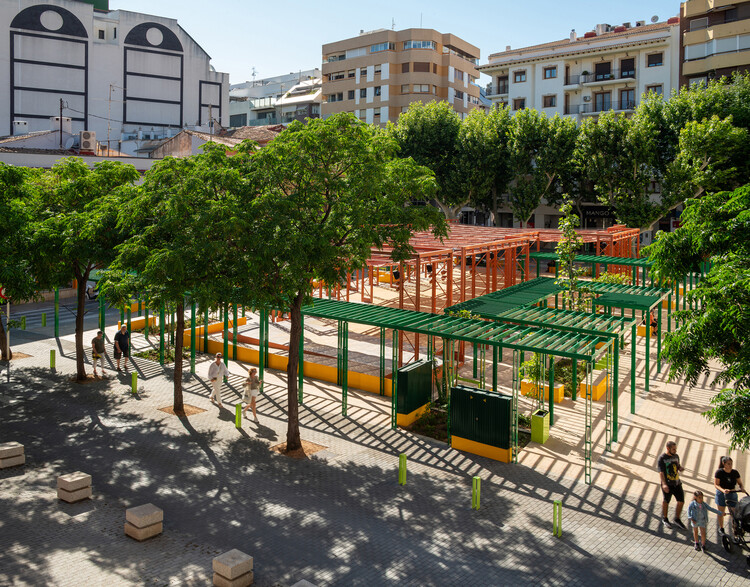 María Hervás Plaza in the Historic Center of Dénia, Valencian Community / DVCH DeVillarCHacon. Image Courtesy of DVCH DeVillarCHacon
As cities invest in public spaces, movement corridors, and third spaces, learning to design public life in the shade becomes a core architectural task. It is not about lowering the temperature, but about enabling slower streets, longer stays, and more equitable access to public space. In a warming city, shade is an architectural language of comfort, resilience, and collective life.
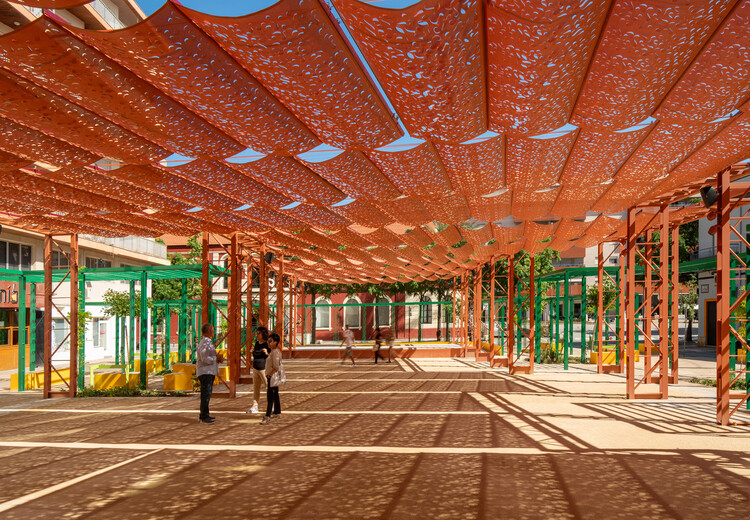 María Hervás Plaza in the Historic Center of Dénia, Valencian Community / DVCH DeVillarCHacon. Image Courtesy of DVCH DeVillarCHacon
This article is part of the ArchDaily Topic: Coming Together and the Making of Place. Every month, we explore a topic in-depth through articles, interviews, news, and architecture projects. We invite you to learn more about our ArchDaily Topics. And, as always, at ArchDaily we welcome the contributions of our readers; if you want to submit an article or project, contact us.