

Manchester United remain one of football’s financial superpowers.
In 2024-25, their worst season on the pitch since the 1970s, United generated club-record turnover of £667m, going on to spend well in excess of £200m in the summer transfer window.
This season, with no European football and early exits in both of the cup competitions, turnover will nosedive. But Sir Jim Ratcliffe has several levers he can pull to ensure that the drop-off is manageable.
The issue at Old Trafford has never been the resources available but rather how the regime of the day has misspent the enormous budgets handed to them.
WHO do you want Manchester United to sign in central defence?🤔
Is Murillo the right signing? Or is another option your favourite?
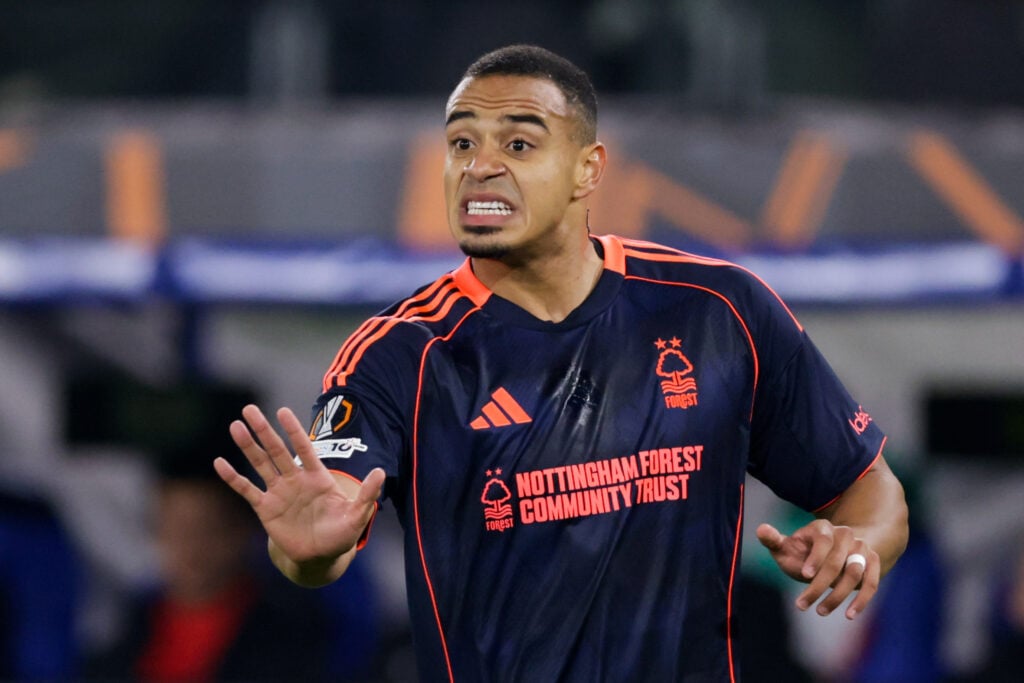 Photo by Joris Verwijst/BSR Agency/Getty Images
👇 Join the debate; share your insight. Use the comment button on the bottom left to have your say
Even with the handicap of losing £30m-plus every season in interest payments as a legacy of the Glazers’ leveraged buyout, successive managers and sporting directors have been allowed to blow eye-watering sums on wages, transfers and agents’ fees without any serious anxieties about next season’s budget.
And while the club is approaching a juncture whereby their pitiful recruitment and retention strategy could catch up with them in terms of their facilities in the transfer market, that moment hasn’t yet arrived.
If the club can get its act together on the pitch, whether under Michael Carrick or another head coach, United’s brand and commercial machinery will bless them with an enormous financial head start.
 Photo by James Gill – Danehouse/Getty Images
Other clubs simply don’t have the luxury of being able to recruit poorly for a decade. With only modest matchday, sponsorship and retail revenues, a single poor season can set them back years.
Looking at the latest Premier League financial data, it is easy to see why rivals get frustrated.
Man United bank more 2024-25 Premier League prize money than four clubs who finished above them
Every year, the Premier League releases a breakdown of how they distributed prize money among their teams. For 2024-25, the figures were late out, only surfacing this week.
As relayed by football finance expert Greg Cordell, United banked £136m after finishing 15th.
That, however, was more than four clubs who finished the season in a higher league position: Fulham (11th), Crystal Palace (12th), Everton (13th) and West Ham (14th).
And while United and Wolves were only separated by goal difference in the final standing, the Red Devils were awarded £13m more in prize money.
Is the Premier League’s financial distribution system fair?
Do United deserve more cash for attracting viewers? Or should prize money be decided on the pitch?
 Photo by George Wood – UEFA/UEFA via Getty Images
👇 Join the debate; share your insight. Use the comment button on the bottom left to have your say
The differentiator was facility fees, which the Premier League hands out each time a club is on domestic television. Only Liverpool (£25m) and Arsenal (£24m) earned more than United (£23m) in this department.
“Whilst fans of other clubs might be bitter about this,” says University of Liverpool football finance lecturer Kieran Maguire in exclusive conversation with United in Focus, “I still think it reflects reality.
“The Premier League without certain clubs would have zero impact on viewing figures domestically or globally. But if Man United were relegated, it would have a catastrophic impact. Whether other clubs like it or not.
“I have had discussions with some other clubs about distribution and they say they shouldn’t be subsidising smaller clubs in the Championship who could potentially be their rivals in a year or two.
“Actually, those clubs are the support actors in the Premier League. People don’t go to the cinema to see the support actors; they go to see Tom Cruise or Denzel Washington. They are the stars, and in the Premier League it’s Man United, Chelsea, Liverpool, Arsenal. Every other club is generating revenue in their slipstream. As a Brighton fan, it pains me to say it, but that’s the economic reality they have to accept.
“The Premier League deserves some credit. They have got the balance almost right. They acknowledge the contribution that a club like Manchester United makes, but at the same time, the multiple between 1st and 20th in the Premier League is smaller than La Liga, Bundesliga and so on.”
Premier League’s legal fees eating into United’s earnings
The growth in the value of the Premier League’s domestic and international TV deals is slowing, yes, but it remains on an upwards trajectory.
And yet, the total prize money dished out by the league in 2024-25 was only up by 0.5 per cent on the previous season, not enough to even keep up with inflation.
 Photo by PETER POWELL / AFP via Getty Images
The reason? Legal fees.
The charges levelled by the Premier League at Manchester City have cost tens of millions in fees, while Profit and Sustainability Rules (PSR) hearings and appeals have been costly too.
Last season, documents seen by United in Focus show that the Premier League spent £45m on fees last season, down slightly from £48m in 2023-24.
And for as long as that money is lining the pockets of lawyers, it is lost revenue for Man United and their peers.
Join Our Newsletter
Receive a digest of our best United content each week direct to your mailbox