
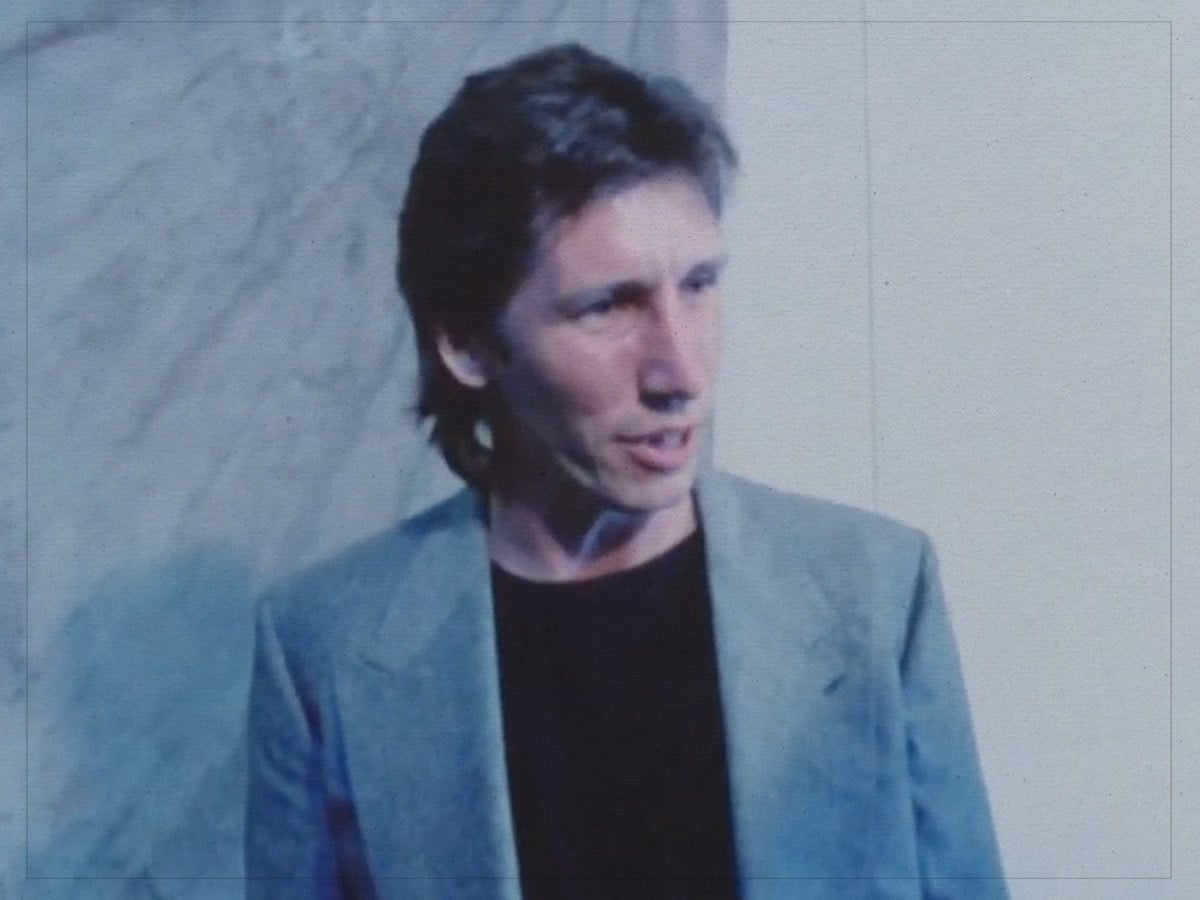
(Credits: Far Out / YouTube Still)
Sat 31 January 2026 16:05, UK
By the time Roger Waters left Pink Floyd, no one would have been surprised if he decided to retire.
He had reached a peak with the band on The Wall, and even if The Final Cut was a little bit disjointed, you could tell that he had done everything that he wanted to do with the band before splitting everything apart. A solo career may have been a bit of a gamble, but Waters only knew that things could work if he had the right musicians by his side whenever he walked into the studio.
There was still room for him to make an impact, but he probably didn’t expect to be starting back at zero all over again. Pink Floyd may have retained ownership of the name, but whereas they were playing stadiums when their next record came out, Waters was always going to feel a bit jaded when playing the first shows of The Pros and Cons of Hitchhiking in small theatres by comparison. He did have Eric Clapton in tow when making the record, but things needed to go in a different direction if he wanted to really make a splash as a solo artist.
Radio KAOS may have been an interesting detour into synthesised music, but something about his performance of The Wall in 1990 felt different. It was unthinkable for him to bring back his old bandmates to play the show along with him, but by getting stars like Van Morrison, Cyndi Lauper, and Joni Mitchell to help bring the record to life, he started to understand what he needed on his next record. He wanted to get the best people around him, and Pat Leonard was the perfect guy to help guide him through Amused to Death.
Leonard may have been a strange choice considering his work with Madonna, but he was just as interested in people like Gentle Giant and Yes when he first became a producer. He wanted the chance to make something with that sense of size and scope, and while Waters did have superstars like Flea and Don Henley on hand for many of the sessions, there was a temperature that changed in the room whenever Jeff Beck strapped on his guitar.
Beck was always known as the guitar player’s guitar player, but what he did on tracks like ‘What God Wants’ is among the finest playing he ever did in his later career. David Gilmour was already a student of Beck’s well before he even joined Pink Floyd, and that searing tone that the Yardbirds guitarist got out of his guitar was absolutely mind-boggling when Waters first heard him play.
Waters may have seen it all in the music business by this point, but Beck is always the kind of person who kept him on his toes whenever he walked into the studio, saying, “I still don’t know how he does it. He’s incredibly technically gifted in ways the rest of us can’t even begin to think about. He also has incredible pitch. When you play a harmonic and then play a melody on the whammy bar, it’s quite extraordinary to listen to.”
That kind of sound also works perfectly for the concept that Waters was cooking up on Amused to Death. The whole record was about humans becoming desensitised to the atrocities of everyday life, and while tunes like ‘The Bravery of Being Out of Range’ had a lot of anger to it, Beck was always the heart of the album whenever he strapped on his guitar, almost like he’s the one crying out in pain as the rest of the characters in the record look on in amusement.
Then again, bringing emotion was always what Beck did better than anyone else. Any guitarist can only hope to find their own sound whenever they play their instrument, but Beck was the kind of guitarist where you could practically hear a human voice in between every one of the notes he played.
Related Topics