
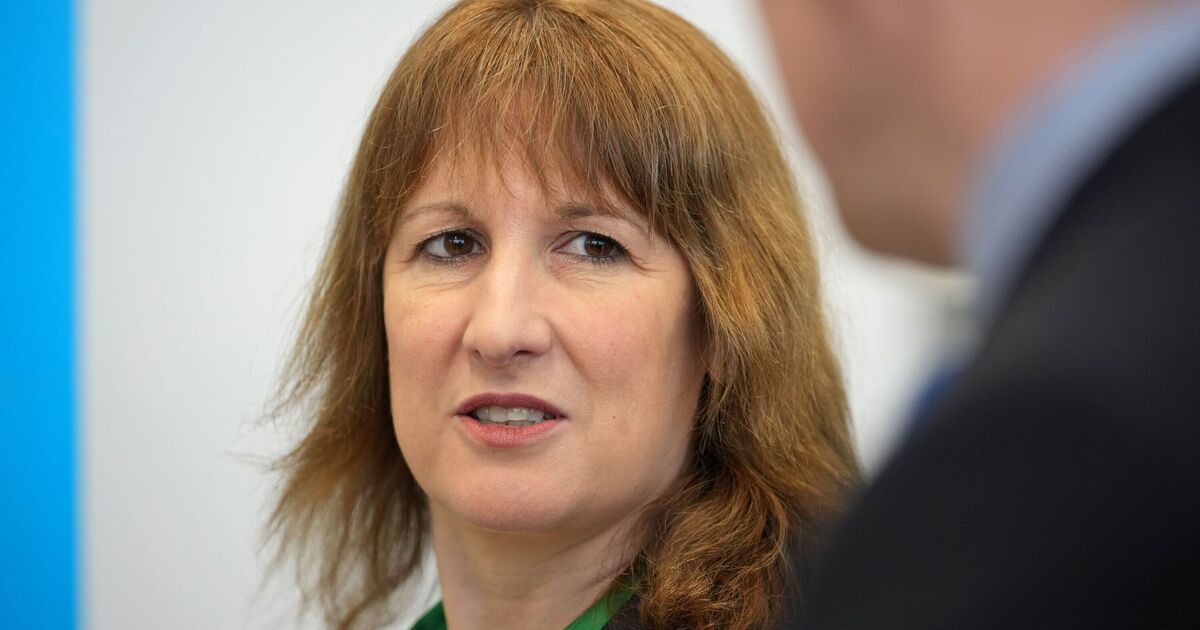
Chancellor Rachel Reeves (Image: Getty)
Rachel Reeves’ rigid economic philosophy is straitjacketing entrepreneurship and will strangle the free market, a financial expert has claimed. In a scathing critique, Bob Lyddon argues that the Chancellor‘s approach expands the state’s role to provide a “stable, predictable, and secure base” for private investment—but it devours resources, leaving no room for genuine market freedom.
The founder of Lyddon Consulting Services, who set out his ideas in a lengthy blog, told Express.co.uk: “Rachel Reeves may appear not to have an economic credo, or to have any idea about how businesses and markets work, or to understand how businesses react to government intervention, high taxation, and high regulation.
Read more: Keir Starmer has finally lost patience with Rachel Reeves
Read more: Rachel Reeves dealt huge ‘kick in the nuts’ by Keir Starmer with snub
Reeves says that she’s ‘commited’ to ‘our non-negotiable rules’
“There is a credo, though, and Reeves’ lack of apparent grip derives from her adherence to it. It is called Securonomics.
“Labour’s plans spell the death of the free market, of wealth creation, and of economic freedom.””
This model, unveiled in the November 2025 Budget, reverses Thatcher-era privatisations without outright renationalisation.
Instead, it compels private firms in energy, water, transport, education, health, and a dozen key industries to follow state directives through regulations, incentives, and penalties. Oil and gas sectors face deliberate inhibition, while Net Zero ambitions take centre stage.

Prime Minister Sir Keir Starmer in China (Image: Getty)
Mr Lyddon’s analysis paints a grim picture: Labour’s £1.64 trillion investment over 10 years—equivalent to 57% of 2024 GDP—will swell the state-directed economy. Adding this to the existing 42% public sector could see government controlling nearly 60% of UK activity.
Mr Lyddon said: “The government’s ‘investment’ plans amount to nearly £1.7 trillion (60% of the UK’s 2024 GDP) to be spent on its Net Zero/Clean Energy, Infrastructure, and Industrial strategies over the next 10 years.
“Public policy objectives – not market opportunities – determine where the money will be spent.”
Such intervention, Mr Lyddon warned, mirrors what he saw as the EU’s stagnant model. The UK’s EU “Re-set” under Labour could ironically align it with this failing system just as Europe awakens to its flaws.
Get top stories from The Express sent straight to your phone Join us on WhatsApp
Our community members are treated to special offers, promotions, and adverts from us and our partners. You can check out at any time. Read our Privacy Policy
He continued: “Reeves’ implementation of Securonomics is the most insidious element in the government’s EU Re-set: it will make the UK’s economy work exactly like the stagnant EU.”
Net Zero forms the credo’s core, promising insulation from energy shocks like those from Russia‘s Ukraine invasion. Yet, Lyddon highlights flaws: the UK’s ban on North Sea exploration licences ignores supply risks, while renewables lock in high costs.
A recent Institute of Economic Affairs report questioned transition expenses, met with government spin about becoming a “clean energy superpower”.
Mr Lyddon echoed the sentiment, saying: “Net Zero, with its huge allocations of money and resources as well as its huge body of regulations, is intrinsic to Securonomics: supposedly ensuring abundant supplies of cheap, home-produced energy as part of our stable, predictable, and secure economic base.”
But global trends threaten this vision. Under Donald Trump‘s approach, US oil and gas exploitation could flood markets, slashing prices—propane already dropped 13% from 2024 averages. Countries clinging to fossil fuels gain competitive edges, undercutting high-cost Net Zero adopters like the UK in global trade.
Lyddon foresees catastrophe: heavy borrowing crowds out private funds, stifling the free market. Job data underscores this—vacancies plunged post-Budget, the sharpest hiring slump since the pandemic. Treasury boasts of “stability” and a capped 25% corporation tax ring hollow, as businesses face rising costs and regulations.
Mr Lyddon explained: “Spending 6% per annum of current UK GDP for 10 years will bloat the size of the ‘state-directed’ sector of the UK economy to 15-20% of the whole, on top of the 42% that is already the public sector.
“That results in 60% of all economic activity being controlled by the state. There is no elbow room for a private sector in that economy.”