
What a pleasure it is to be seduced – and The Night Manager is just about the most seductive show on television. The palatial houses and swish hotels; the expensive suits and crisp shirts (does anyone wear a button-up better than Tom Hiddleston?); all the beautiful people with their beautiful faces, elegantly stabbing one another in the back. The first season aired 10 years ago – an entirely different world – so when it was announced that a second season was coming, my first thought was: oh no, lightning doesn’t strike twice. Delightfully, I was wrong.
If you haven’t revisited The Night Manager since 2016, here are the pertinent points: Jonathan Pine (Hiddleston), a night manager in a Cairo hotel, weaseled his way into the rarefied world of arms dealer Richard Onslow Roper (Hugh Laurie), AKA “the worst man in the world”, under the direction of Angela Burr (Olivia Colman), who ran a British intelligence operation. As a supposedly loyal henchman, Pine beguiled Roper, shtupped his girlfriend, imploded his arms deal and made off with a cool $300m, as Roper was dragged off screaming to a violent fate by unhappy customers.
It was John le Carré’s view that the first season of the TV drama, which tweaked his 1993 novel (mainly swapping the Gulf war for the more recent Arab spring), actually ended well for Roper. “However our story ends, he comes over as a fellow who, for all the awful things he’s done, has been hard done by in return,” he wrote in the Guardian when it aired. “Maybe that’s because Laurie’s Roper has been entertaining us for so long with his cool, his wit, his urbanity and his sheer wickedness that we don’t want to let him go. Or maybe it’s because we’ve taken to wondering by now whether Pine isn’t enjoying himself a bit too much in his role of avenging angel.”
Always the prophet. We didn’t really want to let Roper go, and Pine’s unknowability, the flicker in his eyes when Roper promised him the world, was his biggest appeal. The second season relied heavily on both these facts, which is part of why it worked. It is also meticulously plotted, which is a real pleasure when so many shows lately have felt like no one is at the wheel, pootling along aimlessly towards a finale (I’m looking at you, Fallout and Stranger Things).
Though it didn’t have the weight of a Le Carré novel behind it this time, season two was blessed with familiar faces: Hiddleston, Colman, Alistair Petrie and Douglas Hodge all returned, as did one surprise, hidden entirely on the press tour – Laurie at his glowering best as Roper, seemingly back from the dead. But it was the new faces that impressed me most: the magnetic Diego Calva as the Colombian arms dealer Teddy Dos Santos, who seems to be importing British arms into the country and building a guerrilla army; and Camila Morrone as Roxana Bolaños, a steely informant who becomes Pine’s way into Dos Santos’s world.
Family affairs … Hugh Laurie as Richard Onslow Roper and Diego Calva as Teddy Dos Santos. Photograph: Des Willie/Ink Factory/BBC
Arms dealers, beautiful women, rotten establishments, spies spying on spies – it seemed like season two might be just a tropical spin on the first. But the best thing about The Night Manager is how it pretended to meet our expectations, then subverted them entirely.
The Night Manager has often flirted with plotty silliness, but as soon as it was revealed Dos Santos’s father was an Englishman, it seemed like a disappointingly obvious callback; Le Carré does Star Wars. But then, the true reveal: daddy dearest was still alive, and working with his son to rebuild his empire. “When you’ve slain the dragon,” Roper said, “always check its breath.”
Bolaños was not just another Jed, a hot bod for ravishing; she openly hates Pine for the danger he’s put her in and ends up betraying him entirely. It was Dos Santos, with all his daddy issues, who seemed more infatuated with this dishy British, blue-eyed man with his nice shirts. (Their three-way dance, by the by – the sexiest thing on television in yonks and no one even kissed.) “Were you susceptible?” Roper asked his son in episode five, and Dos Santos’s pause was the answer.
Hiddleston and Laurie going toe-to-toe again made me want to punch the air. In a 10-minute showdown, a tense steak lunch that ranks up there with the diner scene in Heat, Roper offers Pine an ultimatum: come on board or die. “I have inexplicable affection for you,” he says, as explanation.
It is down to their chemistry that part of you wants Pine to say “yes”, while the rest of you hopes he says “no” so they can keep finding each other, as certain as death and taxes. Laurie clearly revels in Roper, a man who says things like, “Conscience and shame are the shackles of slaves!” and tauntingly quotes Macbeth – “If it were done when ’tis done, then ’twere well. It were done quickly!” – while his son points a gun at his forehead.
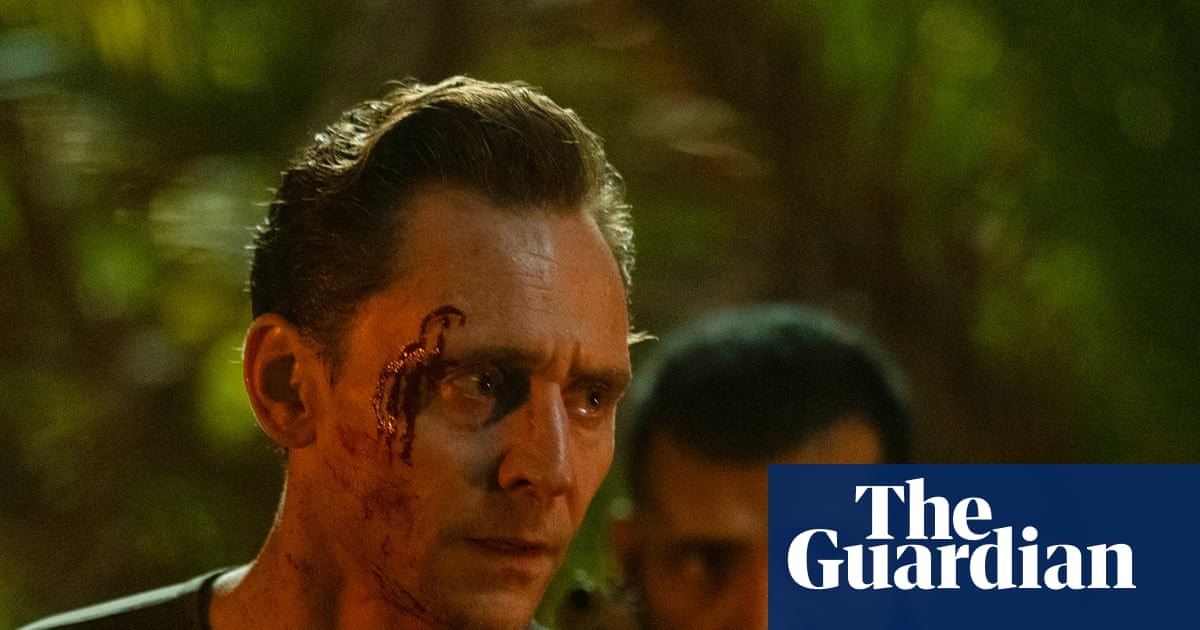
And poor, doomed Dos Santos. Having convinced him to betray his father, Pine advised him to put on a brave face and act loyal – “like a dog”, he said, not knowing that Roper just shot three of his own dogs dead without a blink. In the end, Dos Santos was executed by his father, the plane transporting the arms contained only a gloriously theatrical “bite me” to the few remaining do-gooders, Burr was murdered and Pine was left bleeding out in the Colombian jungle. Roper, meanwhile, got his British passport, his promised Oxford mansion and his son back. This time, he well and truly won. For now, at least – season three is, thankfully, already in pre-production.