
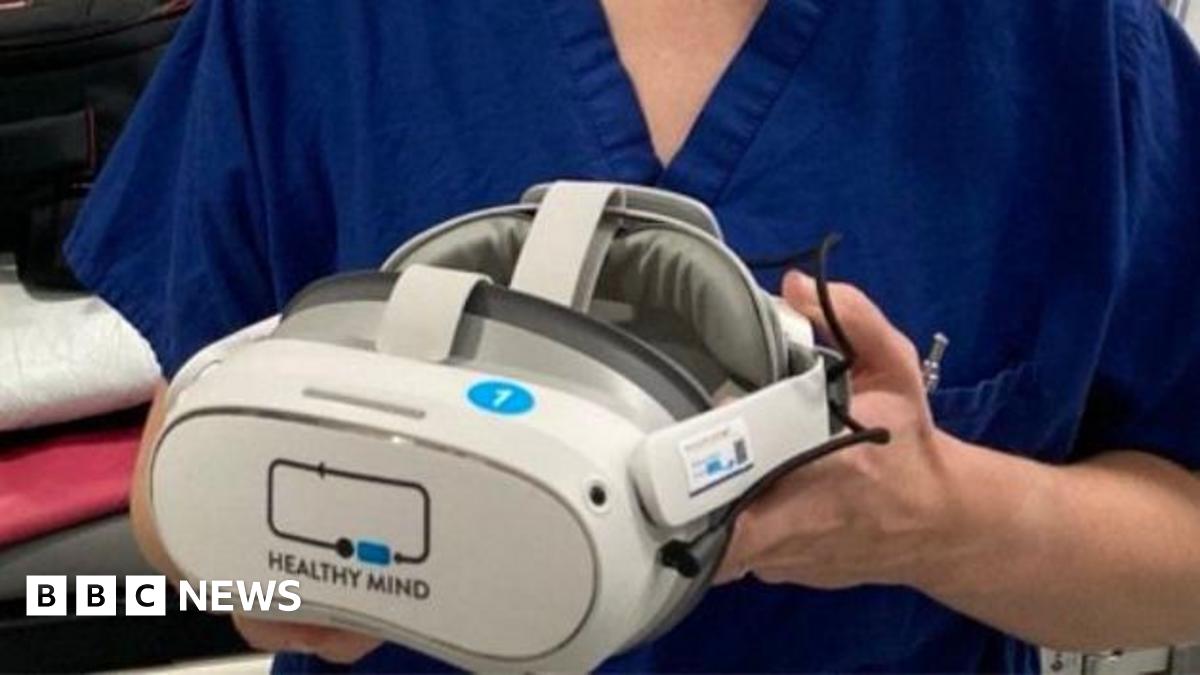
Specialist Interventional Radiographer Leah Simeone said hospitals had had positive feedback so far.
“People often come a bit worked up and that anxiety just increases the longer the procedure goes on. We find it helps to manage that,” she said.
“We have to reach the area we are trying to treat. If we get an hour in and have not reached the area and the patient says ‘I’m done’ then we have to abandon with no treatment.”
The headset is being used by patients needing vascular, biliary, oncology or renal minimally invasive procedures – alternatives to open surgery – lasting longer than 20 minutes.
Simeone said patients with certain illnesses experienced higher levels of pain after lying down flat during treatment. She said the trial might help reduce the amount of room time, sedation and radiation time they use in the long term.
She said: “Vascular patients tend to have cramping-type pain in their lower limb and lying down flat on the couch just makes that pain worse.
“It just turns into a numbness that then turns into an ache and excruciating pain.
“So having their headset helps them to keep that distraction up and on the treatment table for longer.”
So far, some patients have asked for less top-up sedation, but more patients are needed for the trial to get more data.
Simeone added: ‘We’re trying to treat them in a safer way.”