
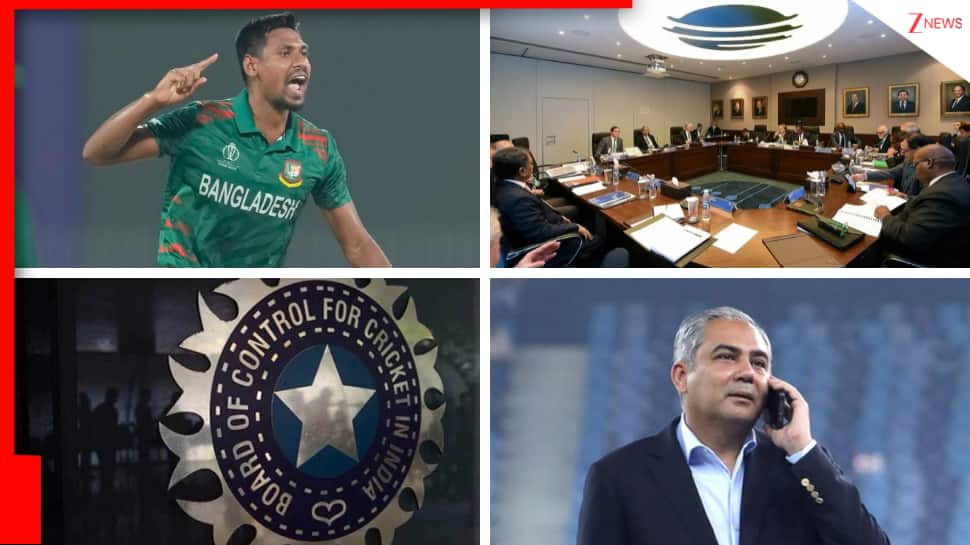
What began as an administrative decision involving an IPL contract has spiralled into one of the most politically charged controversies in modern international cricket. The fallout has dragged in the BCCI, PCB, ICC, and Bangladesh Cricket Board, ultimately reshaping the build-up to the ICC Men’s T20 World Cup.
This is how the crisis unfolded, step by step, and why its consequences go far beyond one tournament.
The Trigger: Mustafizur Rahman and the IPL Fallout
Add Zee News as a Preferred Source

The controversy ignited on January 3, when the BCCI instructed Kolkata Knight Riders to release Bangladesh fast bowler Mustafizur Rahman from the IPL. Officially, no public explanation was offered beyond administrative reasons, but the timing raised eyebrows in Dhaka.
For the Bangladesh Cricket Board, the move was interpreted as a signal, not merely about player availability, but about the environment Bangladeshi players could expect in India. Within days, the issue escalated from a league-level decision into a diplomatic cricket dispute.
BCB vs ICC: Venue Change Demand and Rejection
By January 4, the BCB formally approached the ICC, requesting that Bangladesh’s T20 World Cup matches be moved out of India due to player safety and security concerns. Such a request, so close to a global event, was unprecedented and placed the ICC in an uncomfortable position.
After reviewing security assessments, the ICC rejected the request, stating there was no credible threat that justified a venue change. The World Body reiterated that tournament logistics, security arrangements, and host-nation guarantees had already been cleared.
This refusal marked the point where negotiations began to break down.
Bangladesh Stands Firm, ICC responded decisively
Despite multiple meetings and video conferences, the BCB refused to back down. On January 22, Bangladesh’s team management publicly indicated they would not travel to India for their matches.
On January 24, Bangladesh were officially removed from the T20 World Cup, with Scotland named as their replacement. The decision sent shockwaves through global cricket, as a full member nation was excluded from an ICC event due to a governance deadlock. For Bangladesh cricket, it was a massive sporting and financial setback.
Pakistan Enters the Equation
The situation took a dramatic turn when the PCB openly backed Bangladesh’s stance. Pakistan officials criticised the ICC’s handling of the matter and questioned whether smaller boards were being treated fairly compared to powerful ones like the BCCI. Behind the scenes, the PCB consulted both its government and legal advisors, exploring protest options ranging from formal objections to a tournament boycott.
What followed was a carefully calculated move.
The Retaliation: Pakistan Boycotts India Match
On February 1, Pakistan announced it would participate in the T20 World Cup but boycott its match against India.
The PCB framed the decision as a symbolic protest, not against the tournament itself, but against what it called “institutional injustice” toward Bangladesh. In reality, the message was unmistakable: if Bangladesh could be sidelined, Pakistan would target the tournament’s biggest fixture. The India-Pakistan clash is the ICC’s most valuable asset, commercially, politically, and emotionally. Its absence hits broadcasters, sponsors, and tournament prestige.
BCCI and ICC Push Back
The BCCI fully backed the ICC, warning that selective boycotts undermine the integrity of global tournaments. Indian officials maintained that cricket should not be used as a tool for political signalling. The ICC, meanwhile, made it clear that Pakistan’s decision could invite financial penalties and disciplinary action, as refusing to play a scheduled match violates tournament regulations.
Former players and analysts across countries criticised the move, calling it damaging to the sport and unfair to fans.