
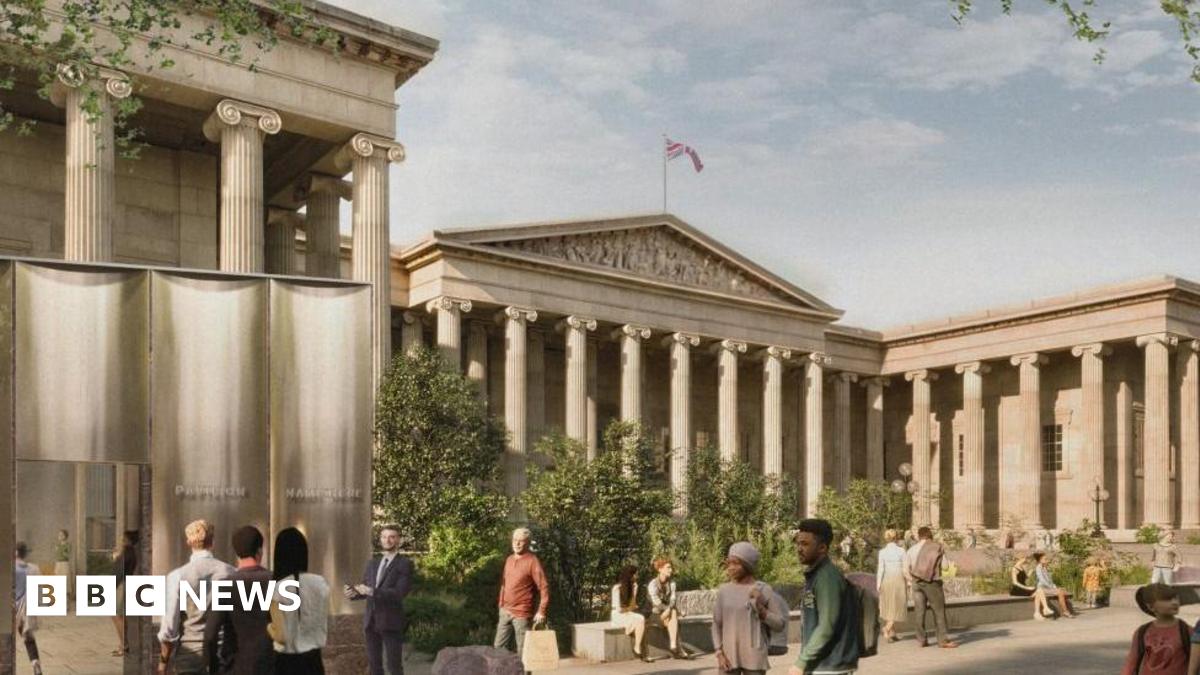
The Grade I listed museum attracts six million visitors a year and is home to artefacts like the Rosetta Stone and the Parthenon sculptures and is soon set to house the Bayeux Tapestry for a short time.
First opened in 1759, it is considered to be the nation’s most famous example of the Greek Revival style. Designed by Sir Robert Smirke, the building’s colonnade is held up by 44 columns inspired by ancient Ionian ruins in Athens and Priene.
These plans, submitted late last year, story, betray the architect’s original vision for the museum, the Georgian Group says.
The group believes that installing pavilions on one side building will ruin its symmetry and undermine its “powerful and carefully composed” architectural elements.
The conservation group said: “While we recognise the operational challenges faced by the museum, we consider that the proposals would cause an unacceptable level of harm to this internationally important site.”
The Victorian Society also objected, arguing that the “flashy” pavilion designs “resembled a shop and wine bar”, slamming the museum for ignoring earlier feedback on the plans.