
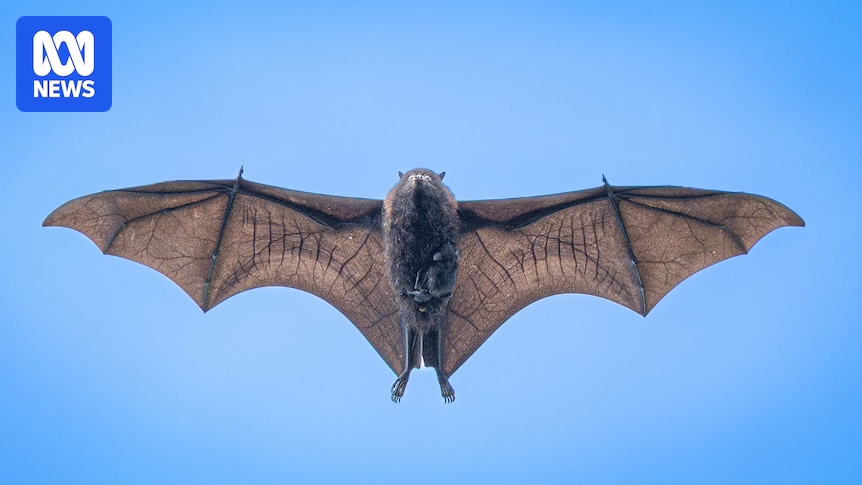
A photographer on Christmas Island has captured what is thought to be the first-ever image of a critically endangered bat carrying its young mid-flight.
Chris Bray said it took hours of effort and hundreds of discarded photos to snap the rare sight.
“You just photograph every bat that goes past, and we took over 1,000 photos,” he said.
“Later on, we went through them all and then realised that a few of them [photos] had the pup.”
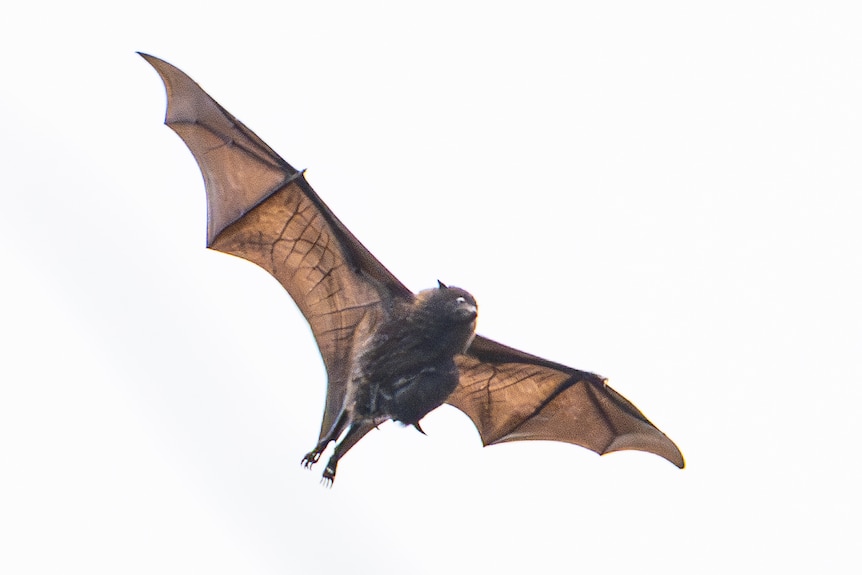
Mr Bray says wet weather conditions made it tricky to snap the perfect shot. (Supplied: Chris Bray)
The Christmas Island flying fox is endemic to the remote territory more than 1,500 kilometres off the West Australian coast.
It is the last native mammal still found there, with a population of fewer than 4,000 estimated to remain in the wild, according to ecologist and bat expert, Annabel Dorrestein.
“They’re our own version of the flying fox, critically endangered, but they’re also the cutest bat species in the world,” Mr Bray said.
“They’ve got big round faces, and they’re super fluffy, and their ears are very round.
“They do just look like a teddy bear.”Loading…Difficult conditions
Finding a window of clear weather to take the photo was the greatest obstacle, Mr Bray said.
“We’d been out a couple of times over the last few months to see if we could spot any and had no luck,” he said.
“And then just before we were going to fly out, we went and gave it one more try and then found them.
“It was pouring with rain and really windy, and so it was pretty terrible lighting.
“[But] just impressive to see them flying around in all the gusty wind and so much rain that they were wet and all their fur was really heavy.”
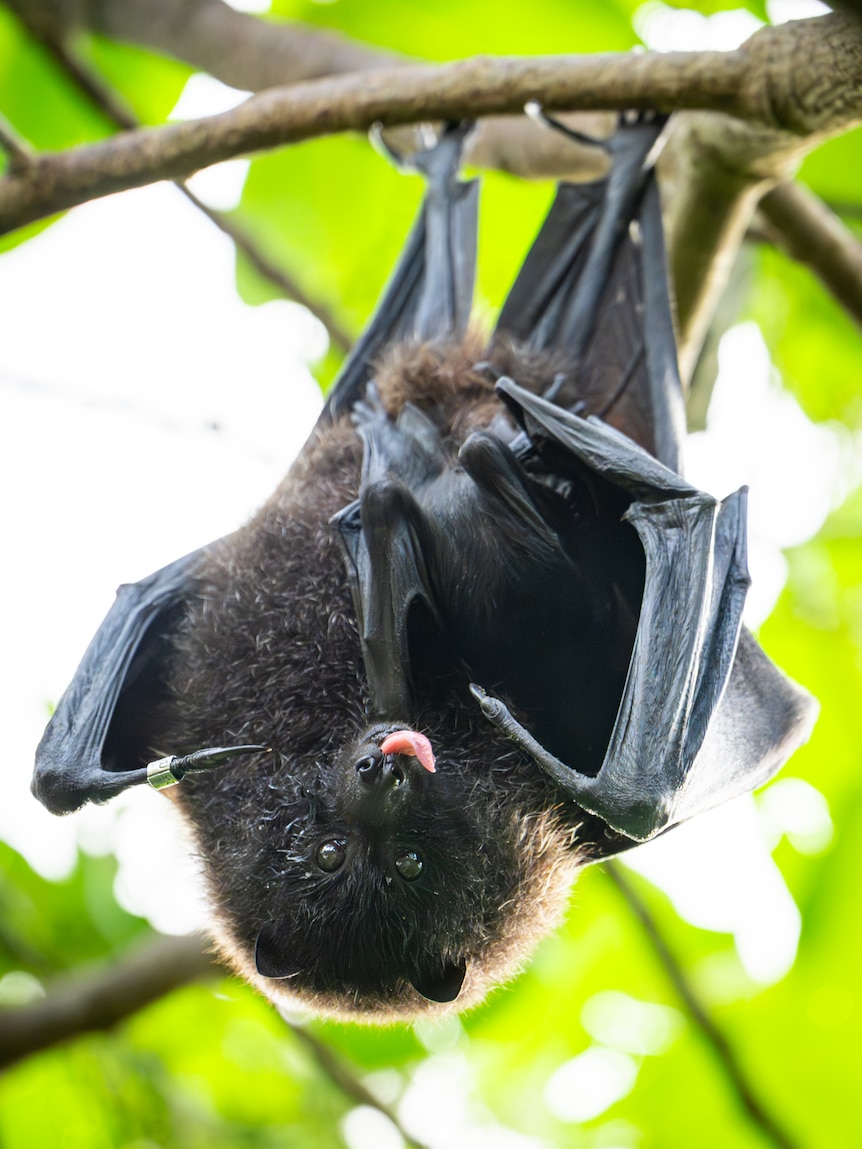
A flying fox pup weighs up to 15 per cent of its mother’s body weight. (Supplied: Chris Bray)
For his partner, Dr Dorrestein of Western Sydney University, seeing the bat cart its pup was not unexpected, but a natural marvel nonetheless.
“When they are born, they’re about 15 per cent of their mother’s weight,” Dr Dorrestein said.
“Knowing that flying is already incredibly energetically costly, and then also the mum is lactating … and then she carries around a little blob underneath her.
“It’s actually really incredible.”
Critically endangered
Dr Dorrestein said the introduction of feral cats on Christmas Island had a “gigantic impact” on flying fox numbers.
“We’ve seen flying fox remains in … the stomach contents of cats,” she said.
Along with yellow crazy ants, the invasive species has devastated local wildlife.
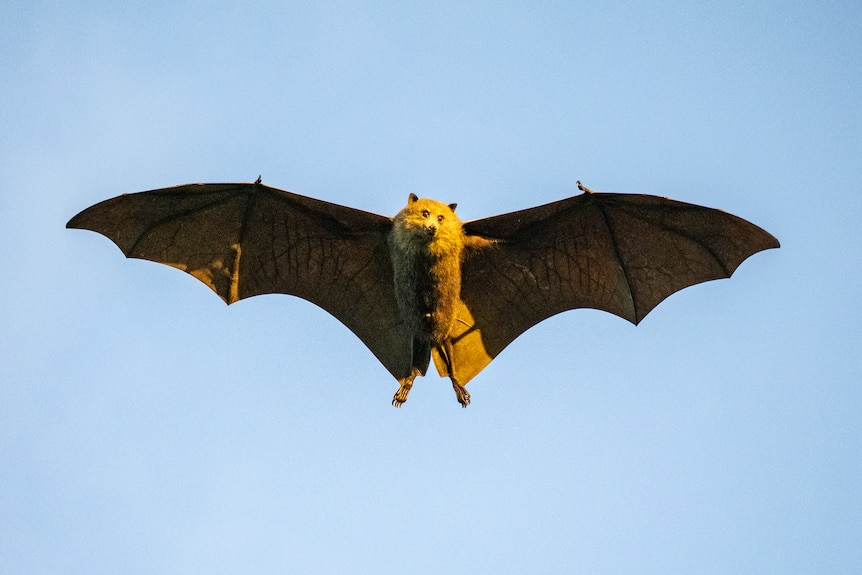
At about 400 grams, the Christmas Island flying fox is smaller than its mainland counterparts — drawing comparisons to a “teddy bear”. (Supplied: Chris Bray)
Four of the five mammals native to the territory have gone extinct since 1888.
Late last year, the Christmas Island shrew was internationally “red-listed” after decades without a sighting.
Dr Dorrestein said the destruction of jungle habitat for phosphate mining was also a contributing factor.
Love at first fox
The first also holds personal significance for the duo.
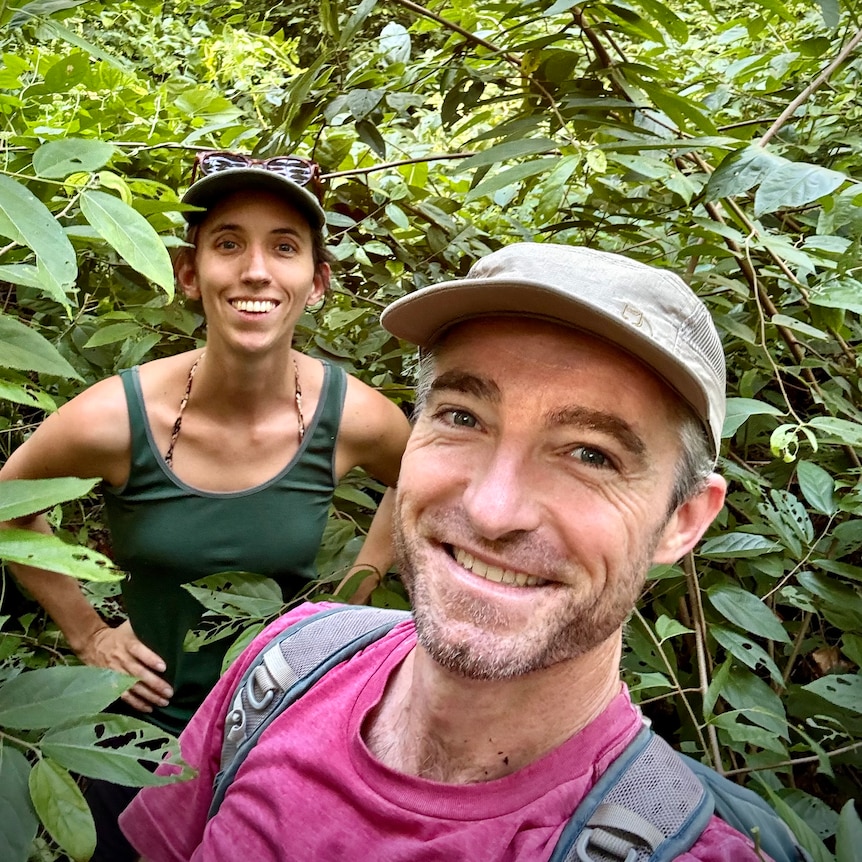
A love of bats brought the couple together. (Supplied: Chris Bray)
“We met at the same place as where we took this photo,” Dr Dorrestein said.
“I was actually catching bats, so I had two bats in my hands.
“And Chris had a photo tour on the island, and he came to that spot with his photo tour.”
Mr Bray said the couple shared a sense of advocacy for the often “maligned” bat.
“Being with Annabel has opened my eyes to so much about different bat species around the world, but also, of course, the Christmas Island one,” he said.
“Obviously, pretty special to have it as a local animal in our own backyard.”