
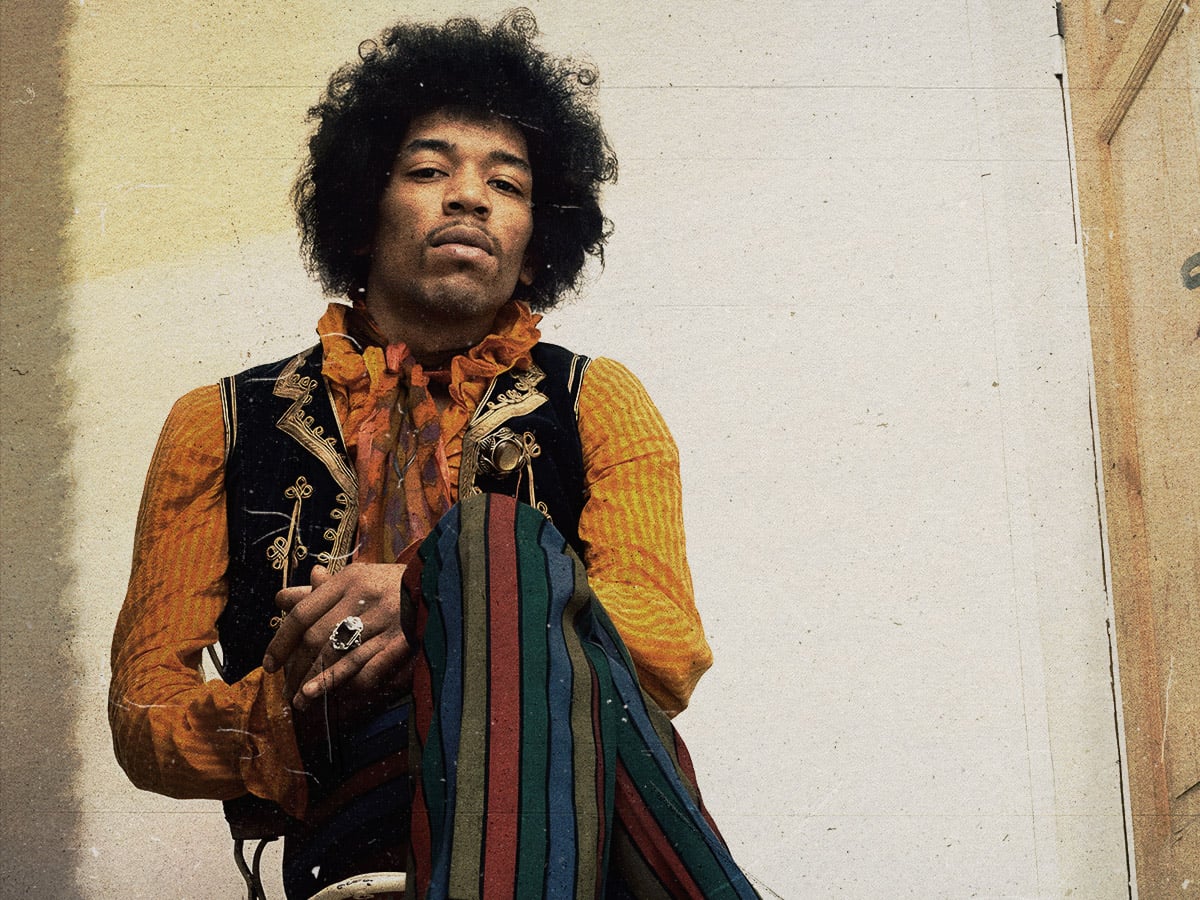
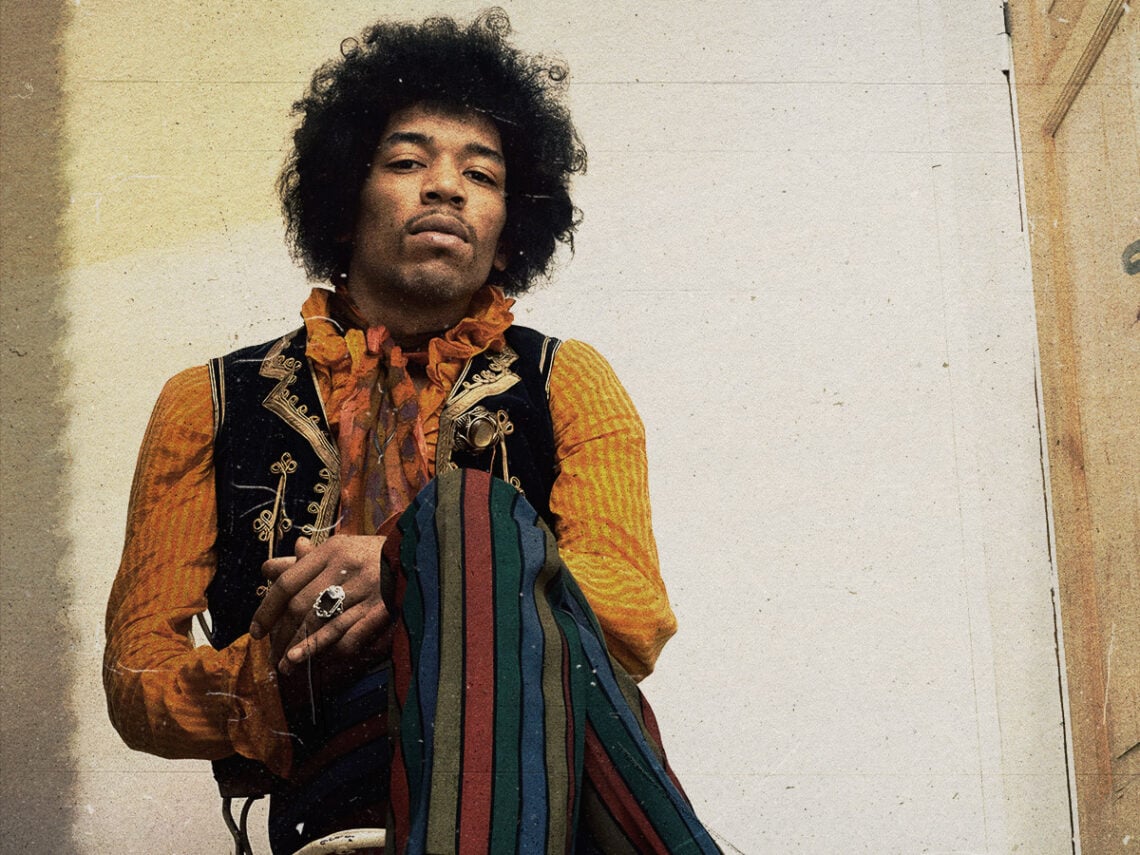
(Credits: Bent Rej)
Tue 3 February 2026 17:19, UK
When Jimi Hendrix tragically died at the humble age of just 27, the world of popular music came to a standstill. Hendrix was not just one of the best, if not the best, guitarists of his century, he was a style icon, and a counterculture hero loved on both sides of the Atlantic Ocean.
Hendrix died on September 18th 1970, in London, and his funeral took place in the city of his birth, Seattle, in the mists of October that same year. Hendrix’s death had suspicious circumstances and was always treated as an ‘open case’. However, the funeral was an emotionally charged solemn affair.
The funeral took place at the Dunlap Baptist Church on Ranier Avenue South, and on the cloudy morning of the event, Hendrix’s friends and peers in the music industry slowly began to gather. First, for breakfast at the Hilton Hotel near the airport.
Though he was one of the most famous rockstars in the world, Hendrix’s family had requested a small, private ceremony to commemorate his passing. Naturally, a large crowd had gathered, but Jimi’s fans paid respect to the family and remained well-behaved behind the ropes that had been laid out around the church. The Seattle police had been concerned about a large crowd, but as it turned out, there was no real need to worry. People outside of the church were paying tribute to an icon of music while the church was mourning a lost family member inside.
During the service, a close family friend of Hendrix’s, Freddie May Gautier, read out a eulogy, while another, Patronella Wright, sang a few spiritual gospel songs. In the eulogy, Gautier read out some of the lyrics from Jimi’s songs ‘Electric Church (Red House)’ and ‘Angel’. The pallbearers were all Jimi’s childhood friends, bar Herbert Price, who had been his chauffeur in Hawaii. Hendrix was returned to the earth to the sound of ‘When The Saints Go Marchin’ In’.
 The mercurial Jimi Hendrix. (Credits: Far Out / Experience Hendrix / Sony Music Entertainment)
The lead-up to the funeral had been somewhat stressful, seeing as the autopsy was persistently inconclusive. As such, the funeral had to be pushed back several times. A big concert had also been touted, although this idea was soon dashed due to time constraints and the fact that the Seattle police were concerned about it turning into a Woodstock-style event.
Several of Hendrix’s collaborators, including Mitch Mitchell and Noel Redding (the other two-thirds of the Jimi Hendrix Experience), jazz pioneer Miles Davis, and Jimi’s manager Steve Paul attended the ceremony.
Following the funeral, a wake took place that was said to be far more like the spirit of Jimi Hendrix than the drab and sombre funeral that preceded it. A jam session began to take shape, with the Buddy Miles Express beginning proceeding before Mitch Mitchell got behind the kit.
Several musicians would fall out and join in the jam, including Jimi’s younger cousin, Eddie Hall, who showed his proficiency at playing the blues guitar. It was a fitting way to celebrate the life of one of the greatest musicians, freest souls and most celebrated icons in the history of rock music.
What lingered after the music faded was the quiet realisation of just how much Hendrix had already given in such a short life. At 27, his catalogue was already vast enough to influence generations, reshaping not only how the guitar was played, but how popular music could sound, feel, and behave. The funeral did not mark an ending so much as a pause, a collective moment of reflection before his work continued its journey without him.
In the years that followed, Hendrix’s absence only sharpened his presence. Each retelling of that day in Seattle reinforces the sense that he belonged as much to the people as he did to history. The jam session, the hymns, and the respectful silence of the crowd outside the church all point to the same truth: Jimi Hendrix was not simply mourned, he was honoured, remembered, and released back into the world through the music he left behind.
Related Topics